
Where it all went wrong for Theresa May
With Brexit negotiations due to start on June 19, the turmoil in British politics is far from over
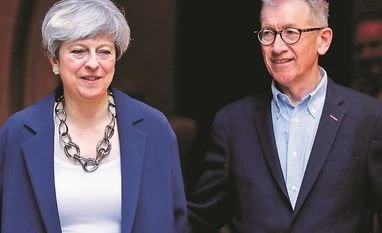 "Where it all went wrong for Theresa May")
premium
WebinarsNew
Deep DiveNew
Explore Business Standard
With Brexit negotiations due to start on June 19, the turmoil in British politics is far from over
When British prime minister Theresa May called a snap general election ahead of Brexit negotiations, it caught almost everyone by surprise. The expectation was that her Conservative party would gain a larger majority,supposedly in order to prevent opposition to any Brexit deal.
However, many suspected it was simply because the polling figures were irresistible. The Tories were far ahead in virtually every opinion poll and anticipated a parliamentary majority of between 80 and 100 if they went to the polls immediately.
As a prime minister without her own general election victory, May clearly hoped that her “hard Brexit” rhetoric would buy her plenty of votes from UKIP, strengthening her grip on Downing Street. However, the past eight weeks have been a disaster for her. She now finds herself the leader of a minority government, with Brexit negotiations due to start in less than two weeks.
The campaign started well for the Conservatives. The expectation was that they would crush Jeremy Corbyn’s opposition. His Labour party was divided on key issues and suffering low poll ratings.
But a leak of the Labour manifesto should have been an early warning for May. With extra funding for the NHS, schools and public sector pay, the document appealed to those exasperated with austerity. As Corbyn began to be more exposed to the public at election rallies and television debates, voters also began to warm to him.
Conversely, the Conservative manifesto launch was shambolic. One of the key pledges was being undermined within 24 hours of publication. The manifesto pledge on social care, nicknamed the dementia tax by its critics, was concerning for many older voters. Coupled with a removal of the triple lock on pensions, the “grey” vote, which the Conservatives have relied upon in recent years, began to look less certain. Concerns were also raised over a more peripheral issue – fox hunting. While not a key issue for many, fox hunting certainly raises temperatures among some voters, and May’s pledge to hold another vote on the issue irritated some.
May’s own personal performance also raised concerns. While Corbyn appeared to be performing well in TV appearances, May seemed ill at ease. She came across as robotic and lacking in the personal touch, which is so important in politics.
She faced severe criticism for failing to attend a seven-way leaders’ debate the week before the vote, instead sending her home secretary, Amber Rudd, to represent the party. While Rudd performed well, the media and many members of the public began to wonder why May was not appearing. This was a crucial opportunity to connect with the public and she missed it.
Despite the manifesto and May’s lacklustre performance, the polls continued to suggest a Conservative majority was the most likely outcome. While a limited number suggested a hung parliament was likely, many suggested a majority of anywhere between 30 and 100 seats.
Corbyn’s rallies, which were extremely popular, were dismissed as not representing the wider electorate and Corbyn’s young supporters were expected by many to simply not turn out to vote. In the defence of the pollsters, younger voters in Britain have historically tended to be among the most apathetic. However, Corbyn was energising some of those young voters, selling them an ideological vision of how Britain could be, and how it should be. Unlike previous elections, those young voters turned out to the polling booths and made quite a difference.
The exit polls, released at 10 pm on election night, were deeply shocking. Even many Corbyn supporters were caught off guard. However, as has been the case since 1992, the exit polls were right, and election night was catastrophic for the Conservative party and May. Overnight, at her own hand, May had gone from the prime minister of a majority Tory party to the leader of a minority government. The UKIP vote, which many had assumed would return to the Conservative party, ended up being split between the Conservative and Labour parties, adding to the mayhem of election night.
Victoria Honeyman, Lecturer in British Politics, University of Leeds
This article was originally published on The Conversation. Read the original article.
Already subscribed? Log in
Subscribe to read the full story →

3 Months
₹300/Month
1 Year
₹225/Month
2 Years
₹162/Month
Renews automatically, cancel anytime

Premium stories handpicked daily by our editors


News, Games, Cooking, Audio, Wirecutter & The Athletic
Digital replica of our daily newspaper — with options to read, save, and share


Insights on markets, finance, politics, tech, and more delivered to your inbox
In-depth market analysis & insights with access to The Smart Investor


Repository of articles and publications dating back to 1997
Uninterrupted reading experience with no advertisements


Access Business Standard across devices — mobile, tablet, or PC, via web or app
First Published: Jun 12 2017 | 8:40 AM IST


 Connect with us on WhatsApp