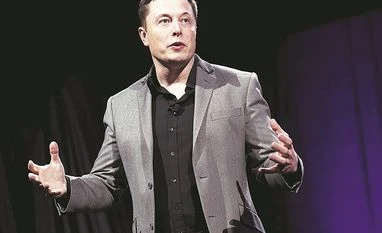
The startling reversal — announced late on Friday in a blog post, a day after he discussed it with directors — capped a tumultuous series of moves that drew in Wall Street’s biggest investment banks, prompted an investigation by regulators and raised fresh questions about Musk’s leadership.
In that time, according to five people close to the events, Musk came to realise that his thinking had been overly simplistic. While going private might have removed some problems, it would have introduced new ones.
Among his concerns were ceding too much control to private investors — including conventional car companies and Saudi Arabia, a symbol of big oil — and shutting out smaller investors who might be unable to retain a stake.
Those were issues both symbolic and substantive for Tesla, which has staked its future on making electric vehicles the transportation of choice — a vision that has made it the nation’s most highly valued car company. Even with its shares worth $55 billion, it faces concerns common to many young companies, including its vulnerability to the whims of public shareholders.
For his part, Musk has come under new scrutiny as his impulsiveness has played out in real time in the stock market, with billions of dollars on the line.
And even with the decision to stand pat, Musk and the company could remain in the sights of the Securities and Exchange Commission over the circumstances of the original announcement.
“Tesla investors must realise that they have a panicky, erratic, possibly self-destructive CEO at the helm,” said Jeffrey Sonnenfeld, a professor at the Yale School of Management. “No CEO is ever this confused and confusing.”
For years, Musk had romanticised the idea of Tesla going private. Doing so, he has mused publicly, would free him from the short-term pressures of the public markets, unburden him of the distractions of a volatile stock price and, more recently, get rid of the short sellers betting that Tesla would fail.
Tesla communications chief Sarah O'Brien quits after two years
Sarah O’Brien, Tesla’s vice president of communications, is leaving the company after nearly two years, the company confirmed late Saturday.
Her departure has been planned for a few months and precedes the recent drama surrounding Chief Executive Officer Elon Musk’s aborted attempt to take the electric carmaker private. Her last day will be September 7.
“We’d like to thank Sarah for all her contributions to Tesla and we wish her the best,” said a Tesla spokesperson. The top communications job is vital to Tesla because, unlike other automakers, the company doesn’t spend heavily on traditional advertising. Bloomberg
One subscription. Two world-class reads.
Already subscribed? Log in
Subscribe to read the full story →
Smart Quarterly
₹900
3 Months
₹300/Month
Smart Essential
₹2,700
1 Year
₹225/Month
Super Saver
₹3,900
2 Years
₹162/Month
Renews automatically, cancel anytime
Here’s what’s included in our digital subscription plans
Exclusive premium stories online
Over 30 premium stories daily, handpicked by our editors


Complimentary Access to The New York Times
News, Games, Cooking, Audio, Wirecutter & The Athletic
Business Standard Epaper
Digital replica of our daily newspaper — with options to read, save, and share


Curated Newsletters
Insights on markets, finance, politics, tech, and more delivered to your inbox
Market Analysis & Investment Insights
In-depth market analysis & insights with access to The Smart Investor


Archives
Repository of articles and publications dating back to 1997
Ad-free Reading
Uninterrupted reading experience with no advertisements


Seamless Access Across All Devices
Access Business Standard across devices — mobile, tablet, or PC, via web or app
)