World's richest 2,000 have more money than poorest 4.6 bn combined: Oxfam

In its "Time to Care" report, Oxfam said it estimated that unpaid care work by women added at least $10.8 trillion a year in value to the world economy - three times more than the tech industry
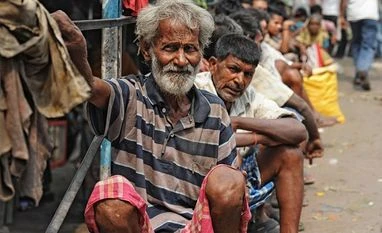
Image via Shutterstock
Reuters Nairobi
2 min read Last Updated : Jan 20 2020 | 8:18 AM IST
The world's richest 2,153 people controlled more money than the poorest 4.6 billion combined in 2019, while unpaid or underpaid work by women and girls adds three times more to the global economy each year than the technology industry, Oxfam said on Monday.

The Nairobi-headquartered charity said in a report released ahead of the annual World Economic Forum of political and business leaders in Davos, Switzerland, that women around the world work 12.5 billion hours combined each day without pay or recognition.

In its "Time to Care" report, Oxfam said it estimated that unpaid care work by women added at least $10.8 trillion a year in value to the world economy - three times more than the tech industry.

"It is important for us to underscore that the hidden engine of the economy that we see is really the unpaid care work of women. And that needs to change," Amitabh Behar, CEO of Oxfam India, told Reuters in an interview.


To highlight the level of inequality in the global economy, Behar cited the case of a woman called Buchu Devi in India who spends 16 to 17 hours a day doing work like fetching water after trekking 3km, cooking, preparing her children for school and working in a poorly paid job.

"And on the one hand you see the billionaires who are all assembling at Davos with their personal planes, personal jets, super rich lifestyles," he said.

"This Buchu Devi is not one person. I in India encounter these women on a daily basis, and this is the story across the world. We need to change this, and certainly end this billionaire boom."

Behar said that to remedy this, governments should make sure above all that the rich pay their taxes, which should then be used to pay for amenities such as clean water, healthcare and better quality schools.

"If you just look around the world, more than 30 countries are seeing protests. People are on the street and what are they saying? - That they are not to accept this inequality, they are not going to live with these kind of conditions," he said.

One subscription. Two world-class reads.

Already subscribed? Log in

Subscribe to read the full story →
*Subscribe to Business Standard digital and get complimentary access to The New York Times

Smart Quarterly

₹900

3 Months

₹300/Month

SAVE 25%

Smart Essential

₹2,700

1 Year

₹225/Month

SAVE 46%
*Complimentary New York Times access for the 2nd year will be given after 12 months

Super Saver

₹3,900

2 Years

₹162/Month

Subscribe

Renews automatically, cancel anytime

Here’s what’s included in our digital subscription plans

Exclusive premium stories online

  • Over 30 premium stories daily, handpicked by our editors

Complimentary Access to The New York Times

  • News, Games, Cooking, Audio, Wirecutter & The Athletic

Business Standard Epaper

  • Digital replica of our daily newspaper — with options to read, save, and share

Curated Newsletters

  • Insights on markets, finance, politics, tech, and more delivered to your inbox

Market Analysis & Investment Insights

  • In-depth market analysis & insights with access to The Smart Investor

Archives

  • Repository of articles and publications dating back to 1997

Ad-free Reading

  • Uninterrupted reading experience with no advertisements

Seamless Access Across All Devices

  • Access Business Standard across devices — mobile, tablet, or PC, via web or app

Topics :Oxfamwealth inequality

Next Story




