Factoring in first impressions to create brand loyalty
The Indian app world is rife with horror stories of first-time users
Nimish V Dwivedi Many years ago, stepping into teenage from boyhood, I had this burning desire to get a branded pair of jeans. At that time in India, only one option of local branded jeans was available - "F.U's". Being the only option for a large population entering the "jeans" phase of their lives, the brand had a huge advantage going for it. Armed with some pocket money, I entered their store. Immediately a salesperson said, "Each pair of jeans here is over Rs 400." Shocked, I ran out to the nearby Elco Arcade where a friendly tailor offered tea while taking measurements and provided a pair at one third the cost. That was my first and only interaction with the F.U's brand.
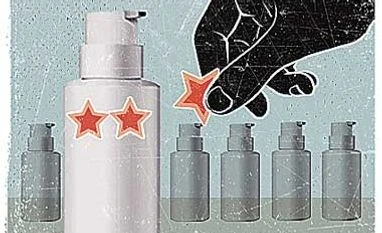
This brings me to a critical aspect that all marketers and brand managers need to manage in today's rapidly changing and evolving world - the first impression and interaction with the brand. I call it the first impression factor in the marketing mix, an aspect that needs huge attention and serious management.
Let us start with the airline industry. An airline promises chauffeur pick and drop services in the country you are visiting - a sterling benefit for business travellers. Landing at a new airport once, assured that my ride is waiting, I headed out only to find that the queue to avail of the chauffeur service is bigger than the queue for normal taxis. Once I got into the car, the driver immediately asked me if I knew the way to my hotel. Sheepishly, he said he was new to the place and didn't quite know his way around. He finally called up a few people to get directions and took an additional hour to get me through. And all the time I asked myself why the driver couldn't be provided a GPS system, told in advance about traveller destinations and given route maps.
Another area is hotels. Tired and drained, you enter a reputable hotel for your business trip and are greeted with a massive queue at check-in. There you are informed that a late check-out is not possible as "we are fully booked".
Jet-lagged, you make it into your room. The funny key contraption given to you does not work. You are now faced with the prospect of going down 14 floors to get another set of keys. At the reception they ask if you kept your keys with your mobile phone, because the key management programme stops working if you did. Finally, you make it to your room and cannot find where the lights are. Searching for lights in an unknown room at 4am does not make for a favourable first impression.
A brand that has emerged recently and has mastered the first impression factor is The Pullman hotel chain, which gets the first impression factor right every time and across geographies in my experience, thereby ensuring repeat business from business travellers across the globe.
Even as mobile applications become an integral part of our lives, the first impression factor becomes even more salient. I recently downloaded Electronic Arts' FIFA 2015 app and opened it. For the next 10 minutes I got the message, "Our servers are experiencing heavy traffic, we are working on it." App deleted. The Indian app-ecommerce world is rife with horror stories of first-time user experiences on food delivery and grocery delivery applications. Over-promising and no delivery - not just under-delivering. It is a complete contrast to Amazon, where the entire first impression factor for a new user is geared towards converting this "just looking" visitor into a frequent site visitor and a loyal shopper.
Imagine when you receive your credit card with great anticipation. Farhad Irani, a pioneer of the credit cards category in India, actually highlighted the importance of these card delivery packs and rechristened them "welcome packs" with three mandatory "I"s - informative, interactive and intuitive. Contrast that with "delivery packs" of today, stuffed with all kinds of irrelevant terms where a customer may end up tearing the actual card itself which is lost in all the junk content.
Singapore is a shining example of getting the first impression factor right. You arrive at a world-class airport where even the cleanliness of toilets can be given a service rating and water can be drunk from any tap. And then you can reach the heart of the city from the airport in just 20 minutes. Thanks to GVK's efforts there is a world-class airport in Mumbai also, with immigration forms not a requirement. But even GVK cannot control the parchment of a "customs declaration form" for filling and handed only after arriving. No escape from some form of form filling!
As Malcolm Gladwell put it: "Our first impressions are generated by our experiences and our environment, which means that we can change our first impressions ... by changing the experiences that comprise those impressions".
It is time for marketers to incorporate the first impression factor in their marketing mix to create brand loyalty and preference.
Nimish V Dwivedi
Business director, cards and payments, VP Bank-FE Credit

 "Factoring in first impressions to create brand loyalty")


 Connect with us on WhatsApp