'Know your consumers, maximise returns': Facebook steps up the brand pitch

The platform has taken up an industry-wide exercise to familiarise brands with their consumers
facebook
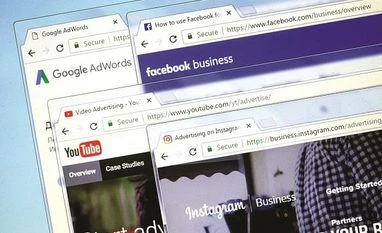
Facebook and Google have been locked in a battle for advertising revenues across the globe
Romita Majumdar Mumbai
Last Updated : Feb 05 2019 | 11:40 PM IST
What do brands want from their social media engagement? How can they get the maximum out of customer interactions? And what happens when digital does not deliver its promised set of customers?

Ask Facebook; that is what the social media giant wants advertisers and marketers to do as it sets down the rules of engagement for brands and consumers on its platform. Using a series of reports that it commissioned through 2018, the team in India is reaching out to brands and advertisers to help them sharpen their pitch and maximise their returns from the platform.

Today consumers demand utmost speed and simplicity when they decide to buy a product or a service and brands have to ensure that they act within seconds of a consumer request. They also must work harder on their user interfaces.

Indian consumers are notoriously fickle and abandon their purchase journeys at the slightest discomfort. Long queues, incomplete information, long forms, anything can be a turn off. Consumers dropping off the purchase journey is referred to as 'friction' and it is here that brands are losing out on millions of dollars worth of sales opportunities. Facebook says it can help brands avoid friction by enabling a better understanding of consumer and platform behaviour.

The need to dig deeper into consumer journeys on social media is even more urgent today, given the growing number of brands accessing the platform and engaging with consumers who speak languages other than English or Hindi. 

“Digital is absolutely mainstream today,” said Sandeep Bhushan, director and head of GMS, Facebook India and South Asia. He adds that people with the smallest level of discretionary income in the country have a smartphone and are online today which makes it imperative for businesses to also be present on the platform. “Platforms like ours which use real identity login reach every Indian in the broad segmentation possible,” he emphasised.

Note that while both Facebook and Google have been locked in a battle for advertising revenues across the globe, one of their key differentiators is the login mechanism. While users can at least use Google search without logging in through individual accounts, none of the Facebook apps can be used without logging in,  which at the basic level does provide more user insight, according to analysts. However, given the huge spread of apps across both tech conglomerates, it is by itself not a big differentiator. hence the need for targeted outreach.

Last year Facebook launched the “Zero friction future” programme, in partnership with KPMG and Nielsen India, releasing a series of industry focussed white papers to help brands understand media friction in consumer purchase journeys and how mobile can help open future avenues for growth.

 As per the research findings and analysis by Nielsen and KPMG, mobile plays a significant role in eliminating friction across multiple touch-points. It was also observed, across the industries covered, that Facebook’s influence at every stage of the marketing funnel is also significant.

“Digital tools have been evolving over the last few years with everyone going for different product offerings. But the marketer still doesn’t have clarity about what it means to business,” said Bhushan. Hence Facebook saw the need for an understanding of the basic query: Where are businesses losing their consumer?

Of course, consumer challenges that lead to friction can occur across different stages of their purchase journey, starting from awareness, consideration, intent to finally making the purchase. And Facebook is keen that brands plug the holes. For that is the only way it can keep the business buzzing on its platform.

Opportunity map

Smartphones: Brands can tap into a potential sales opportunity of about $3.1 billion at a reduced cost per action (CPA*) by almost 13%

Automobiles: For four-wheelers, there is a potential sales opportunity of about a million units at a reduced CPA by nearly 4.7%; for two-wheelers, the opportunity is about 2.6 million units at a reduced CPA by almost 7.8%

Fashion: For apparel, the potential sales opportunity of about $5 billion at a reduced CPA by about 5% is on the table;  for accessories, it is about $9 billion at a reduced CPA by almost 5%

Travel: Airlines can tap into a potential sales opportunity of about $9 billion at a reduced CPA by 30%; and for hotels, about $2 billion at a reduced CPA of 15%

*Cost Per Action (CPA) is the amount it costs in advertising dollars per desired action

Source: Facebook

One subscription. Two world-class reads.

Already subscribed? Log in

Subscribe to read the full story →
*Subscribe to Business Standard digital and get complimentary access to The New York Times

Smart Quarterly

₹900

3 Months

₹300/Month

SAVE 25%

Smart Essential

₹2,700

1 Year

₹225/Month

SAVE 46%
*Complimentary New York Times access for the 2nd year will be given after 12 months

Super Saver

₹3,900

2 Years

₹162/Month

Subscribe

Renews automatically, cancel anytime

Here’s what’s included in our digital subscription plans

Exclusive premium stories online

  • Over 30 premium stories daily, handpicked by our editors

Complimentary Access to The New York Times

  • News, Games, Cooking, Audio, Wirecutter & The Athletic

Business Standard Epaper

  • Digital replica of our daily newspaper — with options to read, save, and share

Curated Newsletters

  • Insights on markets, finance, politics, tech, and more delivered to your inbox

Market Analysis & Investment Insights

  • In-depth market analysis & insights with access to The Smart Investor

Archives

  • Repository of articles and publications dating back to 1997

Ad-free Reading

  • Uninterrupted reading experience with no advertisements

Seamless Access Across All Devices

  • Access Business Standard across devices — mobile, tablet, or PC, via web or app

Next Story



