As Q2FY20 results season gets underway, here's how to play the markets

Gains from the corporate tax cut last month, they believe, are likely to be offset by lower sales volume and revenue contraction in key sectors such as automobiles, energy, metals, and mining.

algo trading
Avdhut Bagkar Mumbai
4 min read Last Updated : Oct 11 2019 | 8:28 AM IST
As markets prepare themselves for the September quarter results season (Q2FY20), most analysts expect the July-September 2019 period to be one of the worst quarters for corporate earnings in recent years. Gains from the corporate tax cut last month, they believe, are likely to be offset by lower sales volume and revenue contraction in key sectors such as automobiles, energy, metals, and mining.

“Underlying demand slowdown in the domestic economy and weak global commodities prices are expected to take a toll on earnings with very few bright spots, if any. However, it is important to look at this quarter's numbers from a profit before tax (PBT) perspective, as the reduction in the corporate tax rate cuts will result in several adjustments in this quarter's tax numbers,” wrote Gautam Duggad, head of institutional research at Motilal Oswal Securities.


So, how should you position yourself in the markets for the results season? Here are the levels you need to watch for key indices.

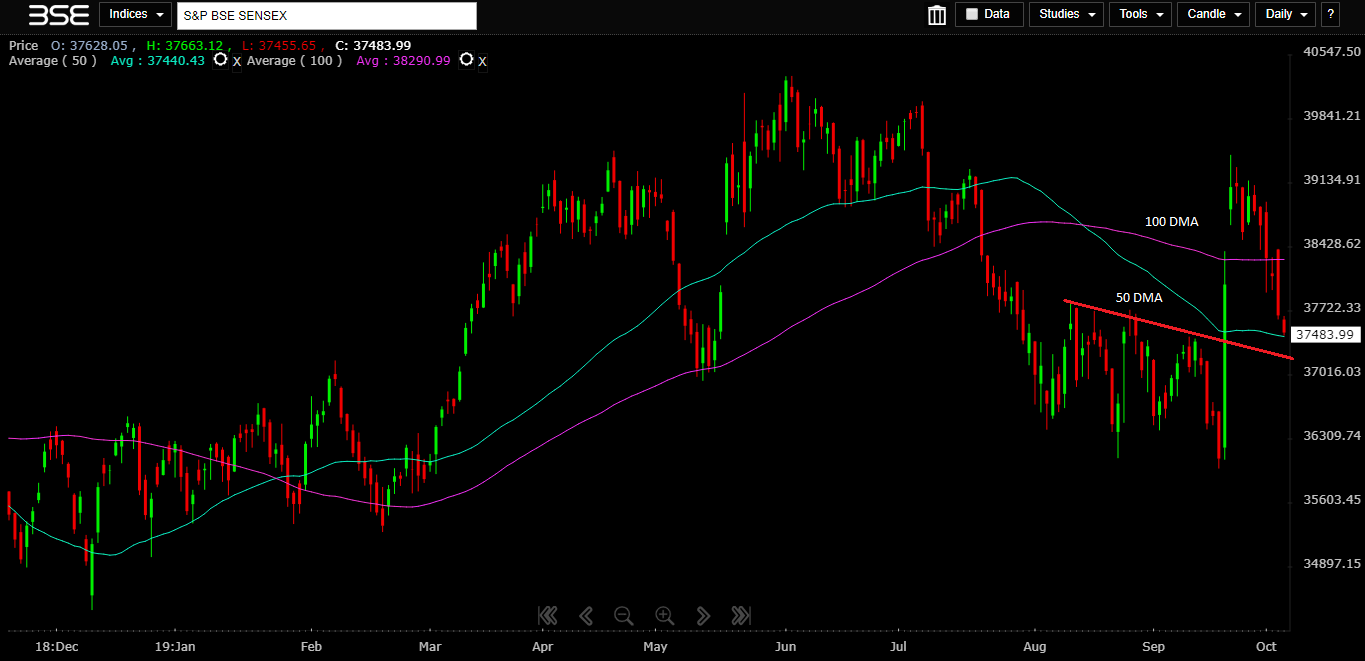
S&P BSE SENSEX: On Monday, the index pulled back from its crucial support levels, which also is its 50-days moving average placed at 37,441 level. Breaching this on the downside may see a breakdown below 37,000 mark. The upside is capped at 38,292 levels – its 100-DMA, as per the daily chart. On the intra-day chart, however, the index is seeing selling pressure around 37,900. To scale up further to the 40,000 mark, the S&P BSE Sensex needs to close decisively above 37,900 and see follow-up buying. CLICK TO VIEW CHART

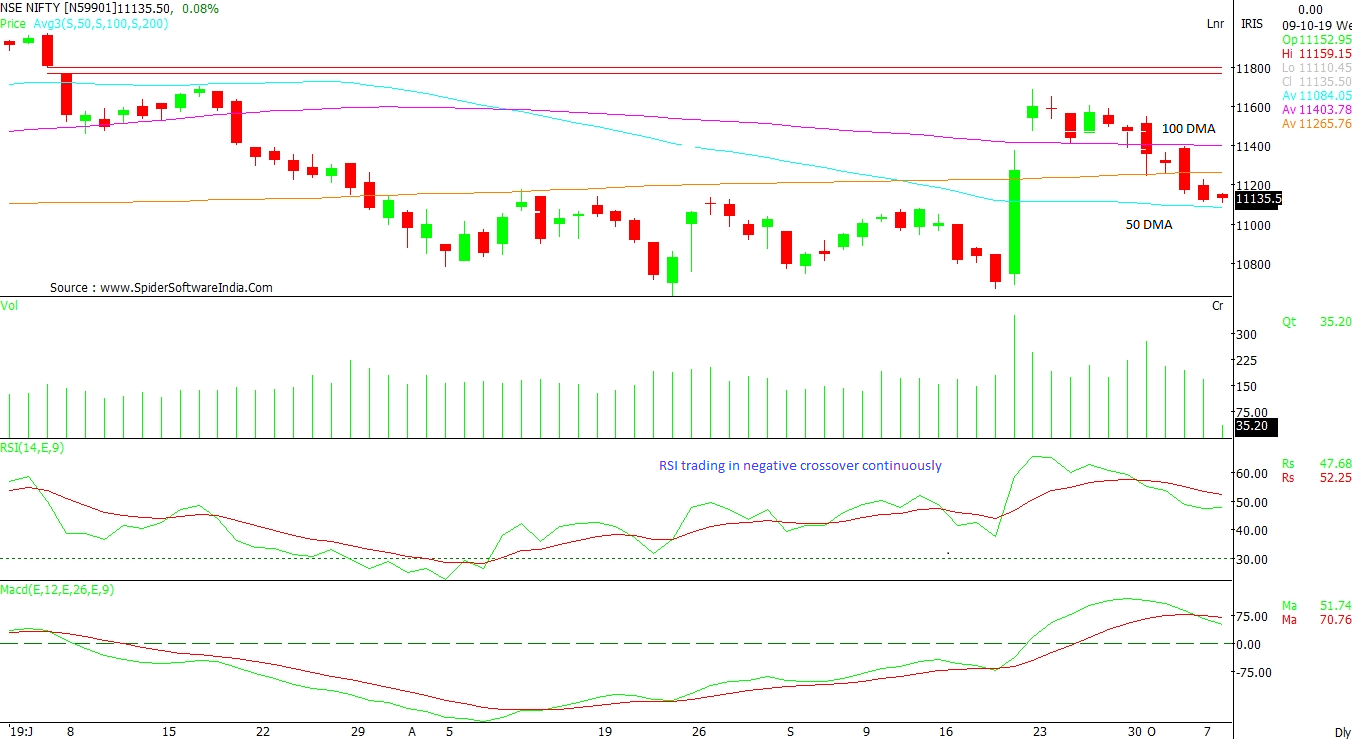
NIFTY 50: As the Nifty50 breached its 200-DMA and faced strong resistance even at the 100-DMA, the sentiment has started to weaken. There is an immediate support at the 50-DMA located at 11,085 levels, which remains the last hope for the Bulls. The rally seen on September 20 when the government slashed corporation tax from 35 per cent to 25 per cent is under threat, and any slide from the current levels can severely dent the overall sentiment. The Relative Strength Index (RSI) has been trading in negative crossover. Moving Average Convergence Divergence (MACD) is showing signs of weakness as it gets near to a negative crossover. CLICK TO VIEW CHART

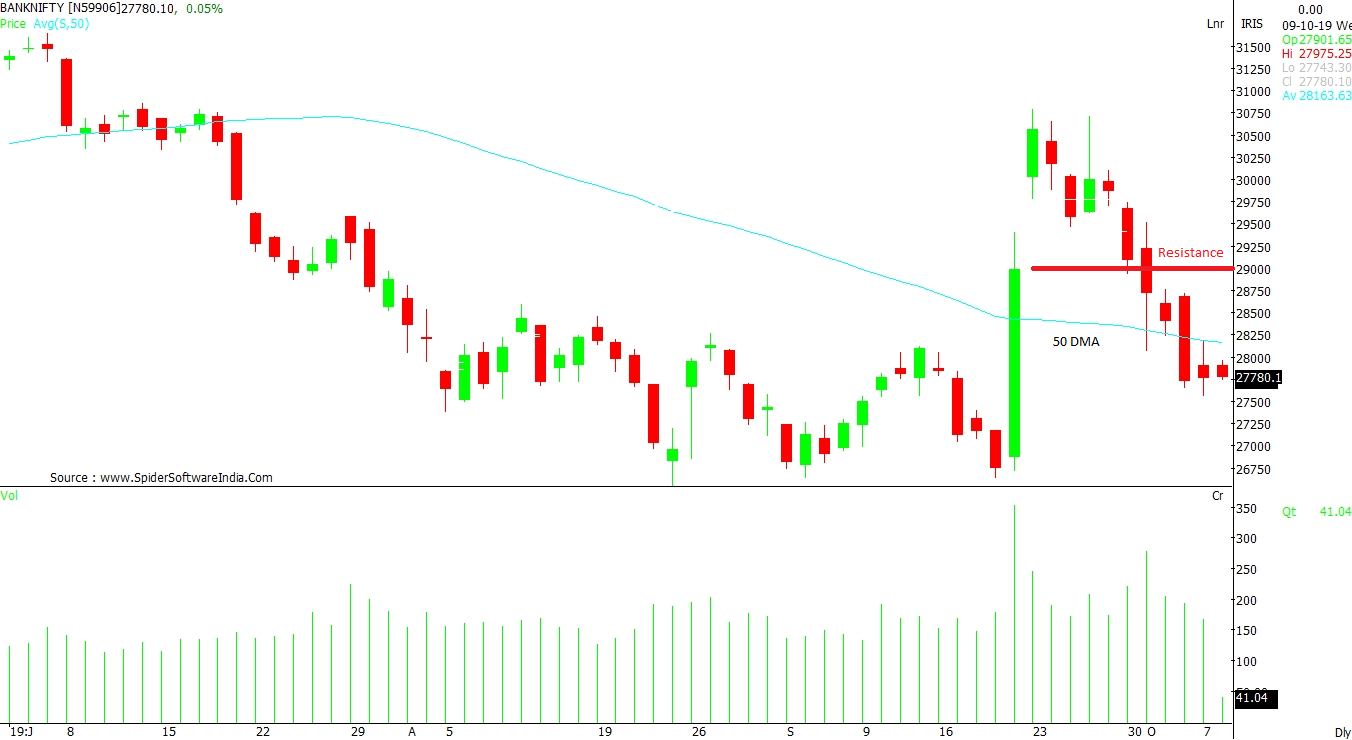
NIFTY BANK: The index is trading well below the 50 per cent retracement of the rise after the government cut corporation tax. It is also trading below all the major moving averages – the 50, 100 and 200-DMA.  That being said, the negative close of the last six sessions can see the index see an intermittent bounce, though the firm upside trend should emerge only above the 29,000 mark. Although there has not been much rise in trading volumes during the last four sessions, but individual stock prices of the scrips in the index do don’t instil much confidence for now. CLICK TO VIEW CHART

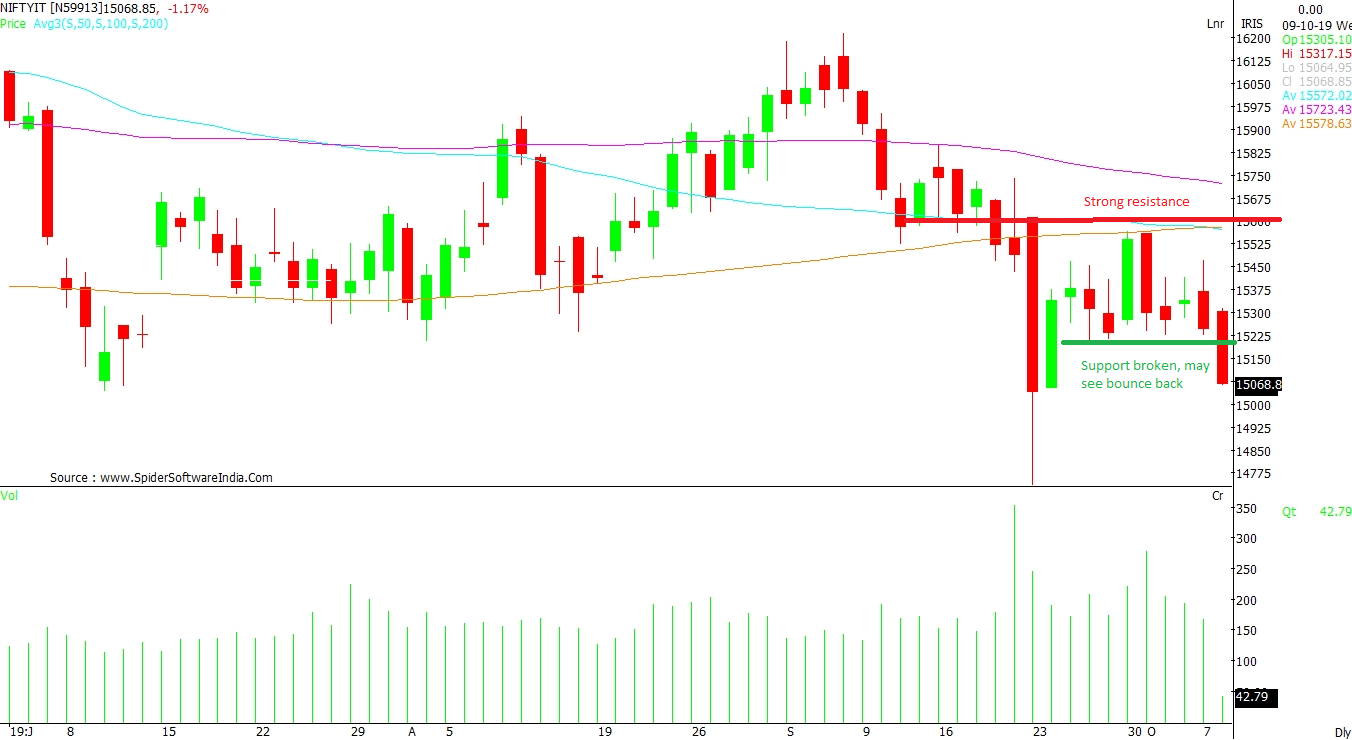
NIFTY IT: This index is witnessing strong resistance at 15,600 levels. This co-insides with 50-and 100-DMAs placed at 15,577 and 15,580 levels, respectively.  On the other hand, 15,200 is seeing buying emerge and become a support for this range-bound consolidation. Currently, the RSI is fluctuating in positive-negative crossover. If the index manages to cross 15,600 on decent volumes and a positive crossover of RSI, then may head towards the 16,000 mark. CLICK TO VIEW CHART

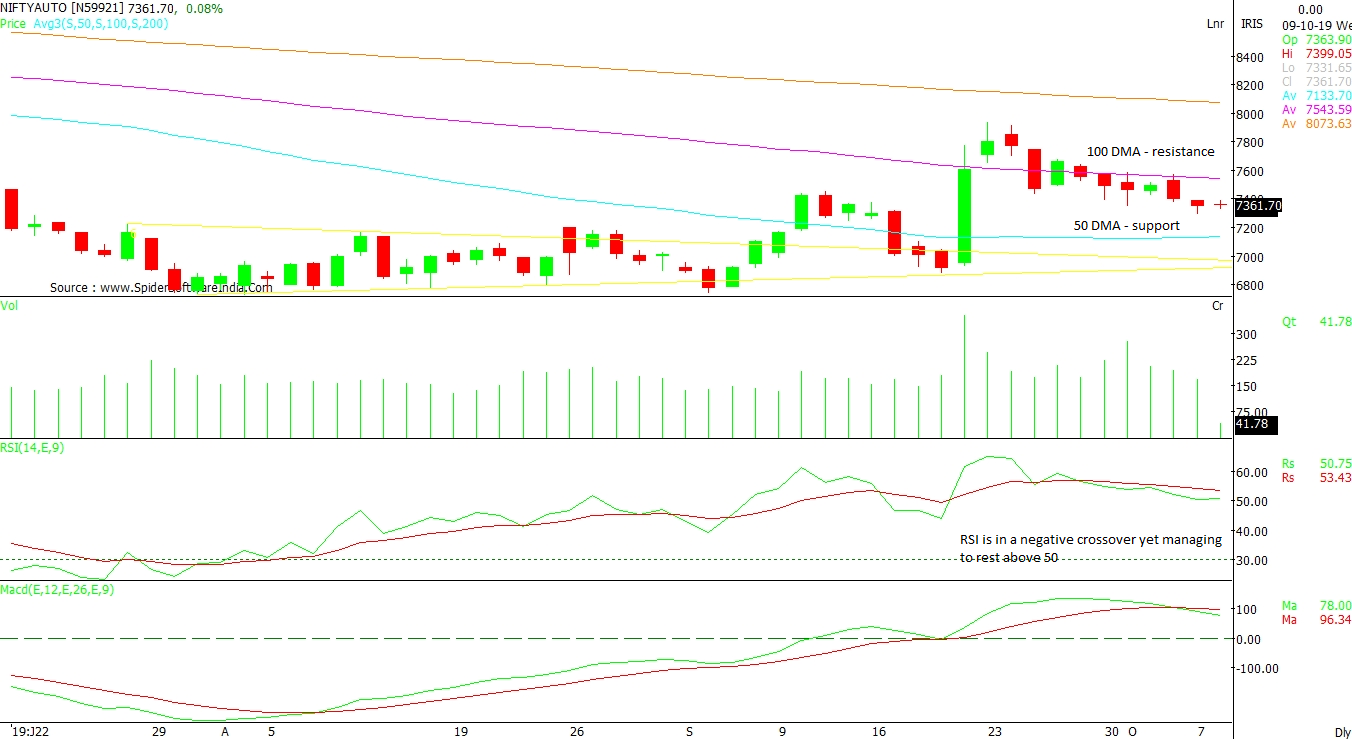
NIFTY AUTO: As the index failed to sustain above its 100-DMA, the positive momentum is slowly diminishing. The 50-DMA is placed at 7,130 levels, which becomes the immediate support for the index. Even though the RSI is in a negative crossover, it has managed to rest above 50. The MACD has made a negative crossover as per daily chart. A change from positive to negative MACD is interpreted as a bearish signal. CLICK TO VIEW CHART

One subscription. Two world-class reads.

Already subscribed? Log in

Subscribe to read the full story →
*Subscribe to Business Standard digital and get complimentary access to The New York Times

Smart Quarterly

₹900

3 Months

₹300/Month

SAVE 25%

Smart Essential

₹2,700

1 Year

₹225/Month

SAVE 46%
*Complimentary New York Times access for the 2nd year will be given after 12 months

Super Saver

₹3,900

2 Years

₹162/Month

Subscribe

Renews automatically, cancel anytime

Here’s what’s included in our digital subscription plans

Exclusive premium stories online

  • Over 30 premium stories daily, handpicked by our editors

Complimentary Access to The New York Times

  • News, Games, Cooking, Audio, Wirecutter & The Athletic

Business Standard Epaper

  • Digital replica of our daily newspaper — with options to read, save, and share

Curated Newsletters

  • Insights on markets, finance, politics, tech, and more delivered to your inbox

Market Analysis & Investment Insights

  • In-depth market analysis & insights with access to The Smart Investor

Archives

  • Repository of articles and publications dating back to 1997

Ad-free Reading

  • Uninterrupted reading experience with no advertisements

Seamless Access Across All Devices

  • Access Business Standard across devices — mobile, tablet, or PC, via web or app

Topics :Nifty BankQ2 resultsNifty ITNifty AutoMarkets Sensex Nifty

Next Story