Breathe easy, NSE. Your index isn't Star Wars

The regulator simply isn't ready to deal with the money laundering that may occur when a bank hands over direct market access software to a dodgy sub-account
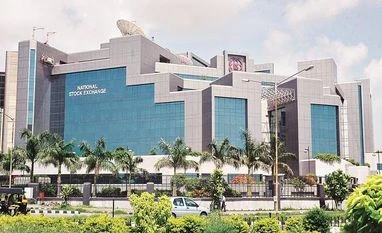
NSE
NSE
Andy Mukherjee | Bloomberg
Last Updated : May 23 2018 | 6:04 PM IST
Is the Nifty 50 a work of art – like Star Wars?

Over the coming weeks, the National Stock Exchange of India Ltd. will assert an intellectual property right over its popular equity benchmark. It's seeking an injunction against Singapore Exchange Ltd., which wants to start its own derivative based on publicly available settlement prices of Nifty futures contracts.
 
Such lawsuits are nothing new in the world of index providers and exchanges.

In 2006, the New York Mercantile Exchange failed to persuade both a US District Court and the Second Circuit Court that Intercontinental Exchange Inc. was violating the copyright of Nymex settlement prices by using them in its over-the-counter derivative contracts. The judges ruled that settlement price wasn't one expression of an idea where others were possible. Rather, it was the only way to express Nymex crude’s closing price. Giving Nymex a copyright would amount to giving it intellectual ownership of… prices. And that would be ridiculous.

The whole “misappropriation” argument – another shouldn't harvest what one has sown – was the legal norm 100 years ago. However, today’s judges realize that too much rights protection for things that are facts – and not creative intellectual property like Darth Vader’s helmet or even his peculiar breathing – could kill finance.

The tussle between India and Singapore over where financial risk pertaining to the former should be traded is getting tiresome. Hedge funds investing in India were perfectly happy with SGX Nifty futures; and NSE earned a license fee from SGX. But in February, NSE and two other Indian bourses ganged up, and said they wouldn't allow their prices to be used in overseas contracts. NSE gave SGX six months to wind up an 18-year-old product.

MSCI Inc. lashed out against the move, saying it could threaten India’s emerging-market classification. SGX, meanwhile, found a clever workaround to protect its own revenue. Its new contracts would merely take published settlement prices of NSE’s contracts on the last Thursday of every month and be called SGX India futures. All investors will know that what they’re really dealing in is the Nifty 50, except NSE won’t get any license fee.

Now that the June launch is approaching, NSE has gone to court. Suppose it does succeed in getting an injunction and also finds a way of enforcing it in Singapore. SGX won't be the only loser. Global money managers will also be affected. Come June 4, there will be no SGX Nifty. If there’s no SGX India futures either, investors will be forced to go direct to the onshore Indian market, or cut their exposure.

Granted, NSE broker-members can now accept U.S. customer funds for trading derivative contracts without first registering with the U.S. Commodity Futures Trading Commission as commission merchants. However, foreigners are reluctant to go anywhere near the Indian tax system. It’s not just the five different levies on capital that are bothersome; dealing with a whimsical bureaucracy that thinks money raised by startups should be taxed as income is a daunting prospect.

Eventually, Indian exchanges will probably want to take overseas clients’ money to a tax-lite regime like GIFT City in Gujarat, Prime Minister Narendra Modi’s alcohol-free home state. To this end, they’re asking that the regulator allow omnibus structures, wherein an India-registered global investment bank can pool clients’ funds and bring them into GIFT. The regulator simply isn’t ready to deal with the money laundering that may occur when a bank hands over direct market access software to a dodgy sub-account. That risk should trump any schadenfreude from making SGX squirm.

One subscription. Two world-class reads.

Already subscribed? Log in

Subscribe to read the full story →
*Subscribe to Business Standard digital and get complimentary access to The New York Times

Smart Quarterly

₹900

3 Months

₹300/Month

SAVE 25%

Smart Essential

₹2,700

1 Year

₹225/Month

SAVE 46%
*Complimentary New York Times access for the 2nd year will be given after 12 months

Super Saver

₹3,900

2 Years

₹162/Month

Subscribe

Renews automatically, cancel anytime

Here’s what’s included in our digital subscription plans

Exclusive premium stories online

  • Over 30 premium stories daily, handpicked by our editors

Complimentary Access to The New York Times

  • News, Games, Cooking, Audio, Wirecutter & The Athletic

Business Standard Epaper

  • Digital replica of our daily newspaper — with options to read, save, and share

Curated Newsletters

  • Insights on markets, finance, politics, tech, and more delivered to your inbox

Market Analysis & Investment Insights

  • In-depth market analysis & insights with access to The Smart Investor

Archives

  • Repository of articles and publications dating back to 1997

Ad-free Reading

  • Uninterrupted reading experience with no advertisements

Seamless Access Across All Devices

  • Access Business Standard across devices — mobile, tablet, or PC, via web or app

Next Story



