Centre's PSU disinvestment drive gets a helping hand from LIC, SBI

The two lapped up the bulk of shares during the offers for sale of HAL, Bharat Dynamics
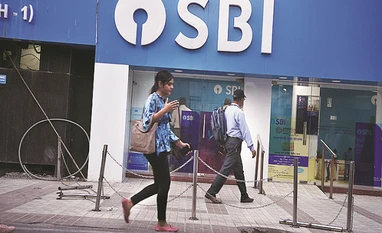
SBI
The life insurance giant subscribed nearly 50 per cent of shares on offer in the HAL OFS, while LIC and SBI put together bought nearly three-fourths of the shares in the BDL OFS
Sundar SethuramanSamie Modak Mumbai
3 min read Last Updated : Oct 20 2020 | 1:11 AM IST
The government’s 2020-21 disinvestment drive would have been off to a rocky start if not for the helping hand from state-owned institutions, such as Life Insurance Corporation (LIC) and State Bank of India (SBI).

The Centre kicked off this fiscal year's disinvestment programme with a Rs 4,900-crore offer for sale (OFS) from Hindustan Aeronautics (HAL) and followed it up with the Rs 770-crore OFS from Bharat Dynamics (BDL).

The latest shareholding data for the two defence stocks revealed that LIC and SBI played white knight to the government.

The life insurance giant subscribed nearly 50 per cent of shares on offer in the HAL OFS, while LIC and SBI put together bought nearly three-fourths of the shares in the BDL OFS.

This is not the first time the likes of LIC have had to bailout PSU divestments. Experts question the viability of the Rs 2-trillion disinvestment target if relatively smaller share sales fail to generate organic demand from investors.

“History is being repeated here; we have seen in the past how IPOs and follow-on offerings had to be bailed out by LIC and other financial institutions. This shows that the government is not getting its pricing right; if it had, the market would have lapped up these issues. The government has to reconsider pricing IPOs, follow-on offerings and OFS,” said Prithvi Haldea, founder, PRIME Database.

In the first half of FY21, the public sector firms had managed to raise only a small fraction of the full-year target despite supportive market conditions. This even as the share sales by private companies hit a record this year. During the calendar year 2020, capital raising through equity-linked instruments has totalled $32.7 billion (Rs 2.4 trillion) — a record for any calendar year.

"The markets are rising despite the economic impact of Covid-19 and fundraising is also at a new high. But investors seem to be indifferent to PSU stocks,” said Arun Kejriwal, founder, Kejriwal Research & Investment Services.

The Centre is expecting the IPO of LIC to do the heavy-lifting this financial year. However, with the draft offer document still far from ready, it is unlikely that the Centre will be able to launch this issue this financial year.

Experts said the government will soon have to identify large disinvestment candidates.

“Small stake sales as seen in the first half will not make much of a difference. Unless there is a big-ticket divestment, the government is unlikely to achieve its disinvestment target. One deal that may help is BPCL where the government has already invited expression of interest (EoI). If this deal goes through, it will help the government in a big way to achieve its targets,” said Kejriwal.

Haldea said the system is flushed with liquidity and the government should make use of this by pricing and timing the share sales carefully.

Besides the two OFSs, the government launched the initial public offering (IPO) of Mazagon Dock Shipbuilders (MDL). The issue garnered the highest-ever subscription for a PSU IPO at 157x.

Experts say Mazagon Dock IPO is an example that if the share sale is priced right, the government won’t have to rely on state-owned institutional shareholders to make up for the demand shortfall. MDL’s shareholding data released on Monday showed that the IPO was subscribed by wide-ranging investors -- over 30 mutual funds and foreign portfolio investors, and more than 20 banks and insurance companies. However, MDL’s IPO size was less than Rs 450 crore.


One subscription. Two world-class reads.

Already subscribed? Log in

Subscribe to read the full story →
*Subscribe to Business Standard digital and get complimentary access to The New York Times

Smart Quarterly

₹900

3 Months

₹300/Month

SAVE 25%

Smart Essential

₹2,700

1 Year

₹225/Month

SAVE 46%
*Complimentary New York Times access for the 2nd year will be given after 12 months

Super Saver

₹3,900

2 Years

₹162/Month

Subscribe

Renews automatically, cancel anytime

Here’s what’s included in our digital subscription plans

Exclusive premium stories online

  • Over 30 premium stories daily, handpicked by our editors

Complimentary Access to The New York Times

  • News, Games, Cooking, Audio, Wirecutter & The Athletic

Business Standard Epaper

  • Digital replica of our daily newspaper — with options to read, save, and share

Curated Newsletters

  • Insights on markets, finance, politics, tech, and more delivered to your inbox

Market Analysis & Investment Insights

  • In-depth market analysis & insights with access to The Smart Investor

Archives

  • Repository of articles and publications dating back to 1997

Ad-free Reading

  • Uninterrupted reading experience with no advertisements

Seamless Access Across All Devices

  • Access Business Standard across devices — mobile, tablet, or PC, via web or app

Topics :PSU DisinvestmentDisinvestmentsbiLife Insurance CorporationHindustan AeronauticsBharat Dynamicsinitial public offerings IPOs

Next Story



