Commodity markets regulator seeks more position disclosures
Reuters Mumbai Commodity markets regulator has launched a fresh attempt to rebuild volume on domestic commodities exchanges, after their credibility was dented by last year's failure of the National Spot Exchange Ltd (NSEL).
The regulator said it had asked its capital market counterpart to require companies to disclose their commodity trading positions on domestic futures markets, seeing this as a way of boosting the credibility of those markets, in turn boosting activity.
Volumes at the commodity exchanges tumbled after NSEL, an exchange run by promoters of the Multi Commodity Exchange, the country's biggest in terms of turnover, defaulted on payments.
Subsequently, the Indian Commodity Exchange (ICEX), which had grown to be the fourth-largest commodity exchange, folded due to plummeting volume. The regulator has been trying to increase disclosure by market participants, hoping to give confidence to smaller companies for instance to hedge on the exchange platforms.
Companies have lately tended to hedge commodity risks on foreign exchanges like the Chicago Board of Trade and the London International Financial Futures Exchange.
"We have written to the Securities and Exchange Board of India and individual companies to disclose their commodity exposure risks and their risk management practices," Ramesh Abhishek, chairman of the Forward Markets Commission, said.
The regulator also wants bank borrowers, who use commodities as their collateral, to hedge their price risk on exchanges. "The platform is there, but awareness and pressure for risk management is not there," said Abhishek.
The regulator is also trying to increase the participation of farmers by promoting the creation of groups in the form of co-operatives for increased bargaining power.
"Work is done by many agencies like NABARD (National Bank for Agriculture and Rural Development) etc on the setting up of co-operatives ... we will continue to bring more awareness and provide more incentives for them to come and participate on exchanges," said Abhishek.
To strengthen the critical component of the physical market as a link to the futures market, the FMC has also asked the exchanges to register their warehouses with the Warehousing Development and Regulatory Authority till Sept. 30.
"A quality warehousing and warehousing receipt financing system is very critical," said Abhishek. "Farmers can come to the warehouse and get some money through financing. Then only they'll have holding power, which is required to have a better price in the future."

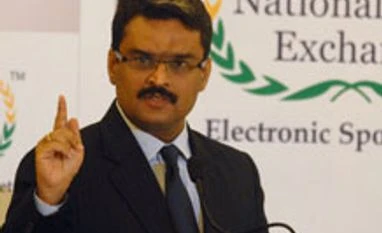 "Commodity markets regulator seeks more position disclosures")


 Connect with us on WhatsApp