Competition hotting up in commodity exchange space
BSE's inritial focus might be on the commodities that are liquid while ICEX is busy planning a relaunch in next few months
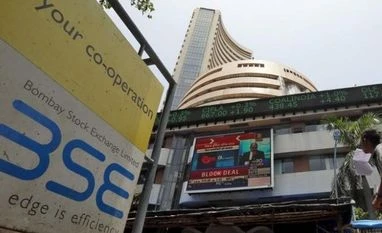
Rajesh Bhayani Mumbai A fresh round of competition is set to begin in commodity derivatives, following the segment coming under the regulations of the Securities and Exchange Board of India (Sebi). The BSE has already applied with Sebi to launch commodity derivatives as a separate segment, while the National Stock Exchange is waiting in the wings. Also, promoters of the currently defunct Indian Commodity Exchange (ICEX) are planning to re-launch the exchange by December.
Through the past few years, the Rs 60-lakh-crore commodity derivatives segment has gone through a wave of consolidation. Till 2009, there were only three national commodity exchanges. After that, ICEX was launched and the Ahmedabad Commodity Exchange graduated to a national exchange, anchored by Kotak Mahindra Bank. In 2012-13, the Universal Commodity Exchange was launched.
Soon, however, a commodity transaction tax was imposed on commodity derivatives, because of which some exchanges started bleeding. Currently, only three commodity exchanges are operational — the Multi Commodity Exchange (MCX), the National Commodities and Derivatives Exchange (NCDEX) and the National Multi Commodity Exchange (NMCE).
Following the merger of the Forward Markets Commission with Sebi last month, Sebi Chairman U K Sinha indicated the fungibility of trading segments to exchanges would be considered in a second phase, once the new arrangement stabilised. That means allowing stock exchanges to launch commodities trading and vice versa wouldn’t be carried out in a hurry.
An NSE spokesperson said, “We are waiting for direction from the regulator. In any case, we are a key shareholder in NCDEX.” Sources said NSE would be interested in non-agri trading, in which MCX is a dominant player. NCDEX hasn’t been able to make a mark in the non-agri segment.
Though BSE hasn’t spelt out the commodities it would focus on, sources said it would initially focus on commodities that were liquid as of now.
ICEX, in which MMTC, IndiaBulls Finance and Reliance Capital have substantial stake, plans to carry out a right issue to increase capital and net worth, with an aim to launch trading by early 2016.
On whether MCX would launch equity trading, an exchange spokesperson said, “We have not yet taken a view on this. The regulator hasn’t spelt out its plan for this and our priority would be to be prepared for new products such as index trading and options, whenever allowed.”
Now, existing commodity exchanges, which were virtually immune from a round of competition due to a first-mover advantage, would face stiff competition, industry observers said. Stock exchanges have much faster technologies compared to commodity exchanges. Also, their technologies can adapt better to option and index trading compared to commodity exchanges.
MCX has several internal issues: It has had no managing director since about two years. During this period, joint managing director P K Singhal has held charge. Also, it has to fill many other senior positions, following some resignations last year. Sources said MCX officials would soon hold talks with Sebi and initiate a process for appointing a managing director.
Another exchange, the Ahmedabad-based NMCE, is struggling to increase market share. The exchange will also have to increase net worth.

 "Competition hotting up in commodity exchange space")


 Connect with us on WhatsApp