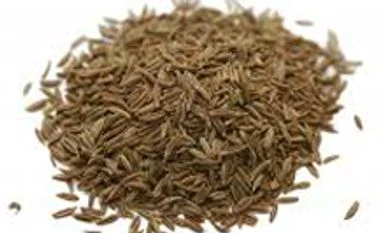
For delivery in March, cumin seed (jeera) jumped almost four per cent by Rs 565 to trade at Rs 14,795 a quintal; far-month contracts moved in a similar range. Turmeric for delivery in April rose four per cent or Rs 320 to trade at Rs 8,322 a qtl. Far-month contracts also shot up in futures trade.
“Both cumin seed and turmeric have been bullish for several months, on estimates of lower production. Farmers shifted sowing to coriander, which has offered around 40 per cent returns in the past two years. A further rise in spices cannot be ruled out,” said Ajay Kedia, managing director of Kedia Commodity Comtrade.
Export demand has remained robust. To boost these further, a delegation chaired by R K Jain, chairman of Indian Merchants’ Chamber, visited Sri Lanka early this month. Yogesh Mehta, co-chairman of the Chamber, said: “India faces huge problems in terms of spices export to Sri Lanka, due to preferential treatment granted by Sri Lanka to Pakistan and China. We hope our visit would bring fruitful results.”
Trade sources estimate a 29 per cent decline in jeera sowing to 603,000 hectares so far this rabi season in two major growing states, Gujarat and Rajasthan, compared to the same time last year. The standing crop was also hit by an erratic monsoon in January. Sowing of turmeric has also been less by at least 10 per cent this year, due to a delayed monsoon and, thereby, lack of soil moisture this year, beside weak realisation last year. There are also concerns over crop loss due to Cyclone Hudhud which hit Andhra in October 2014.
Among other spices, coriander, which has recorded two years of price rise, of around 40 per cent and 36 per cent, respectively, fell three per cent on NCDEX. The variety for delivery in April was traded at Rs 7,131 a qtl on Monday, a decline of 2.1 per cent or Rs 154 from the previous close. Chili Teja contracts for delivery in April posted a decline of 1.25 per cent or Rs 102 to quote at Rs 8,058 a qtl in the afternoon trade.
Extra export orders of jeera are coming to India due to geopolitical tension in Syria and Turkey. Jeera exports were 87,500 tonnes in the first six months (April-September) of 2014-15, a rise of 25 per cent from the corresponding period of the previous year.
You’ve reached your limit of {{free_limit}} free articles this month.
Subscribe now for unlimited access.
Already subscribed? Log in
Subscribe to read the full story →
Smart Quarterly
₹900
3 Months
₹300/Month
Smart Essential
₹2,700
1 Year
₹225/Month
Super Saver
₹3,900
2 Years
₹162/Month
Renews automatically, cancel anytime
Here’s what’s included in our digital subscription plans
Exclusive premium stories online
Over 30 premium stories daily, handpicked by our editors


Complimentary Access to The New York Times
News, Games, Cooking, Audio, Wirecutter & The Athletic
Business Standard Epaper
Digital replica of our daily newspaper — with options to read, save, and share


Curated Newsletters
Insights on markets, finance, politics, tech, and more delivered to your inbox
Market Analysis & Investment Insights
In-depth market analysis & insights with access to The Smart Investor


Archives
Repository of articles and publications dating back to 1997
Ad-free Reading
Uninterrupted reading experience with no advertisements


Seamless Access Across All Devices
Access Business Standard across devices — mobile, tablet, or PC, via web or app
)