Expect earnings downgrade cycle to bottom out by Q2 of FY17
Dilip Bhat The recent data points for the economy, be it the Index of Industrial Production or exports numbers or credit growth (lowest in past 20 years), tell us we have enough headwinds to deal with, despite the efforts of the government to stimulate growth. In addition to this, the near-term will also be largely influenced by fears of a rout of currencies led by the slowdown in China. Everyone is grappling with the gravity and depth of the China problem and the impact it can have. That is the key unknown we have to live with. The fear factor is very overwhelming and the unabated selling by foreign institutional investors is compounding the problem.
However, on the positive side, there are high expectations from the coming Budget, as the past two Budgets left a feeling that the government could have done more. Even more important would be the run-up to the Budget, where we expect the government to be proactive and aggressive on awarding infrastructure contracts ,as this is one sector that can have a multiplier effect on the economy. This government, it must be said, knows this infra story the best. This will act as a tailwind for the markets.
On the reforms side, the rollout of the goods and services tax is expected to boost the gross domestic product (GDP); even if it is delayed, the worst-case scenario is already priced in. The markets will keep an eye out for steps to revive stalled projects and how the government plans to tackle stressed assets. What has helped India in 2015-16, compared to other emerging markets, and is expected to help in the near term, are the falling commodity prices, including of oil and gold, as it enables the government to maintain fiscal discipline. The fall in oil prices, for instance, from $110 a barrel to the current levels is expected to add around $50 billion to the GDP, which is two to 2.5 per cent of our $2.3-trillion economy.
On the corporate side, the consensus earnings growth of 18 per cent for Nifty stocks for FY17 is ambitious, as the first two quarters of FY17 will see only a gradual rise in net profit growth. For FY17, valuation at 16 times is not cheap. If earnings growth does not come through, it will be more expensive. However, the earnings downgrades cycle is expected to bottom out over the next couple of quarters - by around September.
In the current environment, the sectors that can do relatively well would be information technology, pharmaceuticals, automobile and oil marketing companies, while commodities and public sector banks will continue to underperform. Infrastructure and capital goods could see some traction if the contract award activity matches expectations. Given the extreme volatility, investors are better off focusing on a bottoms-up approach, rather than looking at the broader markets for investing decisions.
While there will be short-term issues, we expect the Nifty to touch 9,000-9,200 by March 2017, on the back of a gradual pick-up in the economy translating to higher GDP growth, helping corporate earnings growth as the policies of the government start to kick in. In the short term, amid high volatility, a sell-off which is underway could gradually be replaced by a pre-Budget buying.
The author is joint managing director, Prabhudas Lilladher

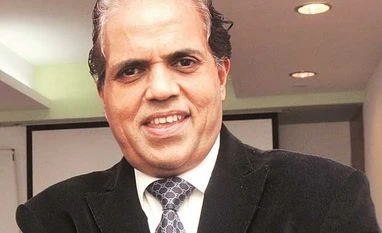 "Expect earnings downgrade cycle to bottom out by Q2 of FY17")


 Connect with us on WhatsApp