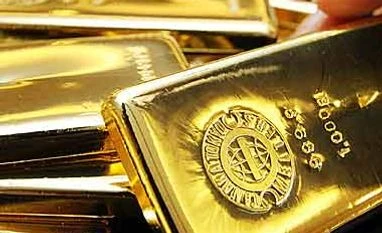
Gold bowls, spoons, glasses imported at 1% duty
Gold utensils attract only 1% import duty, compared to 10-14% for gold and jewellery, converted to bars after import
Rajesh Bhayani Mumbai Ever since the government announced a 10% import duty on gold and 15% on jewellery, jewellers had been looking for loopholes in free trade agreements which allows import of gold jewellery at 1% duty. This, too, was plugged in March when the government imposed countervailing duty on jewellery.
However, jewellers seem to have finally found a route to avoid the high levies: they have started importing gold utensils like glass, spoons, tumblers and bowls at 1% duty which are later converted into bars to make jewellery.
So far, the quantity of gold entered through this route is not alarming since importers are still testing the mechanism. Since April, only about 300-500 grams is estimated to have been imported from April. In the past, jewellery up to 1-2 tonnes per month is reported to have been imported via this route.
Since gold import duty was increased over the past few years, now government has not able to get the FTAs signed. And jewellers have found ways to circumvent government efforts to plug this loophole.
In South Korea, for example, special machinery was bought to make such utensils. Another country from where such concessional gold is entering India is Indonesia.
South Korea and India have signed a Comprehensive Economic Partnership while India and Asean have signed a Free Trade Agreement (FTA). Industry officials say that once import duty on gold is rolled back to at least 5%, “…this arbitrage will end as there is also a cost to import and not just the basic Customs Duty”. A similar argument for reducing gold smuggling is also being made by trade and industry associations.
Almost a year ago, customs authorities were asking for bank guarantee equivalent to the 15% duty, which some jewellers submitted. Since bank guarantee cannot be kept by customs for more than 6 months without finalising exact duty burden, the jewellery started entering the market.
Early this year, a court ruled in favour of these importers for shipments that originated from Indonesia; the case for importers was fought by former finance minister P Chidambaram. Importers argued that consignments were not being released despite checks being done by Indian Customs and validating the country of origin certificate, which was required for clearing concessional duty import under FTA.
In March, the government imposed a countervailing duty of 12.5% on jewellery import, which resulted in the halting of import of jewellery. However other gold articles were not covered, leaving the loophole wide open.
As a bullion dealer puts it, “The importers are just being smart with rules while policy makers fail to think on same lines as a businessman. Thus even if another case is filed against such imports it will end in favour of the importer only.”
Late in August, the Central Board of Excise and Customs issued another circular following complaints about such practices, requiring a 100% bank guarantee that was left to the discretion of customs officials.
Since import of articles were for testing the market, the quantity had not been so high. But the CBEC circular has also led to accusations of discriminatory application. “In case of same consignment, Hyderabad customs is demanding a 100 per cent bank guarantee while some consignments in Delhi are cleared without Bank Guarantee, which is being misused by some large players who have links with South Korea,” a trade analyst told Business Standard, on condition of anonymity.
Leading bullion refiners have alerted tax authorities on how such loopholes are being used. The analyst quoted earlier said “Indian government is planning more free trade agreements, treaties and regional partnerships. For those agreements it is time to remain alert to misuse of the arrangement and plug the gaps.”

 "Gold bowls, spoons, glasses imported at 1% duty")


 Connect with us on WhatsApp