Raamdeo Agrawal sees room for more gains in stocks after Pakistan feud

The S&P BSE Sensex Index has jumped 8 per cent from a low on Feb 19, days after the suicide bombing in Jammu and Kashmir's Pulwama
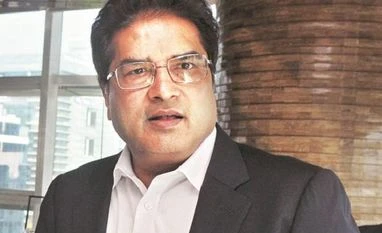
Raamdeo Agrawal, co-founder and joint managing director of Motilal Oswal Financial Services
Raamdeo Agrawal
Nupur Acharya | Bloomberg
4 min read Last Updated : Mar 27 2019 | 7:04 AM IST
The gains in Indian stocks after a breakout in tensions with Pakistan may have room to run, according to a veteran stock picker.

Prime Minister Narendra Modi’s strong response to a suicide bomb that killed 40 Indian troops in Kashmir has increased the chances that a stable government will be elected in upcoming general elections, said Raamdeo Agrawal, who helped develop Motilal Oswal Financial Services Ltd. into a billion-dollar company. And that bodes well for the economy and equities, he said.

Since Modi retaliated with airstrikes against what New Delhi said was a terrorist training camp in Pakistan, at least four opinion polls have shown his ruling coalition may get close to the 272 seats needed for a majority in elections that begin on April 11. Results are due on May 23.

“Close to elections, when these things happen, it generally keeps building up,” Agrawal said in an interview in Mumbai. “In that situation there could be an extraordinary mandate.”

The S&P BSE Sensex Index has jumped 8 per cent from a low on Feb. 19, days after the suicide bombing, making the gauge of Indian equities the third-best performer among 94 primary indexes tracked by Bloomberg.

“The market is on fire,” Agrawal said. “The despondency which was there, that is gone.”

Global funds bought a net $4 billion of Indian shares this month through March 22, set for the biggest monthly inflow in two years. The buying comes after withdrawals of $4.6 billion in 2018, which was the biggest annual outflow in a decade.

Credit Flow

“It is important that you have very clear and decisive leadership, and if we are heading towards that, of course the foreigners love it,” Agrawal said. “Even if what I expect doesn’t come true, the sky isn’t going to fall. There will be volatility in the short term but economy will do well.”

But the 63-year-old joint managing director of Motilal Oswal has a caveat.

Modi -- or whoever wins power -- must use the mandate to fix the “plumbing” of the financial system. The engines of loan growth in the world’s fastest-growing major economy are sputtering after a recent default at an infrastructure lender sent shock waves through the financial system, creating a crisis of confidence for shadow lenders. Further, state-run banks that comprise the bulk of the system are strapped with $190 billion of bad loans.

“In a well-run economy, smooth credit flow round the clock is a must,” said Agrawal, whose firm’s stock has lost more than half its value since January 2018, as investor sentiment soured for non-bank finance companies. “It is the bare minimum.”

Mixed Bag

Modi is trying to secure a second term for his government this spring, five years after he won the largest mandate in three decades in 2014. His tenure has been a mix of big economic reforms including introducing a unified tax system for the country, insolvency and bankruptcy codes for companies and demonetization that struck at the heart of a largely cash-based economy.

The goods and services tax and the surprise decision to cancel high-value currency notes proved to be speed-breakers for economic growth, which led to a surge in unemployment.

“You need to convert your political capital into an economic boom,” Agrawal said. “The economic boom is possible, but you need hard-nosed thinking, vision, strategy and determined execution.”

Still, Agrawal remains positive on Modi, whom he has previously referred to as a “strict headmaster.”
“I’m still a Modi fan,” he said. “If this job issue or this economic agenda gets into his head, he will know how to do it and I’m sure that will become a bigger agenda in the second term.”

One subscription. Two world-class reads.

Already subscribed? Log in

Subscribe to read the full story →
*Subscribe to Business Standard digital and get complimentary access to The New York Times

Smart Quarterly

₹900

3 Months

₹300/Month

SAVE 25%

Smart Essential

₹2,700

1 Year

₹225/Month

SAVE 46%
*Complimentary New York Times access for the 2nd year will be given after 12 months

Super Saver

₹3,900

2 Years

₹162/Month

Subscribe

Renews automatically, cancel anytime

Here’s what’s included in our digital subscription plans

Exclusive premium stories online

  • Over 30 premium stories daily, handpicked by our editors

Complimentary Access to The New York Times

  • News, Games, Cooking, Audio, Wirecutter & The Athletic

Business Standard Epaper

  • Digital replica of our daily newspaper — with options to read, save, and share

Curated Newsletters

  • Insights on markets, finance, politics, tech, and more delivered to your inbox

Market Analysis & Investment Insights

  • In-depth market analysis & insights with access to The Smart Investor

Archives

  • Repository of articles and publications dating back to 1997

Ad-free Reading

  • Uninterrupted reading experience with no advertisements

Seamless Access Across All Devices

  • Access Business Standard across devices — mobile, tablet, or PC, via web or app

Next Story



