Markets are not prepared for a spike in inflation, sub-par monsoon

The Indian markets are among the top performers in the emerging market pack thus far in calendar year 2018 (CY18), with the S&P BSE Sensex and the Nifty50 rallying 9.5 per cent and 7 per cent.

monetary policy, inflation
Puneet Wadhwa New Delhi
Last Updated : Aug 02 2018 | 12:34 PM IST
A sub-par monsoon and a possible rise in inflation may prove to be a double whammy for the stock markets over the next few months. Most analysts believe the markets are not factoring in this possibility yet.

While reviewing the monetary policy, the Reserve Bank of India (RBI) hiked interest rates for the second consecutive time and cited a spike in inflation as one of key risks going ahead and expects it to touch 5 per cent in first quarter of financial year 2019-20 (Q1FY20).

Most analysts agree with the central bank's stand. Dhananjay Sinha, head of institutional research, economist and strategist at Emkay Global, for instance, believes that inflation momentum will continue to be elevated.

Also Read: After RBI policy, what debt investors should bear in mind for portfolios 

“Key factors driving our view are: (a) core inflation has been consistently trending up, headline inflation will eventually converge, (b) government spending has been reflationary in nature, (c) currency depreciation will have a lagged inflationary impact, thereby accentuating the impact of rising global commodity prices, (d) increase in MSPs and aggressive foodgrain procurement have also had a significant impact on retail inflation,” he wrote in a post-policy note.

On the other hand, private weather forecaster, Skymet, has lowered its southwest monsoon forecast for 2018 to ‘below normal’, at 92 per cent of the long period average (LPA). If true, this would hit the production of kharif crops, sowing of which was down almost eight per cent till last week.

Also Read: RBI monetary policy: Hike as expected; next increase likely in 2019

“Sub-par monsoon will impact economic activity. In such a scenario, the RBI may not hike rates in a hurry. Currently, the market is expecting a normal monsoon and a revival in the rural economy, which in turn will help increase the purchasing power and improve capex cycle. All this gets delayed in case the monsoon is not good. However, we need to wait for an assessment by the Indian Metrological Department (IMD) as well. Given the domestic and global cues, the Nifty50 can dip to 10,500 in worst-case scenario, which is its strong support level,” says U R Bhat, managing director, Dalton Capital Advisors.

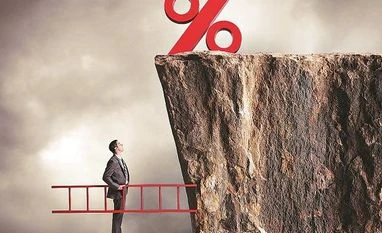
The Indian markets are among the top performers in the emerging market pack thus far in calendar year 2018 (CY18), with the S&P BSE Sensex and the Nifty50 rallying 9.5 per cent and 7 per cent, respectively during this period. 

Also Read: Rate hike: Is RBI expecting stronger inflationary pressures in near future?

“Factors such as rising crude oil, falling currencies and more than average increase in MSPs will continue to push inflation higher. US Fed’s guidance of interest rate hikes for few more quarters will keep global interest rate cycle on the upward trajectory. Thus RBI’s neutral monetary stance in words is only to calm the effects of expectations of future rate hikes. Historically, there has been a negative correlation for equities and interest rates. Soon, the stock market will course correct and recede as interest rate path is decisively up in the medium term,” says Jimeet Modi, founder and CEO, SAMCO Securities.

G Chokkalingam, founder and managing director at Equinomics Research, however, does not expect a sharp reaction from the markets till the consumer price inflation (CPI) breaches six per cent mark on the upside. He believes the corporates will be able to successfully pass on a hike in raw material prices to the consumers. 

“If they are able to do so, it will signal a genuine pick-up in demand despite a rise in product prices. The economy and markets should be able to sustain a higher inflation till the time the CPI does not breach six per cent,” he says.

One subscription. Two world-class reads.

Already subscribed? Log in

Subscribe to read the full story →
*Subscribe to Business Standard digital and get complimentary access to The New York Times

Smart Quarterly

₹900

3 Months

₹300/Month

SAVE 25%

Smart Essential

₹2,700

1 Year

₹225/Month

SAVE 46%
*Complimentary New York Times access for the 2nd year will be given after 12 months

Super Saver

₹3,900

2 Years

₹162/Month

Subscribe

Renews automatically, cancel anytime

Here’s what’s included in our digital subscription plans

Exclusive premium stories online

  • Over 30 premium stories daily, handpicked by our editors

Complimentary Access to The New York Times

  • News, Games, Cooking, Audio, Wirecutter & The Athletic

Business Standard Epaper

  • Digital replica of our daily newspaper — with options to read, save, and share

Curated Newsletters

  • Insights on markets, finance, politics, tech, and more delivered to your inbox

Market Analysis & Investment Insights

  • In-depth market analysis & insights with access to The Smart Investor

Archives

  • Repository of articles and publications dating back to 1997

Ad-free Reading

  • Uninterrupted reading experience with no advertisements

Seamless Access Across All Devices

  • Access Business Standard across devices — mobile, tablet, or PC, via web or app

Next Story




