Shares of rate sensitive sectors such as financials, automobiles and real estate were trading firm after the Monetary Policy Committee (MPC) of the Reserve Bank of India (RBI) kept the repo rate and reverse repo rate unchanged at 6% and 5.75%, respectively, at Wednesday's monetary policy review, keeping in line with what analysts and experts had forecast.
MPC also maintained the cash reserve ratio (CRR) at 4%, but cut statutory liquidity ratio (SLR) requirement by 50 basis points to 19.5%.
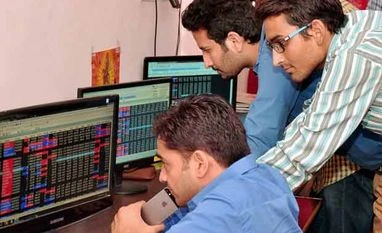
Nifty Bank and Nifty Private Bank index ended flat, while Nifty PSU Bank index up nearly 1% on the National Stock Exchange (NSE). Nifty Auto and Nifty Realty indices closed 0.5% each as compared to 0.6% gain in the Nifty 50 index.
State Bank of India, Andhra Bank, Syndicate Bank, Indian Bank, Punjab National Bank and Bank of Baroda were from the Nifty PSU Bank index up 1% each.
The implementation of the Goods & Service Tax (GST) so far also appears to have had an adverse impact, rendering prospects for the manufacturing sector uncertain in the short term. This may further delay the revival of investment activity, which is already hampered by stressed balance sheets of banks and corporates.
“Consumer confidence and overall business assessment of the manufacturing and services sectors surveyed by the Reserve Bank weakened in Q2 of 2017-18; on the positive side, firms expect a significant improvement in business sentiment in Q3. Taking into account the above factors, the projection of real GVA growth for 2017-18 has been revised down to 6.7% from the August 2017 projection of 7.3%, with risks evenly balanced,” RBI said in fourth bi-monthly monetary policy statement.
The MPC was of the view that various structural reforms introduced in the recent period will likely be growth augmenting over the medium- to long-term by improving the business environment, enhancing transparency and increasing formalisation of the economy. The Reserve Bank continues to work towards the resolution of stressed corporate exposures in bank balance sheets which should start yielding dividends for the economy over the medium term, it added.
“Going ahead, if the risks to growth rise, and inflation undershoots the MPC’s forecast, then there is a possibility of a rate cut. The second-quarter GDP data will be a key deciding factor. If growth sulks down further, it can potentially bring down core inflation, too. A dip in core can provide a faster downside to overall inflation. Meanwhile, reasonably healthy food production aided by good monsoon will keep food inflation low, too,” the rating agency CRISIL said.

 "Rate sensitive shares end firm post RBI policy")











