RBI cuts repo rate by 25 bps; Viral Acharya votes to keep rates unchanged

It was the first monetary policy meeting under the new governor Shaktikanta Das, who took over as Governor, RBI after the abrupt exit of Urjit Patel from the office in December last year.

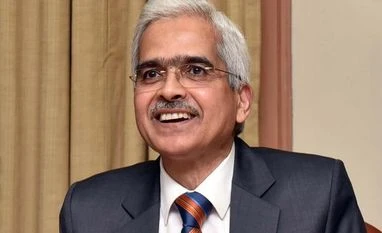
RBI Governor Shaktikanta Das during a press conference in Mumbai  (Photo-KAMLESH PEDNEKAR)
RBI Governor Shaktikanta Das during a press conference in Mumbai (Photo-KAMLESH PEDNEKAR)
SI Reporter New Delhi
Last Updated : Feb 07 2019 | 3:57 PM IST
The Monetary Policy Committee (MPC) of Reserve Bank of India (RBI) in its sixth bi-monthly monetary policy meeting on Thursday cut the repo rate to 6.25 per cent from 6.50 per cent, earlier. The Committee also changed its stance to 'neutral' from the 'calibrated tightening' adopted in October meeting last year. 

The MPC unanimously voted to change the stance to neutral. 

Repo rate is the rate at which the central bank of a country (RBI in case of India) lends to the commercial banks in case of any shortage of funds. 

It was the first monetary policy meeting under the new governor Shaktikanta Das, who took over as Governor, RBI after the abrupt exit of Urjit Patel from the office in December last year. 
 
The reverse repo rate stands at 6 per cent.

CPI is seen at 2.8 per cent in January-March, 2019 and 3.2-3.4 per cent in April-September 2019, the committee said in its press release. 

As many as 32 of the 43 economists surveyed by Bloomberg as of Wednesday had expected the central bank to keep the repo rate steady but drop its hawkish bias.

A softer stance would bode well for Prime Minister Narendra Modi’s government, which wants to boost lending and lift growth as it faces elections by May, said a Reuters report dated February 5. The ruling Bharatiya Janata Party is already in an election mode. In its Interim Budget on February 1, the government doled out cash to farmers and tax cuts to the middle-class, even as it missed the target for fiscal deficit for the second year in a row. 

Under the former RBI Governor Urjit Patel, the RBI had raised interest rates twice last year and stuck to a 'calibrated tightening' stance in December.

On the macro front, India's retail inflation in December eased to 2.19 per cent from a rise of 2.33 per cent in November. In its December policy statement, the RBI forecast headline inflation at 3.8 per cent to 4.2 per cent in the six months starting April, not very far from its medium-term target of 4 per cent.

With headline inflation hovering at multi-month lows, India’s real interest rate makes it a standout in the region, and harmful to economic growth, analysts including Bank of America Merrill Lynch’s Chief Economist Indranil Sen Gupta had said before the decision announcement. 

One subscription. Two world-class reads.

Already subscribed? Log in

Subscribe to read the full story →
*Subscribe to Business Standard digital and get complimentary access to The New York Times

Smart Quarterly

₹900

3 Months

₹300/Month

SAVE 25%

Smart Essential

₹2,700

1 Year

₹225/Month

SAVE 46%
*Complimentary New York Times access for the 2nd year will be given after 12 months

Super Saver

₹3,900

2 Years

₹162/Month

Subscribe

Renews automatically, cancel anytime

Here’s what’s included in our digital subscription plans

Exclusive premium stories online

  • Over 30 premium stories daily, handpicked by our editors

Complimentary Access to The New York Times

  • News, Games, Cooking, Audio, Wirecutter & The Athletic

Business Standard Epaper

  • Digital replica of our daily newspaper — with options to read, save, and share

Curated Newsletters

  • Insights on markets, finance, politics, tech, and more delivered to your inbox

Market Analysis & Investment Insights

  • In-depth market analysis & insights with access to The Smart Investor

Archives

  • Repository of articles and publications dating back to 1997

Ad-free Reading

  • Uninterrupted reading experience with no advertisements

Seamless Access Across All Devices

  • Access Business Standard across devices — mobile, tablet, or PC, via web or app

Next Story