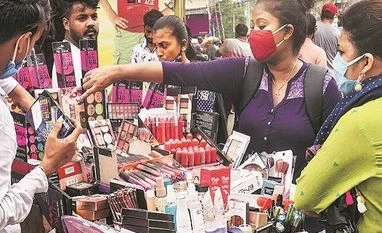
Recovery in demand, consumption stocks likely to be short-lived: Analysts

Measures announced by the FM on Monday, according to A K Prabhakar, head of research at IDBI Capital, though will give some fillip to consumption, demand will be limited into buying only essentials

beauty care products, fmcg, sales, demand, consumers, FMCG, women
Consumption boost may be short-lived, say analysts
Puneet Wadhwa New Delhi
4 min read Last Updated : Sep 21 2021 | 4:03 PM IST
A consumption-led recovery in the economy will take its own time and will not be helped much by the government’s measures announced on Monday, say analysts, who feel that the monetary help will be used to stock up on essentials instead of high-end discretionary items. The markets, they say, are well aware of the government’s fiscal constraints and any recovery in demand and consumption-related stocks due to the measures announced will be short-lived.

ALSO READ: Govt trains guns on boosting consumer & capital demand with Rs 73K cr push

“The markets are not too enthused by the measures. What is more important for the markets now is that economic recovery should sustain. The measures will only provide a short-term boost and then fizzle out. Sectors such as auto, capital goods fast moving consumer goods (FMCG) can see demand taper over the next few quarters,” says G Chokkalingam, founder and managing director at Equinomics Research.

Finance Minister Nirmala Sitharaman on Monday announced measures to boost capital expenditure and stimulate consumer demand, including advance part-payment of allowances to central government employees for spending during the festival season. That apart, central government employees who get Leave Travel Concession (LTC) for their travel will get an equivalent of the amount even without travelling, which can be used to fund purchase of goods that attract goods and services tax (GST) of 12 per cent or more.

“It is unlikely that employees will cash in their LTC as well as take an advance to buy consumer goods. It could be of the two more likely. The overall impact on consumption will be positive at the margin, though muted as the measures are more of a ‘nudge’ through an incentive rather than a cash transfer. For sure, some of the white goods manufacturers and auto dealers could see an increase in demand this festival season,” feels Madan Sabnavis, chief economist at CARE Ratings. READ MORE HERE

Following the development, most consumption-driven stocks lost ground at the bourses. The Nifty Consumption index – a gauge of the performance of consumption-related stocks on the National Stock Exchange (NSE) – slipped 0.2 per cent. Losses in some of the individual stocks were steeper with Bajaj Auto, Hero MotoCorp, Jubilant FoodWorks, Voltas, Colgate-Palmolive, D-Mart and Zee Entertainment slipping 1 per cent to 6.1 per cent.

Measures announced by the FM on Monday, according to A K Prabhakar, head of research at IDBI Capital, though will give some fillip to consumption, the demand will get limited into buying only essentials. “The government employees form a large part of the entire consumption basket; so the measures will help them and in turn the overall demand. That said, they will not rush to buy high-end SUVs etc, but look at essentials such as electronic goods, entry / mid-level cars etc instead. There is still a lot of pent up demand that needs to be released,” he says.

TRACK CONSUMER STOCKS HERE

From the lows of March 2020, the benchmark indices – the S&P BSE Sensex and the Nifty 50 – have gained over 50 per cent and have outperformed emerging markets (EM) since April beginning. Three factors - a differentiated policy response, strong corporate action through the pandemic and an attractive starting point of relative valuations, say analysts at Morgan Stanley have helped India achieve this feat. Going ahead, they too suggest the policy measures adopted by the government will go a long way in attracting foreign flows into equities.

“We have been arguing that for this outperformance to be sustained, India needs to continue to deliver policy that lifts India’s potential growth in the eyes of market participants,” wrote Ridham Desai, head of India research and India equity strategist at Morgan Stanley in an October 9 co-authored note with Sheela Rathi.

One subscription. Two world-class reads.

Already subscribed? Log in

Subscribe to read the full story →
*Subscribe to Business Standard digital and get complimentary access to The New York Times

Smart Quarterly

₹900

3 Months

₹300/Month

SAVE 25%

Smart Essential

₹2,700

1 Year

₹225/Month

SAVE 46%
*Complimentary New York Times access for the 2nd year will be given after 12 months

Super Saver

₹3,900

2 Years

₹162/Month

Subscribe

Renews automatically, cancel anytime

Here’s what’s included in our digital subscription plans

Exclusive premium stories online

  • Over 30 premium stories daily, handpicked by our editors

Complimentary Access to The New York Times

  • News, Games, Cooking, Audio, Wirecutter & The Athletic

Business Standard Epaper

  • Digital replica of our daily newspaper — with options to read, save, and share

Curated Newsletters

  • Insights on markets, finance, politics, tech, and more delivered to your inbox

Market Analysis & Investment Insights

  • In-depth market analysis & insights with access to The Smart Investor

Archives

  • Repository of articles and publications dating back to 1997

Ad-free Reading

  • Uninterrupted reading experience with no advertisements

Seamless Access Across All Devices

  • Access Business Standard across devices — mobile, tablet, or PC, via web or app

Topics :Nirmala SitharamanFinance ministerconsumer durable stocks

Next Story