Ripples of US tariffs hurt Ballarpur Industries

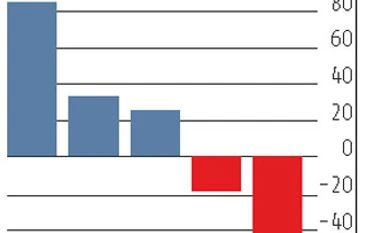
Losses of domestic paper makers have jumped 5 times in 12 months
graph
Anurag JoshiLianting Tu/Bloomberg Mumbai/ Hong Kong
Last Updated : Mar 24 2017 | 2:22 AM IST
Creditors of India’s largest paper maker, Ballarpur Industries, could face costly unintended consequences from punitive US duties on some of the company’s Asian competitors.

Ballarpur invested heavily in recent years to modernise its production facilities, and now may not be able to avoid defaulting on its debts, Fitch Ratings said Monday. The imposition by the US of duties on Chinese and Indonesian paper in mid-2015 couldn't have come at worse time for Ballarpur, as it prompted companies from those nations to seek more sales in India. India itself is reducing paper import tariffs.

The result is a toxic mix for Ballarpur, founded in 1945, and now in an industry under siege from overcapacity and increased digitisation, as people turn to e-readers instead of books and newspapers. It is also a reminder of the far-reaching consequences that protectionist measures can have at a time when President Donald Trump is just putting shape to his America First policies.

Fitch said Monday that a default on the Ballarpur’s obligations “appears inevitable” and it lowered the company’s long-term issuer rating to C, one level above default grades. The group’s 9.64 per cent perpetual bonds were worth 38.375 cents to the dollar on Wednesday, their lowest in seven months.

Shravani Dang, a company’s spokeswoman in New Delhi, declined to comment on Ballarpur’s plans to meet its obligations, including commercial paper payments. The company in February deferred coupon on $200 million perpetual bonds sold in 2011.

“Given the severe liquidity constraints, existing lenders are unlikely to grant further credit,” Akash Gupta, an associate director at Fitch, said in an interview. “If that is the case, they will struggle to get operations back on track as well as in addressing maturities."

The 60 listed Indian paper makers generated a total loss of $99.4 million in the past 12 months, widening from a loss of $18.7 million in the previous year, according to Bloomberg-compiled data. 

Paper imports into India have doubled since 2010 and Chinese and Indonesian producers are diverting excess inventory into the nation after the US tariffs, the Indian Paper Manufacturers Association said in a statement to government last November, requesting relief.

Ballarpur has a Rs 50-crore bond due June 21 and a Rs 60-crore bond due September 29, according to Bloomberg-compiled data. Ballarpur is part of the Avantha Group, an engineering, foods to paper conglomerate, run by multi-millionaire Gautam Thapar.

“The company hasn’t been able to operate at optimal capacity due to inadequate working capital,” said Fitch’s Gupta.

One subscription. Two world-class reads.

Already subscribed? Log in

Subscribe to read the full story →
*Subscribe to Business Standard digital and get complimentary access to The New York Times

Smart Quarterly

₹900

3 Months

₹300/Month

SAVE 25%

Smart Essential

₹2,700

1 Year

₹225/Month

SAVE 46%
*Complimentary New York Times access for the 2nd year will be given after 12 months

Super Saver

₹3,900

2 Years

₹162/Month

Subscribe

Renews automatically, cancel anytime

Here’s what’s included in our digital subscription plans

Exclusive premium stories online

  • Over 30 premium stories daily, handpicked by our editors

Complimentary Access to The New York Times

  • News, Games, Cooking, Audio, Wirecutter & The Athletic

Business Standard Epaper

  • Digital replica of our daily newspaper — with options to read, save, and share

Curated Newsletters

  • Insights on markets, finance, politics, tech, and more delivered to your inbox

Market Analysis & Investment Insights

  • In-depth market analysis & insights with access to The Smart Investor

Archives

  • Repository of articles and publications dating back to 1997

Ad-free Reading

  • Uninterrupted reading experience with no advertisements

Seamless Access Across All Devices

  • Access Business Standard across devices — mobile, tablet, or PC, via web or app

Next Story



