Vegetables price jump 40% as coronavirus lockdown hits transportation

In Mumbai, cabbage and cauliflower were available at Rs 80 a kg and Rs 120 a kg, respectively, as against Rs 60 and Rs 80 a kg late last week.
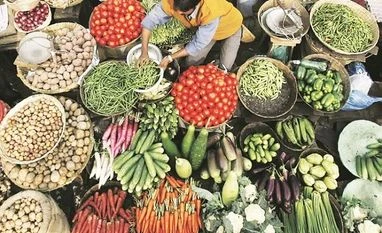
food, vegetables, inflation, retail inflation
With the state government monitoring supplies of essential commodities, the impact is minimal in and around Delhi with prices of vegetables moving in a narrow range.
Dilip Kumar Jha Mumbai
4 min read Last Updated : Mar 28 2020 | 8:12 PM IST
Vegetables in retail markets of major cities have become costlier by 30-40 per cent in the last one week due to a sharp increase in their transportation cost amid fears of supply disruptions amid the the 21-day lockdown imposed across the country to check the growing spread of coronavirus the (Covid-19).
 
In Kolkata on Saturday, the lady finger was available at Rs 40 a kg as compared to Rs 30 a kg about a week ago. In Mumbai, cabbage and cauliflower were available at Rs 80 a kg and Rs 120 a kg, respectively, as against Rs 60 and Rs 80 a kg late last week. While the prices of tomatoes and potatoes in Delhi's retail markets jumped 25 per cent in one week, in Mumbai the price of tomato rose by 70 per cent in the same period.
 
With the entire world struggling to cope with Covid-19 and India being no exception, rising vegetable prices would impact consumers' kitchen budget during the ongoing lockdown period. Retailers, however, blame the sharp rise in vegetable prices on a steep increase in transportation costs.
 
"We have to walk 9 kilometres from our retail store to the mandi to fetch vegetables due to non-availability of public transport. After purchasing of goods, however, we need to wait for hours to get a private vehicle to transport vegetables to the retail store.

The transporter charges four times higher (Rs 400 now) than the usual charge of Rs 100 earlier. In the mandi too, vegetables have become costlier. So we don't have any option but to pass on the high cost to consumers," said Chandeshwar Shah, a vegetable retailer at Ballygunge, Kolkata.
 
In Mumbai and other metro cities like Chennai and their respective suburbs, vegetables have become costlier too. The government-owned National Horticultural Board (NHB), which tracks wholesale and retail prices of vegetables, has not updated its price data since last week.
 
With the state government monitoring supplies of essential commodities, the impact is minimal in and around Delhi with prices of vegetables moving in a narrow range.
 
Meanwhile, mandis selling essential commodities have been operating regularly with farmers, transporters and stockists taking utmost care for their protection from Covid-19 which has claimed 19 lives in India and infected more than 900 others.
 
Mathadis in the Agricultural Produce Market Committee (APMC) in Vashi near Mumbai are, however, working cautiously and have demanded sanitisers, masks and health insurance from APMC officials for operating smoothly. Mandi management, along with traders and mathadis, have decided to operate 5 days a week till March 31 and remain closed on Thursday and Sunday for sanitisation and disinfestation.
 
"Farmers have been advised to harvest vegetables only with assured supply either to mandis or bulk buyers. We have seen vegetables supply to mandis remained lower. Farmers are in a panic selling mood," said Sunil Singatkar, Director, APMC Vashi.
Many such mandis across the country are operating for a limited time with restricted access for public and allowing only bulk consumers to lift a large quantity of vegetables to prevent spread of Covid-19.
 
Meanwhile, data compiled by the Union Ministry of Food and Consumer Affairs shows potato prices jumped by 26 per cent to trade at Rs 37 a kg as compared to Rs 29 a kg about a week ago. Potato has become costlier by 60 per cent in the last one month. Prices of onion and tomato, according to the Ministry of Consumer Affairs, have risen by 8 per cent and 25 per cent to trade currently at Rs 40 a kg and Rs 34 a kg, respectively. Similarly, additives like coriander leaves have become costlier in retail to trade at Rs 20 a bundle today as against Rs 10 a bundle about a week ago.
 
In view of the problems being faced by consumers, the government has decided to provide relaxation in the lockdown norms and allow market access to agencies engaged in procurement of agricultural commodities. In a notification issued on Saturday, the Ministry of Agricultural and Farmers' Welfare said that all activities relating to mandis, farming activities, manufacturing and packaging units and movement of harvested commodities are exempt from lockdown

One subscription. Two world-class reads.

Already subscribed? Log in

Subscribe to read the full story →
*Subscribe to Business Standard digital and get complimentary access to The New York Times

Smart Quarterly

₹900

3 Months

₹300/Month

SAVE 25%

Smart Essential

₹2,700

1 Year

₹225/Month

SAVE 46%
*Complimentary New York Times access for the 2nd year will be given after 12 months

Super Saver

₹3,900

2 Years

₹162/Month

Subscribe

Renews automatically, cancel anytime

Here’s what’s included in our digital subscription plans

Exclusive premium stories online

  • Over 30 premium stories daily, handpicked by our editors

Complimentary Access to The New York Times

  • News, Games, Cooking, Audio, Wirecutter & The Athletic

Business Standard Epaper

  • Digital replica of our daily newspaper — with options to read, save, and share

Curated Newsletters

  • Insights on markets, finance, politics, tech, and more delivered to your inbox

Market Analysis & Investment Insights

  • In-depth market analysis & insights with access to The Smart Investor

Archives

  • Repository of articles and publications dating back to 1997

Ad-free Reading

  • Uninterrupted reading experience with no advertisements

Seamless Access Across All Devices

  • Access Business Standard across devices — mobile, tablet, or PC, via web or app

Topics :Coronavirusvegetable pricesTransportation

Next Story



