
SpiceJet converts three Bombardier Q400 passenger aircraft into freighters
The three converted Q400 cargo planes will primarily be used for operations to smaller towns and cities
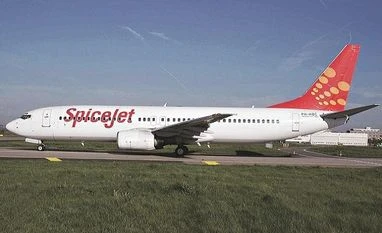 "SpiceJet converts three Bombardier Q400 passenger aircraft into freighters")
WebinarsNew
Deep DiveNew
Explore Business Standard
The three converted Q400 cargo planes will primarily be used for operations to smaller towns and cities
Private airline SpiceJet has converted three of its Bombardier Q400 passenger aircraft into freighters.
With the addition of these three cargo planes, SpiceJet now has a dedicated fleet of eight freighter aircraft. The three converted Q400 cargo planes will primarily be used for operations to smaller towns and cities.
"Our cargo operations are doing extremely well and to address the increased demand we have converted three Q400 passenger aircraft into freighters," said Chairman and Managing Director Ajay Singh.
"These are our old 78-seater Q400s and have a cargo capacity of 8.5 tonnes each. These smaller cargo planes are perfectly suited for operations to tier 2 and 3 cities and to remote and hilly areas in the North-East, Jammu and Kashmir and Himachal Pradesh."
SpiceJet's cargo network spans over 25 international destinations most of which it added during the Covid-19 lockdown period. "We see tremendous potential in the cargo business and will continue to expand in the times to come," said Singh.
The carrier transported over 12,000 tonnes of cargo on more than 1,690 flights since the nation-wide lockdown began transporting medical and surgical supplies, sanitisers, face masks, coronavirus rapid test kits and IR thermometers.
SpiceJet has aggressively expanded its international cargo network operating cargo flights to and from Sudan, South Korea, Cebu, Huangzhou, Tashkent, Baghdad, Cambodia, Guangzhou, Abu Dhabi, Kuwait, Singapore, Ho Chi Minh, Hong Kong, Shanghai, Bangkok, Colombo, Dubai, Kabul, Myanmar, Sharjah, Male, Kuala Lumpur, Ukraine, Nepal, Indonesia and other places.
It had launched dedicated cargo arm SpiceXpress in September 2018. SpiceJet operated the country's first cargo-on-seat flight on April 7 carrying vital supplies in the passenger cabin and belly space.
Since then, the airline has been regularly deploying its B737 and Q400 passenger aircraft to carry cargo in the passenger cabin.
(Only the headline and picture of this report may have been reworked by the Business Standard staff; the rest of the content is auto-generated from a syndicated feed.)
First Published: May 28 2020 | 10:23 AM IST


 Connect with us on WhatsApp