
20 million people in 4 African countries on brink of famine: UN agencies
Inaction will witness repeat of 2010-11 famine in Somalia as 250,000 people died, says FAO staffers
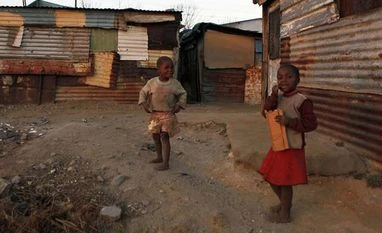 "20 million people in 4 African countries on brink of famine: UN agencies")
Explore Business Standard
Inaction will witness repeat of 2010-11 famine in Somalia as 250,000 people died, says FAO staffers
People in northeastern Nigeria, Somalia, South Sudan, and Yemen face an "unprecedented" humanitarian crisis due to a combination of drought and armed conflict with fundamentalist insurgencies, such as the Boko Haram and Al-Shabaab groups.
Twenty million people are on the brink of famine, senior staffers at the UN Food and Agriculture Organisation (FAO) and the World Food Programme (WFP) said.
"It's the biggest crisis any of us have ever seen," Xinhua quoted Denise Brown, Director of Emergencies at the WFP, as saying in Rome on Thursday.
She described the situation as millions of people "standing on the edge of a cliff, and the number keeps increasing."
Conflict and adverse climate are causing animals to die and fields to go untilled in a part of the world in which 80 per cent of the population relies on farming and fishing to survive, according to FAO Director of Emergency and Rehabilitation Division Dominique Burgeon.
If action is not taken, the world will witness a repeat of the 2010-2011 famine in Somalia, in which 250,000 people died because the international community did not act soon enough, the senior staffers said.
Famine is defined as occurring when 20 per cent of the population is starving, 30 per cent of the children are extremely malnourished, and the mortality rate has reached double its average, explained WFP chief economist Arif Husein.
He added that this many malnourished children means an entire generation will be permanently damaged.
Bourgeon said that the people who fled the Somalia 2010-2011 famine are still in refugee camps.
"It's extremely difficult for them to go back," he said. "So the best way to avoid (migration) is to help them stay where they are."
This means not only emergency aid but also long-term policies such as providing crop seeds, irrigation systems, fisheries, equipment, and veterinary care for livestock.
"We must not just keep people from the edge of the cliff -- we must pull them away from the cliff," he said.
The WFP assists 80 million people in 80 countries each year. Its executive board consists of 36 member states, and its principal donors are governments. In 2016, it raised over $5.9 billion.
The FAO is a UN agency dedicated to eradicating hunger and promoting sustainable use of natural resources.
First Published: May 19 2017 | 10:53 AM IST


