
Daily fuel price changes to continue despite rise in petrol prices: Pradhan
Daily revision allows any fall in international oil rates to be passed on to consumers immediately
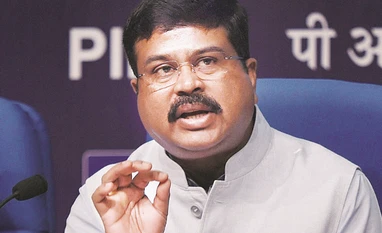 "Daily fuel price changes to continue despite rise in petrol prices: Pradhan")
Explore Business Standard

Associate Sponsors
Co-sponsor
Daily revision allows any fall in international oil rates to be passed on to consumers immediately
Petroleum Minister Dharmendra Pradhan on Monday said the dynamic pricing regime, whereby prices of transport fuels are revised daily, would continue despite petrol prices going up by over Rs 6 per litre since the scheme was introduced pan-India from mid-June.
Speaking to reporters here after taking over additional charge of the Skill Development and Entrepreneurship Ministry following his elevation to cabinet rank on Sunday, Pradhan said dynamic pricing ensures that the benefit of even the smallest change in international oil prices can be passed down the line to the dealers and the end-users.
"Daily revision in prices is good. When we started daily revisions on June 16, rates dropped in the first fortnight. Thereafter, it has increased mainly because of rise in global oil prices," he said.
"It is in the interest of consumers. I don't think that there is a need for change in it," he said.
Daily revision allows any fall in international oil rates to be passed on to consumers immediately rather than having to wait for 15 days as in the old system, he added.
"Should prices be hiked by Rs 2.50 or Rs 3 per litre in one go or they should be spaced out in small doses," he asked.
Since daily revision was implemented, petrol prices have increased by Rs 6.60 to reach Rs 69.66 a litre in Delhi, while that of diesel have risen by Rs 4.02 to Rs 57.38. Petroleum products do not come under GST and prices vary at locations according to state taxes.
In the first two weeks of dynamic pricing, petrol prices fell by over Rs 2 a litre and of diesel by more than Re 1.
Earlier, the state-run oil marketing companies used to review and revise retail fuel prices every fortnight on the basis of global crude oil prices, while the revision took effect from midnight.
Prices of petrol and diesel are now revised at 6 a.m. every day.
Dynamic fuel pricing is followed in many developed countries and India opted for it as a response to the recent volatility in global crude oil prices.
Pradhan also said that his ministry is seeking approval of the safety organisations for starting home delivery of fuel.
"The issue involves safety and we have to first get their approval before a pilot is launched," he said. "We are trying to secure permission."
According to the latest official data, the Indian basket, comprising 73 per cent sour-grade Dubai and Oman crudes, and the balance in sweet-grade Brent, breached the psychologically-important $50-a-barrel-mark last week.
First Published: Sep 04 2017 | 4:11 PM IST

