A Marvel-lous creator

How Stan Lee invented universes and changed entertainment
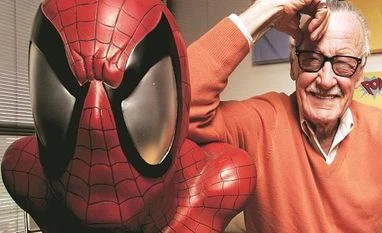
Stan Lee
Almost as famous as his Marvel superheroes, Stan Lee was known for bringing complex emotional life to comic characters (Photo: Bloomberg)
Business Standard Editorial Comment
Last Updated : Nov 17 2018 | 7:05 PM IST
Over the past decade, the American comics publishing house Marvel has become one of the great global cultural juggernauts, thanks to its billion-dollar movies and its half a dozen television shows. Last week, the man whose name is associated with Marvel more than any other, its former editor-in-chief Stan Lee, died at the age of 95 — setting off worldwide mourning of the sort usually seen when a great movie star dies. Lee, however, was a familiar face; he had made dozens of short, special appearances in Marvel superhero movies, and waiting for the Lee cameo was part of the anticipation built up around those films. But, of course, Lee himself was far more than a bit-part actor and a genial ambassador for Marvel. He had had a hand in creating almost all the characters whose stories were being told — Iron Man, Black Panther, Thor and so on.

Back in the 1960s, when Lee was writing most of these stories, comic books were not particularly cerebral. They were escapist, in some cases juvenile, in other cases titillating. Lee’s innovations helped cement what is in retrospect called the “silver age” of comics, in which there was a renewed focus on story-telling and on the internal lives of the lead characters — Marvel superheroes were in many cases deeply conflicted individuals. The superheroes of Marvel’s great rival, DC — Batman and Superman among them — were broadly humourless, and lived in cities named Gotham and Metropolis while battling villains who seemed far removed from the real world. Marvel's, meanwhile, lived in real cities, like New York, and had to deal with real issues such as racism and the Vietnam War. Lee, who was of Jewish heritage, had a keen appreciation of progressive causes. The X-Men comics he oversaw, in which humans turn on a despised race of mutants among them, were a way of talking about anti-Semitism without actually mentioning anti-Semitism; by introducing the first African superhero, Black Panther, in the mid-1960s, he chose to imagine an Africa that would emerge from the colonial era powerful, independent, and admirable. That vision has lost none of its appeal, as the recent stunning success of the Black Panther movie showed.

Some of this difference between the two stables of heroes has persisted to this day. A Marvel movie is much more light-hearted than a DC movie; it is far more likely to feature a wise-cracking lead character. Lee also made sure that the comics he oversaw were interlinked, and self-referential, with little notes on the pages directing readers to another Marvel comic for elucidation of some throwaway reference. He felt that readers needed to feel they were looking at a complete and integrated universe. This is also reflected in today’s “Marvel Cinematic Universe”, in which multiple different characters and stories are being told in a loosely inter-connected fashion.

Lee himself did not have an uncontroversial life. In recent years, as his health and his awareness deteriorated, other charges were also levelled against him — including of sexual harassment, made by the nurses who were taking care of him. There were also accusations of elder abuse, after Lee signed a document that his aides were seeking to “gain control over my assets”. But even before that, for years he has been followed by accusations that he did not give his artists and other writers enough credit. He died a rich man, while his long-time collaborator Jack Kirby somehow never benefited as much. 
Kirby did not own rights over many of the characters he created with Lee, for example. 

Lee himself frequently had to fight legal battles to make sure that the big studios paid him what he deserved. In the end, it is worth noting that it was Lee's imagination that created characters who have, over the past decade alone, earned $26 billion. 

One subscription. Two world-class reads.

Already subscribed? Log in

Subscribe to read the full story →
*Subscribe to Business Standard digital and get complimentary access to The New York Times

Smart Quarterly

₹900

3 Months

₹300/Month

SAVE 25%

Smart Essential

₹2,700

1 Year

₹225/Month

SAVE 46%
*Complimentary New York Times access for the 2nd year will be given after 12 months

Super Saver

₹3,900

2 Years

₹162/Month

Subscribe

Renews automatically, cancel anytime

Here’s what’s included in our digital subscription plans

Exclusive premium stories online

  • Over 30 premium stories daily, handpicked by our editors

Complimentary Access to The New York Times

  • News, Games, Cooking, Audio, Wirecutter & The Athletic

Business Standard Epaper

  • Digital replica of our daily newspaper — with options to read, save, and share

Curated Newsletters

  • Insights on markets, finance, politics, tech, and more delivered to your inbox

Market Analysis & Investment Insights

  • In-depth market analysis & insights with access to The Smart Investor

Archives

  • Repository of articles and publications dating back to 1997

Ad-free Reading

  • Uninterrupted reading experience with no advertisements

Seamless Access Across All Devices

  • Access Business Standard across devices — mobile, tablet, or PC, via web or app

Next Story



