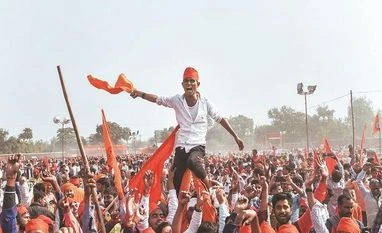
As the country nears another Lok Sabha election in 2019, competitive Hindutva over the Ram Janmabhoomi-Babri Masjid issue is taking centre stage. It is unfortunate that politicians are giving in to the temptation of playing to the gallery and ratcheting up the rhetoric in this regard. Over the weekend, the Vishva Hindu Parishad (VHP) organised a so-called “Dharam Sabha” in Ayodhya and claimed that it was the largest congregation of “Ram bhakts” since December 6, 1992, when Hindu vigilantes, often referred to as “kar sevaks” (or, those who offer their services), razed the Babri Masjid. The Sabha was described as the VHP’s “last effort” to clear the hurdles for the construction of a Ram temple in Ayodhya. The voices from the VHP camp were provocative. Its vice-president warned the central government that the Hindu community would not settle for anything less than the entire swathe of the Ram Janmabhoomi site for the temple. Other leaders said the Hindus were losing patience with the legal process and want the Centre to explore all options under the Constitution to ensure that a temple is constructed, regardless of the proceedings in the apex court.
The worrying aspect is that the VHP is not alone in its demand. In his annual Dussehra speech in October, Mohan Bhagwat, the head of the Rashtriya Swayamsevak Sangh (RSS), raised the demand for a temple and made it clear that Hindu outfits were likely to make this demand a political one as India entered a hectic election cycle. In that speech, Mr Bhagwat had implied that the apex court should dispose of the Ayodhya suit on an electorally-determined schedule. More worryingly, he urged the government to bring in a law enabling the construction of a temple at Ayodhya in the “national interest”. While any citizen can hold such beliefs as a private citizen in a free society, it is nothing short of alarming when people like Mr Bhagwat join the rabble-rousing.

 "Let the court decide")












 Connect with us on WhatsApp