Little for the vulnerable

Budget didn't address special needs of a pandemic year
Little for the vulnerable
MNREGA
Business Standard Editorial Comment
3 min read Last Updated : Feb 03 2021 | 12:42 AM IST
The Union Budget for 2021-22 set out a new agenda for growth and recovery, based around an expansion of capital expenditure, fuelled by considerable borrowing from the market and small savings. In any other year, the effectiveness of this strategy would naturally have been the main question to be asked about the Budget. But 2020-21 is not a normal year; it is one in which a pandemic has ravaged the global and Indian economy, and in which a large number of Indians have been rendered jobless or destitute. The question necessarily also must be, therefore: How well did this Budget address the concerns of those most vulnerable to the disruptions of the pandemic — the lowest three deciles of the Indian income distribution?

The only fair answer is: Not well. The fact is that strategies for creating more employment opportunities in the medium and long term through upgrading infrastructure may well have their benefits — but in a year when the short-term concerns of the most vulnerable are so intense, a long-term focus may not address immediate problems. This is not to say that a welfarist approach to policy should be the default approach for Budgets; it is merely to point out that, at a time of crisis, a Budget should be judged also in terms of how it seeks to ameliorate the most severe effect of that crisis. Seen from this perspective, the best that can be said about the Budget’s approach to the relevant expenditure heads is that the Union finance ministry has come to the conclusion that the pandemic is over.

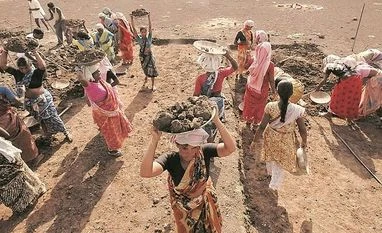
The food subsidy, for example, may have been stretched over the past year because of the disbursement from the public distribution system at the height of the lockdown. Yet it is not clear why the outlay for the Mahatma Gandhi National Rural Employment Guarantee Scheme has also been slashed by a third, given that there is ample evidence of continuing joblessness. Altogether, subsidies have been crunched significantly — a laudable achievement in most years, but a priority worth questioning in this one. In addition, there are few other avenues in the Budget for detecting a renewed focus on those at risk. Some rural infrastructure schemes will continue to be funded, and the integrated schemes focused on women and very young children are being restructured. But is it good enough to create a status-quo effort when it comes to the bottom 30 per cent in a year when — according to most estimates — a record number of Indians fell back into poverty?

Perhaps nobody is more conscious of this failure of the Union Budget as Prime Minister Narendra Modi. He has stressed, in his commentary around the Budget, that it should be seen as only one instalment in a series of measures that were taken since the lockdown was imposed last March, many of which ostensibly addressed the misery caused by the pandemic, by social distancing norms, and the lockdown. Yet the fact remains that, in spite of the claims about those packages’ total size, their actual fiscal impact — and therefore the effective transfers they involved — was small. The hope was that, in a year when the government would have more money, India would finally receive measures addressed towards the victims of the pandemic year that were fully funded. The Budget failed to provide that.  

One subscription. Two world-class reads.

Already subscribed? Log in

Subscribe to read the full story →
*Subscribe to Business Standard digital and get complimentary access to The New York Times

Smart Quarterly

₹900

3 Months

₹300/Month

SAVE 25%

Smart Essential

₹2,700

1 Year

₹225/Month

SAVE 46%
*Complimentary New York Times access for the 2nd year will be given after 12 months

Super Saver

₹3,900

2 Years

₹162/Month

Subscribe

Renews automatically, cancel anytime

Here’s what’s included in our digital subscription plans

Exclusive premium stories online

  • Over 30 premium stories daily, handpicked by our editors

Complimentary Access to The New York Times

  • News, Games, Cooking, Audio, Wirecutter & The Athletic

Business Standard Epaper

  • Digital replica of our daily newspaper — with options to read, save, and share

Curated Newsletters

  • Insights on markets, finance, politics, tech, and more delivered to your inbox

Market Analysis & Investment Insights

  • In-depth market analysis & insights with access to The Smart Investor

Archives

  • Repository of articles and publications dating back to 1997

Ad-free Reading

  • Uninterrupted reading experience with no advertisements

Seamless Access Across All Devices

  • Access Business Standard across devices — mobile, tablet, or PC, via web or app

Topics :Union BudgetBudget 2021Economic recoveryFinance MinistryIndian Economy

Next Story



