An employee with a public sector bank was recounting how, when she started her career about 15 years earlier, a customer walking into a branch for opening an account would be ignored. The staff would even blame the customer for making them work more than required. But, today, bank employees chase customers as they have to meet targets for opening bank accounts. While Indian banks are waking up to the importance of providing good service, the question remains if customers' interests are being protected.
The Reserve Bank of India (RBI), in its latest 'Trend and Progress Report', said, "To further improve customer service in Indian banks and financial institutions, the Treating Customers Fairly (TCF) model can be attempted."
TCF was introduced by the Financial Services Authority (FSA), the UK, in 2006. Under this initiative, companies are required to consider their treatment of customers at all stages of the product life-cycle, including the design, marketing advice, point-of-sale and after-sale stages.
| THE STEPS TAKEN SO FAR... |
- RBI asks banks to extend Treating Customers Fairly to non-banking products
- Banking Codes and Standards Board of India and Banking Ombudsman Scheme are examples of this for banking products
- Implementation will require logistical changes by banks and possible re-orientation of the staff
|
"While the intent and basic structure for TCF is in place in India for banking products, it is now being considered to extend TCF structure to third-party products like mutual funds, capital markets and insurance products sold by banks," RBI said.
The Banking Codes and Standards Board of India and the Banking Ombudsman Scheme are examples. But how feasible is it to extend the same to third-party products, which are not regulated by RBI? RBI itself says successful implementation will require a change in mindset in firms' leadership and that TCF measures were used to influence performance appraisal and incentive structures.
According to an expert, while implementation could be difficult, it is not impossible. "It is true that banks will face challenges in terms of distribution because today, products are sold across a wide range of intermediaries and distribution channels. And, implementation will also take time. But the regulation is in the right direction," he says.
While traditional banking products are fairly straightforward, there have been instances of mis-selling in case of third-party products like insurance and mutual funds. What RBI's guideline will do is to impose more responsibility on a bank because it will ask banks to act on behalf of customers, rather than sell what is in their interest.
For the customer, it could mean more engaging with bank staff before buying products and taking time out to understand product features thoroughly before buying it. No longer can you blindly sign the application form on the advice of your relationship manager.
According to Ashvin Parekh, advisor, financial services, EY India, we are moving away from 'pull' to 'push products' and RBI's move has to be seen in this context. "Today, since banks are corporate agents, they don't often do the due diligence before selling products. But once they become brokers, they will be expected to be loyal to customers and not to the principal (insurance company)," Parekh says.
Monish Shah, senior director, Deloitte, India says the real benefit of the policy will be seen only when banks invest in creating infrastructure that is truly customer-centric. "Successful implementation will require that all elements of customer engagement from staff, processes to channels have to be fine-tuned to provide a seamless experience," he says.
The new guidelines could mean some inconvenience for customers, as is seen from the recent changes announced for credit and debit cards. With RBI making it mandatory for banks to issue new cards with better security features, the customer will now have to key in PIN numbers at the point-of-sales terminals. While this involves an extra process, it is for the safety of the customer.
So, while banks now chase you to open an account or sell an insurance policy, be prepared for a lot more documentation and detailed discussion with the bank staff. Having an independent evaluation of banking services will also help improve customer service. "As of now, banks do report complaints to RBI. So, the regulator has some idea of the customer service. But an independent evaluation will help," says Parekh.
Logistically, adopting more customer-centric measures could pose challenges for banks and it could also mean changes in the orientation of the staff, which in turn could mean higher costs for banks. Whether this will lead to higher fees for customers needs to be seen.
In its report, RBI also said it was working with the Indian Banks' Association on implementation of the remaining recommendations of the Damodaran committee on customer service. Of the 232 recommendations made so far, 155 have been implemented. Some of the important ones yet to be implemented are minimum account balance transparency, uniformity in charges for non-maintenance, charges for basic services, compensation for wrong returns of cheques by banks, internet banking-secure total protection policy and onus on banks to prove customer negligence. According to Parekh, some of the recommendations are difficult or expensive to implement and banks will have to compare the cost against benefit. This is probably why these have been delayed.

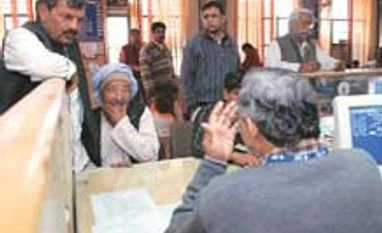 "Logistical challenges for banks implementing TCF")


 Connect with us on WhatsApp