I don't plan to lose the election, says Nilekani
Will give up his role as UIDAI chairman by March-end to contest LS polls
BS Reporter New Delhi Ahead of his maiden electoral battle, Unique Identification Authority of India (UIDAI) Chairman Nandan Nilekani says he has chosen the political path to change the system.
“I am in the business of solving problems. That’s what I do for a living,” he said, responding to a question on his shift from industry to government to an aspiring politician. Asked whether he was taking a big risk by contesting elections, Nilekani said he didn’t plan to lose. “The worst case is I might lose, but risk-taking is part of life.”
On Friday, Nilekani said he would quit as chairman of UIDAI by March-end to contest the Lok Sabha elections, expectedly on a Congress ticket from Bangalore South. He added he had already started preparing for his new role by talking to people from his constituency about various issues. Public transport, water supply, education and jobs were some the areas he would want to focus on, he said.
Sharing his experience on decision-making within the government, he said one of his biggest lessons was the large number of stakeholders one had to keep in mind while arriving at a decision. In contrast, decision-making in a corporate environment involved only a handful of people, he added.
Asked whether the UID project would now run on auto-pilot, Nilekani said the project was in a position in which anybody could take it forward. “We have built a system which can do 300 million (enrolments) a year; we are looking at 900 million enrolments by 2015,” he said.
Everybody recognised the value of digital governance in improving the delivery of public services, he said. “The return on investment on Aadhaar would be substantial even if it could improve the productivity of welfare distribution by 10 per cent, which would save Rs 30,000 crore a year, against the lifetime cost of Aadhaar of Rs 15,000 crore,” he said.
He added the aim of the UID project was to generate 600 million Aadhaar numbers by 2014. So far, around 587 million numbers have been issued. “We are about 13 million short of the target, and this will be bridged in a few weeks,” he said.
The scope of the programme would be enhanced as it enters four more states – Uttar Pradesh, Bihar, Uttarakhand and Chhattishgarh – with a target population of about 330 million, he added.

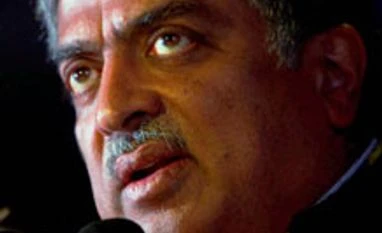 "I don't plan to lose the election, says Nilekani")

