I would like to see us voting as Indians, says academic Dr Rajat Ganguly

Democracy may have contradictory impacts on identity politics, says Dr Rajat Ganguly
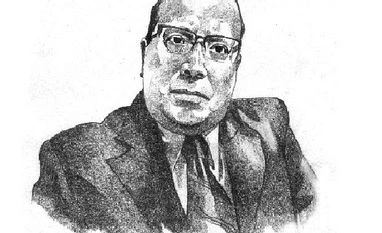
Illustration
Dr Rajat Ganguly, an academic based at Murdoch University, Australia | Illustration by Binay Sinha
Aditi Phadnis
Last Updated : Nov 04 2018 | 5:35 AM IST
Dr Rajat Ganguly, an academic based at Murdoch University, Australia, has published widely on identity politics and ethnic conflict, insurgency and terrorism, and security and strategic affairs in South and Southeast Asia. In this email interview with Aditi Phadnis, he speaks of identity politics and the Bharatiya Janata Party (BJP). Edited excerpts:

The BJP believes that in a perfect world, being a nationalist should subsume all other identities: Caste, region, religion. But it can't help playing the caste card if that wins elections, or the region card. In other words, it plays identity politics without saying so. Will this contradiction wither away or will it become more pronounced as it is faced with the compulsion of winning elections for survival?

In the modern world, we usually have multiple identities. We have religious identity, caste and sectarian identity, regional identity, national identity, global identity, gender identity, sexual identity, class identity, so on and so forth. We often give hierarchical rankings to these identities and these ranking preferences may change over time depending on our particular situation and contextual circumstances. Our ideological preferences also shape the way we prefer certain identities over others.

In the past 200 years or so, however, the identity that has had the most profound political impact has been that of the nation. Simply put, a nation is a territorially-based community or a group of individuals, large or small, who share certain common attributes. These common attributes are both objective (for example, common cultural, linguistic and religious attributes as well as common citizenship and civic values) and subjective (for example, a psychological attachment to the nation, a sense of shared history and ancestry with other members of the community, and a sense of personal fulfillment in being a part of the nation). Depending on which common attributes one focuses on, a nation can be imagined in either "ethnic" or "civic" lines. Nations conceived along ethnic lines are exclusionary, whereas nations conceived along civic lines are more inclusionary. One final point. As the preceding discussion suggests, nations are "social constructions" or "imagined communities" as Elie Kedourie once remarked.

Since the 19th century and more so in the 20th century (especially after the First World War), the idea of the nation coalesced with the idea of the modern sovereign state to give rise to the concept of the nation-state. Simply put, it was argued by liberals that a nation can fulfil its destiny and develop itself fully only when it is able to convert itself into a modern sovereign state - that is, a nation-state. In reality though, most modern sovereign states are multi-national; that is, they incorporate more than one nation within their boundaries.

In the modern Indian context, there have been at least four alternative conceptions of the nation, each competing with the others for prominence during the freedom struggle. First, the Congress saw the Indian state as a territorial space being inhabited by several ethnic nations; hence, the Congress constructed the Indian national identity essentially along civic lines (written constitution, common citizenship with clearly defined rights and privileges, and democratic and secular polity with federal division of powers) in order to maintain ethnic harmony and prevent the balkanisation of the country. Second, in contrast to the Congress view, the Muslim League saw India as incorporating two nations organised around religious attributes - a Hindu nation and a Muslim nation; this then led the Muslim League to demand the division of India to create a Hindu India and a Muslim Pakistan. Third, the Communist Party of India saw India as a territorial space that incorporated several distinct ethnic nations, each of which should have the right of national self-determination in order to decide if they wished to remain within one loose confederal state or go their separate ways. Finally, there was the Jan Sangh (precursor to the Bharatiya Janata Party [BJP]) view that India is a territorial state that incorporated one cultural nation anchored by the common attribute of "Hindutva". 

Hindutva has been defined as a 'way of life'. But what does it really imply?

Simply put, in the Jan Sangh/BJP conception, Hindutva means "Indianness" or being from the territorial landmass called India. In other words, being Hindu does not have a religious connotation; it simply refers to those who trace their ancestry from the ancient civilisations that existed in this Indian landmass centuries ago. It is a kind of "sons of the soil" identity that sits above all other identities. The objective territorial attribute of this identity then has a subjective emotional or psychological aspect as well - the attachment and love for the territorial entity called India. Seen from this view, Indian Muslims and Christians are actually "Hindus", in the sense that, they are also sons of the soil who have chosen for various reasons to follow an alien religion that arrived in this territorial space called India through the hands of invaders and conquerors.

Of course, not everyone accepts this "benign" and "non-religious" construction of the Hindu identity. Moreover, the BJP itself seems to have moved away from the inclusionary sons of the soil construction of the Hindu identity to a more exclusionary religious notion of being a Hindu. This has been clearly driven by the imperatives of electoral and vote bank politics, irrespective of what the party says about its understanding of Hindutva. I don't blame the BJP entirely for this. The Congress also has long moved away from the inclusionary civic ideas of Indian nationalism to blatantly play divisive politics on the basis of religion, caste and reginal identities. Other left of centre parties have been no better.

Even if you look within the Hindu religious community, the BJP seems to be now facing the within the dilemma of how to react to divisions religious community. For example, on the Lingayat issue, the BJP seemed to rule out divisions within Hinduism along sectarian lines. But at the same time, the party has an image of being close to upper caste Hindus at the expense of lower caste Hindus, Dalits and tribals. It has also started playing more prominently the 'regional card' in order to win elections. For instance, the Modi government's decision to honour Netaji Subhas Chandra Bose and the Azad Hind Fauj could have been made with an eye to winning the "Bengali vote" in parliamentary elections in West Bengal in 2019.

So, to sum up, I would like to believe the BJP/RSS when it says that Hindutva refers to the sons of the soil Indian nationalism and love for the Indian nation-state, the exigencies of power and electoral politics has meant that the party has had to move away from that definition in order to pander to religious, caste and regional sentiments.

Is 'identity' and 'nation' a contradiction? Evidence suggests that sometimes it is; and sometimes it isn't….

See my previous comments on identity and nation. I would say that national identity (that is, identity based on the concept of the nation) is a socially constructed identity based on a certain imagination for the purpose of achieving certain socio-economic and political objectives. So, I don't see a contradiction between 'identity' and 'nation'.

Rather, I would say that there exists tensions and contradictions between the national identity and other forms of identity. For example, Bernard Lewis has correctly argued that the idea of the nation (which is a Western idea) has never reconciled with the Islamic notion of the ummah or "Islamic community".

Similarly, there is a lot of tension between the "ethnic" and the "civic" conceptions of the nation.

Would it be correct to say that identity gets effaced by development?

I don't think so. If that were the case, then there would be no identity-based politics in the developed countries. The reality is in most of the developed world, identity-based politics and political behaviour is extremely strong. Take the complete ideological polarisation in the United States as an example. This is mainly a function of the very different identity of the "liberal" and the "conservative" American.

What effect do democracy and democratic movements have on identity politics?

In my opinion, democracy may have contradictory impacts on identity politics. On one hand, the consolidation of democracy in a multi-ethnic society can create, under certain circumstances, an impetus towards the creation of an inclusive civic nationalist polity. But, on the other hand, democracy may create intensely competitive electoral politics, which could lead towards the creation of an exclusive ethnic nationalist polity. Inclusive civic nationalism may create conditions of stability and peace in society, whereas exclusive ethnic nationalist politics may lead to fragmentation and civil conflict.

In India, caste identities were accommodated and over time, rigidities were loosened. To retain and grow its base, should the BJP accommodate caste or reject it?

As a patriotic Indian, I would like to see us voting as "Indians" and not on the basis of caste, religion, region, etc. Our politics need to be at a higher level and we must vote for those political parties and leaders who are best placed to advance our collective interests as Indians. But this is a utopian dream. For the foreseeable future at least, our politics will be shaped by sectarian, caste, class, regional and religious identities. If the BJP's aim is to consolidate the Hindu vote in its favour, then it has to reach out to lower castes, Dalits, etc. And shed its image as an upper caste and bania party.

One subscription. Two world-class reads.

Already subscribed? Log in

Subscribe to read the full story →
*Subscribe to Business Standard digital and get complimentary access to The New York Times

Smart Quarterly

₹900

3 Months

₹300/Month

SAVE 25%

Smart Essential

₹2,700

1 Year

₹225/Month

SAVE 46%
*Complimentary New York Times access for the 2nd year will be given after 12 months

Super Saver

₹3,900

2 Years

₹162/Month

Subscribe

Renews automatically, cancel anytime

Here’s what’s included in our digital subscription plans

Exclusive premium stories online

  • Over 30 premium stories daily, handpicked by our editors

Complimentary Access to The New York Times

  • News, Games, Cooking, Audio, Wirecutter & The Athletic

Business Standard Epaper

  • Digital replica of our daily newspaper — with options to read, save, and share

Curated Newsletters

  • Insights on markets, finance, politics, tech, and more delivered to your inbox

Market Analysis & Investment Insights

  • In-depth market analysis & insights with access to The Smart Investor

Archives

  • Repository of articles and publications dating back to 1997

Ad-free Reading

  • Uninterrupted reading experience with no advertisements

Seamless Access Across All Devices

  • Access Business Standard across devices — mobile, tablet, or PC, via web or app

Next Story


