
2019 Lok Sabha elections could be world's most expensive, says expert
The Election Commission of India is soon expected to announce its schedule for the polls to be held to elect 543 members of the Lok Sabha
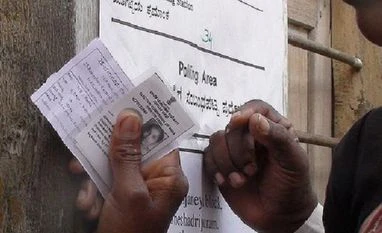 "2019 Lok Sabha elections could be world's most expensive, says expert")
WebinarsNew
Deep DiveNew
Explore Business Standard
The Election Commission of India is soon expected to announce its schedule for the polls to be held to elect 543 members of the Lok Sabha
The upcoming general elections in India will be the most expensive in Indian history and perhaps one of the most expensive ever held in any democratic country, a US-based expert has said.
The Election Commission of India is soon expected to announce its schedule for the polls to be held to elect 543 members of the Lok Sabha.
"The combined US presidential and congressional elections in 2016 cost $6.5 billion. If the 2014 Lok Sabha elections cost an estimated $5 billion, there is little doubt the 2019 election will easily surpass that making India's elections the world's most expensive," Milan Vaishnav, senior fellow and director of the South Asia Program at the Carnegie Endowment for International Peace think-tank told PTI.
"The uncertainty associated with the coming election polls suggest a narrowing gap between the BJP and the opposition only provides more fodder for an arms race in spending," he said.
Vaishnav has emerged as an authoritative voice on Indian elections, in particular the funding aspects of it, over the years.
"While the outcome of the next general election is up in the air, one attribute about it is already well known: it will be the most expensive general election in Indian history and perhaps one of the most expensive ever held in any democratic society," Vaishnav wrote in an op-ed for Carnegie Endowment for International Peace, a top American think-tank.
Noting that the 2014 general elections costed $5 billion, Vaishnav said it was not inconceivable that overall expenditure will double again this year.
"The exorbitant cost of Indian elections has become a cardinal fact of the Indian political economy that is widely acknowledged and lamented including by politicians and their donors. But it is not simply the material outlays that grab one's attention, it is the manner in which the money flows," he said.
Vaishnav rued that in India there is virtually zero transparency when it comes to political contributions.
It is next to impossible to either identify who has donated money to a politician or party or to figure out from where a politician has obtained his or her campaign funds, he said.
Very few donors are willing to disclose their political giving for fear of retribution should their preferred party not come to power, he noted.
The system of electoral bond, brought in by the current government, has not helped either, he argued.
The system lacks transparency, he said.
First Published: Feb 22 2019 | 11:25 AM IST


 Connect with us on WhatsApp