Home / World News / China to enshrine President Xi Jinping's name in state constitution
China to enshrine President Xi Jinping's name in state constitution
The constitutional change must be approved by the National People's Congress, which is expected to hold its annual plenary session in March
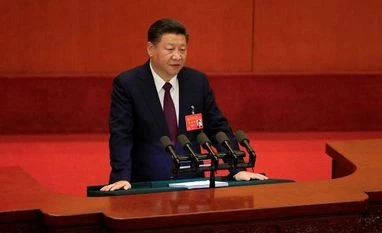
Chinese President Xi Jinping speaks during the opening of the 19th National Congress of the Communist Party of China at the Great Hall of the People in Beijing, China. Photo: Reuters.
China's Communist Party proposed on Friday to engrave President Xi Jinping's guiding philosophy in the country's constitution, further cementing his status as its most powerful leader in decades.
Xi's eponymous "thought" was already enshrined in the Communist Party constitution at a major congress in October, elevating him to the same status as modern China's founder Mao Zedong.
The architect of China's economic reforms, Deng Xiaoping, is the only other leader whose name appears alongside his guiding principle in both the state and party constitutions.
The party's Central Committee proposed at a two-day meeting that "Xi Jinping Thought on Socialism with Chinese Characteristics for a New Era" should also be added to the state constitution, said the official Xinhua news agency.
The constitutional change must be approved by the National People's Congress, which is expected to hold its annual plenary session in March.
The elevation of Xi, 64, into the Communist Party constitution in October had already brought him into the pantheon of the country's most powerful leaders.
The congress also unveiled a new seven-member ruling council that did not include a clear successor to Xi, leaving the impression that he could break with recent tradition and seek a third term in office in 2022.

 "China to enshrine President Xi Jinping's name in state constitution")


 Connect with us on WhatsApp