Indian nuke facilities face 'insider threats': Harvard Kennedy School report
According to report, India faces significant insider corruption though it is thought to be less severe than in Pakistan or Russia
Press Trust of India Washington Even though Indian atomic facilities do not face terrorist threats as serious as those in Pakistan, a US report on preventing nuclear terrorism has expressed concern over "insider threats" against India's nuclear assets.
"There are concerns about insider threats within Indian nuclear facilities," said report titled 'Preventing Nuclear Terrorism: Continuous Improvement or Dangerous Decline?' released by the prestigious Harvard Kennedy School ahead of the Nuclear Security Summit here this month.
India faces significant insider corruption though it is thought to be less severe than in Pakistan or Russia, it said.
In 2014, Vijay Singh, a CISF head constable at the Kalpakkam Atomic Power Station, shot and killed three people with his service rifle.
Although the CISF had a personnel reliability programme in place, it was not able to detect Singh's deteriorating mental health, despite multiple red flags including him saying that he was about to "explode like a firecracker", the report said.
"Given the limited information available about India's nuclear security measures, it is difficult to judge whether India's nuclear security is capable of protecting against the threats it faces," the report said.
"Although India has taken significant measures to protect its nuclear sites, recent reports suggest that its nuclear security measures may be weaker than those of Pakistan, though likely adversary threats in India are less extreme. Overall, the risk appears to be moderate, and there is no clear trend, either upward or downward," it said.
Noting that India has a relatively small stockpile of nuclear weapons and weapons-usable nuclear material at a limited number of sites, which are believed to be heavily guarded, the report said unlike Pakistan, India has a civilian plutonium reprocessing program.
According to the report, US officials have reportedly ranked Indian nuclear security measures as weaker than those of Pakistan and Russia, and US experts visiting the sensitive Bhabha Atomic Research Centre in 2008 described the security arrangements there as "extraordinarily low key".
The threats to India's nuclear security systems have to confront appear to be significant- though not as great as the threats that exist in Pakistan, it said.
India faces threats both domestically and from attacks by terrorist groups based in Pakistan.
The report cited the January 2 Pathankot airbase attack by heavily-armed militants of the Jaish-e-Mohammed that killed seven security personnel.
The attackers were able to infiltrate the base by climbing over a tree that had grown along the side of a security fence in an area where floodlights were not operating, it said.

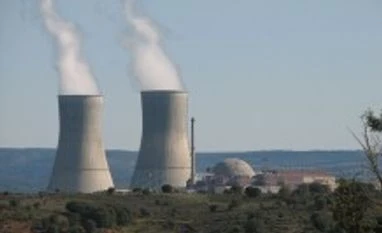 "Indian nuke facilities face 'insider threats': Harvard Kennedy School report")


 Connect with us on WhatsApp