Confident of clearing up the bad-loan mess, RBI Governor Raghuram Rajan today said there is "absolutely no chance of a Lehman moment" in India and a three-cornered firewall was being created to safeguard the economy from external shocks.
He also rejected calls for any immediate privatisation of public sector banks and said the urgent need was to clean up their balance sheets and no private investor would anyway come without a cleaner balance sheet.
Rajan, who has often been criticised for being too economical with rate cuts, indicated that rate cuts were not the only instrument to boost growth.
"I think the real way we are trying to firewall the economy is, on the first hand, with good policies, including as I said, the moves on reforms that have been enacted recently. The second is by trying to increase the maturity of our debt. We have substantially increased the maturity of debt, external debt that we owe. The third is we built-up reserves," he told CNBC news channel in an interview here.
Asked about bad loan problem in India being bigger than the size of New Zealand's $170 billion economy and whether there was risk of a banking crisis, Rajan said, "I do not think it's that big. Second, many of bad assets are in public sector banks and the government fully guarantees them.
"So, there is absolutely no chance they will fail. There is also absolutely no chance there will be a Lehman moment."
It was the collapse of Lehman Brothers, once a giant banking institution, that began a severe financial crisis in the US in 2008.
"It is about ensuring that the assets are cleaned up and investors have a good idea of the balance sheets of the bank and that process is under way and some banks have cleaned up much faster than the pace that we had set for them," he said.
On whether he should privatise some banks and can that reduce some of the inefficiencies, Rajan said, "I think, over time as we improve the governance in the banking system, that question can be addressed. At this point, the real issue is for most of these banks clean up their balance sheets without it is hard to imagine a private investor coming in without clean balance sheet.
"Also, many of them have the capacity to sustain the existence as public sector entities provided we improve the governance. Now, we have a Banks Board Bureau which has been set up primarily to distance itself from the government and to make a number of governance decisions including for appointments for the banks.
"My sense is we can do a lot without actually going to the point of privatisation. That's a decision the government will have to take down the line," he said.
Admitting that the banking sector is under stress in India, Rajan said, "Ours is not a retail problem. It is a wholesale problem. There are big projects and it is not because of connected lending or corruption. It was because the world changed."
He was replying to a question on whether there are problems because of some public sector banks granting loans to influential persons because of their connections.
"What we need to do is restructure the debt for some of these projects, put them back on track. It is not that there are acres of real estate that are unoccupiable. It's actually a power plant that can produce power and India is a growing economy that needs power. We just need to make sure the debt levels are appropriate," he added.
The banking sector problem, he said, is about ensuring that the assets are cleaned up and investors have a good idea of the balance sheets of the bank.
"...And that process is under way and some banks have cleaned up much faster than the pace that we had set for them," he added.
Answering questions on the economy, Rajan said lot of structural reforms have taken place and the nation's economy is on the path of recovery.
Rajan said there are some bad news, but the Indian economy was getting stronger.
"I think we are a recovering economy and when you talk about structural reforms, we have seen a playout in the past few days. For example, we have a bankruptcy bill which was legislated last week. We also have a monetary policy committee that lays the framework that was also legislated last week. I think structural reforms are happening, are on their way and growth steadily is ... You see more green shoots.
"Of course there is some bad news also every once in a while," he said.

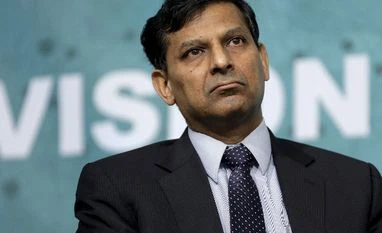 "No 'Lehman moment' possible in India; firewalls in place: Raghuram Rajan")

