Oil Min grapples with payment options for RIL's KG-D6 gas
There is no clarity on how to invoice fuel from RIL's blocks
Press Trust of India New Delhi
Days ahead of the first payment at new gas price, the Oil Ministry is grappling with the issue of how to bill the gas produced from Reliance Industries' main fields in the KG-D6 block.
As per the 15-day billing cycle, gas producers are to raise the first invoice at the revised price of $5.61 per million British thermal unit (mmBtu) this weekend.
However, there is still no clarity on how to invoice the fuel from RIL's D1&D3 fields, which is to be sold at the old rate of $4.2 per mmBtu.
While announcing an across-the-board 33% hike in natural gas prices, the government had on October 18 stated that customers of D1&D3 gas will pay the revised rates but RIL will get only $4.2, with the difference being deposited in a gas pool account maintained by state-owned GAIL.
Sources said the Oil Ministry is still grappling with the easier option of allowing RIL to raise bill at new rate of $5.61 and then depositing $1.41 in the gas pool account.
Or alternatively, asking customers to pay the old rate of $4.205 per mmBtu to RIL and the incremental $1.41 per mmBtu rate into the gas pool account, an option fraught with risks like payment defaults as well as being at odds with rights of the contractor under Production Sharing Contract.
Under the first option, at stake is $4 million of additional revenue for about 7 million standard cubic meters per day of output from D1&D3 fields every fortnight.
Sources said this is too less an amount for any firm to swindle and not deposit in the gas pool account, thereby risking government action, including cancellation of contract.
On the other hand, the second option may lead to creating more complexities in a dispute which is primarily between the contractor (RIL) and the government, they said.
The government has not agreed to RIL's reasoning of geological complexities leading to output from D1&D3 dropping to one-tenth of the targetted 80 mmscmd and has levied penalty in the form of disallowing $2.376 billion in cost. RIL disputed this and has dragged the government to arbitration.
Pending award of arbitration, the government has disallowed higher gas rates for D1&D3. RIL will get the amount accumulated in the pool account if it wins the arbitration.
Sources said the gas sale-purchase agreement (GSPA) is primarily between seller (RIL) and buyers (fertiliser firms). Recovery provisions as well as built-in default redressal mechanism are there in the agreement.
If the government decides that the incremental revenue of $1.41 should go directly to the gas pool account, then GAIL does not have legal powers to recover any amount in case of default and the consequences of who pays in case RIL wins the arbitration.
Also, this may tantamount to involving a third party in a dispute which is primarily between the government and the contractor, they added.

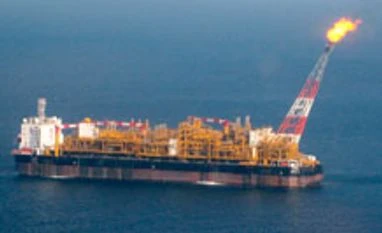 "Oil Min grapples with payment options for RIL's KG-D6 gas")


 Connect with us on WhatsApp