The Income Tax department today said now-defunct Rs 500 and Rs 1,000 notes can be used till December 30 for paying tax on disclosures made under the tax evasion amnesty scheme.
The government has come out with Taxation and Investment Regime for Pradhan Mantri Garib Kalyan Yojana (PMGKY), 2016, under which those with unaccounted cash were offered a chance to come clean by paying 50 per cent of it as tax, penalty and surcharge, while parking an additional 25 per cent in a non-interest bearing deposit for four years.
"It is stated that up to December 30, 2016, the payment towards tax, surcharge, penalty and deposit under the PMGKY can be made in old bank notes of rupees 500 and rupees 1000 denomination issued by the RBI," a finance ministry statement said.
The PMGKY scheme opened on December 17, 2016, and people can declare unaccounted cash or bank deposits up to March 31, 2017.
The payment of tax, surcharge and penalty under the scheme is to be made through challan ITNS- 287 and the deposits are to be made in the Pradhan Mantri Garib Kalyan Deposit Scheme, 2016, the statement added.
After the shock demonetisation of high value notes on November 8, the government allowed banned currency to be deposited in bank accounts till December 30.
The holder of unaccounted cash in Rs 500/1000 notes can now deposit half of it in any of the 29 scheduled bank that are entitled to accept income tax on behalf of the government.
A quarter of the amount can be deposited in cash in the non-interest rate bearing PMGK Deposit Scheme 2016. The remaining 25 per cent can then be deposited in individual bank account.
After December 30, tax as well as the deposit will have to be made through cheque or RTGS transfer.
Tax at the rate of 30 per cent of the undisclosed income, surcharge of 33 per cent of tax and penalty of 10 per cent of such income is payable besides mandatory deposit of 25 per cent of the undisclosed income in the PMGK Deposit Scheme.
Income declared under the Scheme will not be included in the total income of the declarant under the Income Tax Act for any assessment year.
Not declaring the black money under the scheme now but showing it as income in the tax return form would lead to a total levy of 77.25 per cent in taxes and penalty. In case the disclosure is not made either using the scheme or in return, a further 10 per cent penalty on tax will be levied followed by prosecution, he added.

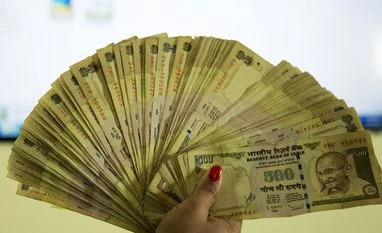 "Old 500,1000 rupee notes can be used for payment under PMGKY")


 Connect with us on WhatsApp