The Supreme Court on Friday indicated it may deliver its verdict on whether the right to privacy constitutes a fundamental right under the Constitution next week.
A bench comprising Chief Justice J S Khehar and Justice D Y Chandrachud said by next week the judgement on the status of Right to Privacy could be pronounced.
The court's remark came on a plea by senior advocate Salman Khurshid who sought urgent listing of his petition challenging passing of the Aadhaar Bill as a Money Bill.
"There are some Aadhaar matters in which notices have been issued while in some notices have not been issued till now," Khurshid said.
To this, the court said, all Aadhaar matters will be taken up once the verdict on Right to Privacy is delivered.
"We can't fix the date for your bill. You wait for one week by which time Right to Privacy verdict may come, then we will give the date for listing of your plea," the court said.
A nine-judge Constitution bench had reserved its verdict on the issue on August 2 after voicing concern over possible misuse of personal information in public domain.
It had observed that protection of the concept of privacy in the technological era was a "losing battle".
The Constitution bench, headed by Chief Justice J S Khehar, had heard marathon arguments on six days over three weeks.
A battery of senior lawyers, including Attorney General K K Venugopal, Additional Solicitor General Tushar Mehta, Arvind Datar, Kapil Sibal, Gopal Subaramaniam, Shayam Divan, Anand Grover, C A Sundaram and Rakesh Dwivedi, had advanced arguments in favour and against the inclusion of right to privacy as a fundamental right.
The bench, which had favoured "overarching" guidelines to protect private information in public domain, said there was a need to "maintain the core of privacy" as the notion of privacy was fast becoming irrelevant in an all-pervading technological era.
It had said, "We are fighting a losing battle of privacy. We do not know for what purpose the information will be used. This is exactly a cause of concern.

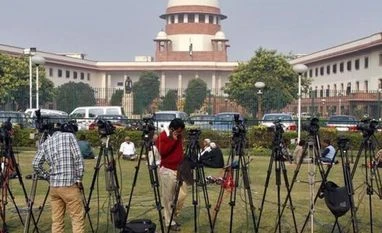 "SC indicates Right to Privacy verdict in next one week")


 Connect with us on WhatsApp