Telcos must ensure their services are good: Ravi Shankar Prasad
Telecom Minister said that mobile operators should work to improve their infrastructure
Press Trust of India New Delhi Asking mobile operators to improve infrastructure and address the call drop issue, Telecom Minister Ravi Shankar Prasad today said providing good quality services is "their responsibility and they should do it".
"I welcome them (operators) for their work but they should also keep in mind and ensure their services should be good," Prasad said on the sidelines of Workshop of State Administrative Training Institute.
"Just being a big operator in not necessary, the services should be good also," the minister added.
Asked about operators approaching Delhi High Court against the Trai's regulation of imposing penalty for call drops, the minister said court would take its decision.
The Telecom Regulatory Authority of India (Trai) has come out with a compensation policy mandating that telecom companies from January 1 should compensate users at the rate of Re 1 per dropped call, with a ceiling of three such calls per day, which amounts to Rs 3 compensation a day.
The issue of call drop has been prevailing over the last few months. The services though are now showing some signs of improvement.
The minister on the policy front said he took most of the decisions that were pending for many years like spectrum trading, sharing, harmonisation and liberalisation and telcos should also do their bit.
"Telecom operators should work to improve their infrastructure and we expect them to improve it. Our department is monitoring it. They have done some work, more needs to be done," he said.
Recently, the minister had said he did not want to be known as a 'call drop minister' and operators must reinforce their networks to improve quality of services.
He had also said the implementation of the investment commitments made by telecom players to upgrade networks is being monitored.
Inaugurating the workshop, Prasad called on the officials of both Centre and the states to catalyse introduction of digital technology in the governing system to bring transparency and efficiency in the delivery of services.
Prasad said Internet users during the current year has gone up by 49 per cent in the country. The number of mobile Internet users in rural India is expected to reach 87 million by the end of this month, he said.
The minister said Digital India initiative is a process aimed at promoting inclusiveness through digitalisation and thus not dependent on any single programme or city.
He said the administrators at all levels need to ensure its spread from major cities to mufasil towns across the country. "The government's initiative of setting up BPOs in small towns is a major step in this direction and States need to take full advantage of this," he said.
Talking about the BPO scheme, he said private sector has responded well with 1,25,000 seats being requested for against expression of interest floated for 48,000 seats only.

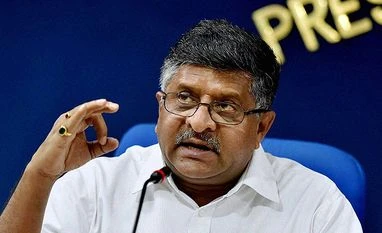 "Telcos must ensure their services are good: Ravi Shankar Prasad")


 Connect with us on WhatsApp