
A silicon chip can now convert wasted heat into electricity
Researchers have previously determined that there is a theoretical "blackbody limit" to how much energy can be produced from thermal radiation (heat).
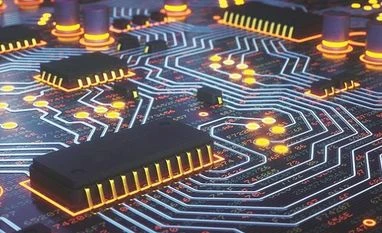 "A silicon chip can now convert wasted heat into electricity")
WebinarsNew
Deep DiveNew
Explore Business Standard
Researchers have previously determined that there is a theoretical "blackbody limit" to how much energy can be produced from thermal radiation (heat).
Scientists have discovered a way to produce more electricity from heat than thought possible by using a newly developed silicon chip.
It is estimated that as much as two-thirds of energy consumed in the US each year is wasted as heat, said researchers from University of Utah.
Take for example, car engines, laptop computers, cell phones, even refrigerators, that heat up with overuse.
The method, described in the journal Nature Nanotechnology, uses a silicon chip called "device," that converts more thermal radiation into electricity.
Researchers have previously determined that there is a theoretical "blackbody limit" to how much energy can be produced from thermal radiation (heat).
However, the team demonstrated that they can go well beyond the blackbody limit and produce more energy if they create a device that uses two silicon surfaces very close together.
The researchers produced a 5mm-by-5mm chip (about the size of an eraser head) of two silicon wafers with a nanoscopic gap between them only 100 nanometres thick, or a thousandth the thickness of a human hair.
While the chip was in a vacuum, they heated one surface and cooled another surface, which created a heat flux that can generate electricity.
The concept of creating energy in this manner is not unique, but researchers have discovered a way to fit the two silicon surfaces uniformly close together at a microscopic scale without touching each other.
The closer they are to each other, the more electricity they can generate.
"Nobody can emit more radiation than the blackbody limit. But when we go to the nanoscale, you can," said Mathieu Francoeur, an associate professor at University of Utah.
In the future, Francoeur envisions that such technology could be used to not only cool down portable devices like laptops and smartphones but also to channel that heat into more battery life, possibly as much as 50 per cent more.
A laptop with a six-hour charge could jump to nine hours, for example.
The chips could be used to improve the efficiency of solar panels by increasing the amount of electricity from the sun's heat or in automobiles to take the heat from the engine to help power the electrical systems.
They could also be designed to fit in implantable medical devices such as a pacemaker that would not require replaceable batteries, researchers said.
Another benefit is such technology can help improve the life of computer processors by keeping them cool and reducing wear and tear, and it will save more energy otherwise used for fans to cool the processors, they said.
(Only the headline and picture of this report may have been reworked by the Business Standard staff; the rest of the content is auto-generated from a syndicated feed.)
First Published: Jul 11 2019 | 1:45 PM IST


 Connect with us on WhatsApp