Would implement database tracking Muslims in US: Donald Trump
Trump said he believes war on terror will require unprecedented surveillance of America's Muslims
Press Trust of India Washington Leading Republican presidential front-runner Donald Trump has created a controversy by saying he "would certainly implement" a database system tracking Muslims in the US to protect the country against terrorism.
"I would certainly implement that. Absolutely," Trump told NBC News yesterday.
"There should be a lot of systems, beyond databases," he added.
"We're going to have to look at a lot of things very closely. We're going to have to look at the mosques. We're going to have to look very, very carefully," Trump told Yahoo News.
Trump said he believes war on terror will require unprecedented surveillance of America's Muslims.
"We're going to have to do thing that we never did before. Some people are going to be upset about it, but I think that now everybody is feeling that security is going to rule," he said when asked whether increased surveillance of American-Muslims could include warrantless searches.
"Certain things will be done that we never thought would happen in this country in terms of information and learning about the enemy. We're going to have to do things that were frankly unthinkable a year ago," Trump said.
His remarks created a storm on the social media.
Democratic National Committee Chair Debbie Wasserman Schultz in a statement said, "Donald Trump's openness to special identifications and a database for Muslim-Americans is beyond shameful, embodies the exclusionary culture of today's Republican Party, and is a dangerous mindset our Greatest Generation fought and died to defeat seven decades ago."
"Trump should be ashamed for proposing that America could be a place where masses of humans are gathered and classified by their religion. We cannot let our political process be driven by fear," Schultz said.
"This language is not just offensive - it's un-American, counter-productive and dangerous. Statements like these damage American credibility around the world, and act as recruiting tools for terror organisations who push the narrative that Islam is engaged in a religious war with the West," he said.
Trump is not the only Republican presidential aspirant who has given anti-Muslim statement.
Indian-American Louisiana Governor Bobby Jindal was quite vocal on what he called as Islamic terrorist. He dropped out of the presidential race this week.
Two other candidate Jeb Bush and Ted Cruz have called for a religious test for refugees from the Syrian civil war, while Ben Carson said that a Muslim-American should not be allowed to become President.
The Council on American-Islamic Relations (CAIR), said to be the largest Muslim civil rights and advocacy organisation in the US, condemned leading Republican presidential candidates for "Islamophobic and unconstitutional" comments targeting American-Muslims and Syrian refugees.
CAIR condemned Donald Trump for refusing to rule out special IDs and a surveillance database for American-Muslims.

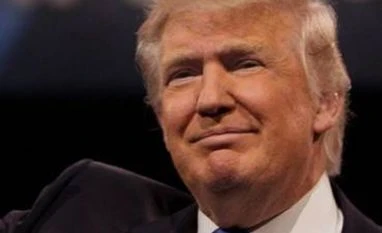 "Would implement database tracking Muslims in US: Donald Trump")


 Connect with us on WhatsApp