
Budget 2017 to try and ease pain from cash crunch
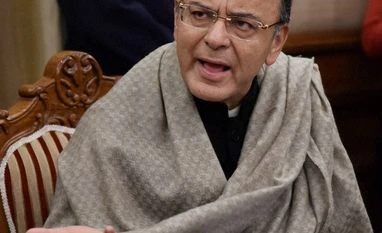
Jaitley will present the 2017/18 budget at 11 am to the lower house of parliament
 "Budget 2017 to try and ease pain from cash crunch")
WebinarsNew
Deep DiveNew
Explore Business Standard
Jaitley will present the 2017/18 budget at 11 am to the lower house of parliament
Finance Minister Arun Jaitley will likely boost spending and ease back on cutting the deficit when he presents his fourth budget on Wednesday, as he seeks to lift growth hit by the government's drive to purge the economy of "black money".
Prime Minister Narendra Modi's surprise decision last November to scrap high-value banknotes worth 86 percent of India's cash in circulation has hit consumer demand, disrupted supply chains and hurt capital investments.
Jaitley will present the 2017/18 budget at 11 am (0530 GMT) to the lower house of parliament.
The finance ministry forecasts that growth could dip to as low as 6.5 percent in the current fiscal year to March, before picking up in the coming fiscal year to between 6.75 and 7.5 percent.
While opinions vary on how long the disruptions caused by Modi's crackdown on untaxed and illicit wealth will last, there is near unanimity among economists that Asia's third-largest economy needs a helping hand.
Arvind Subramanian, Jaitley's chief economic adviser, on Tuesday advocated slashing personal income tax and accelerating cuts in corporate tax rates. He cautioned, however, against pursuing debt-fuelled fiscal expansion.
Still, economists are pencilling in a federal fiscal deficit of 3.3 percent of GDP for 2017/18. That would be higher than the 3 percent pledged earlier but lower than 3.5 percent that the government has budgeted for the year soon to end.
"Expectations are running high for an expansive budget," said Radhika Rao, an economist with DBS Bank in Singapore.
The rollout of a nationwide Goods and Services tax (GST), expected in July after years of delays, could also weigh on economic growth. Countries that have introduced GST in the past have often faced a relative economic slowdown before the benefits of a unified tax regime feed through.
BENEFITS AND COSTS
Jaitley's fiscal largesse will not only boost consumer spending, but may also shore up the fortunes of Modi's nationalist party in five regional elections for which voting begins on Saturday.
The electoral outcome, particularly in the battleground state of Uttar Pradesh that is home to one in every six Indians, would play a big part in determining whether Modi can win a second term in 2019.
Busting the deficit target, however, would worry ratings agencies at a time when oil prices - India's most costly import - are on an upswing.
Standard & Poor's has already warned that, at 68.5 percent, India's public debt-to-GDP ratio is still too high.
A slowdown in fiscal consolidation would also limit the room for monetary easing. Investors are betting that the Reserve Bank of India would lower its policy rate by another 25 basis points (bps) as early as next Wednesday.
The central bank has cut interest rates by 175 bps since January 2015 to 6.25 percent.
"Signs of a populist budget will be positive for markets, but if accompanied by a larger-than-expected borrowing programme will quickly reverse sentiment," said Rao of DBS Bank.
(Reporting by Rajesh Kumar Singh; Editing by Douglas Busvine and Kim Coghill)
First Published: Feb 01 2017 | 4:50 AM IST


 Connect with us on WhatsApp