India's high-speed rail

Globally, 22,900 km of HSR network is operational (China alone accounts for a half of this) and 12,700 km is under construction
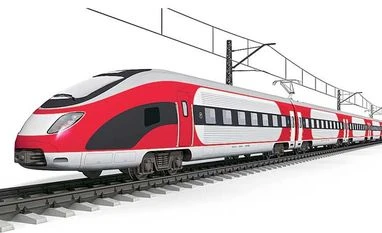
Business Standard New Delhi
Last Updated : Apr 04 2015 | 10:57 PM IST
  • Globally, there is no single standard definition of High- Speed Rail (HSR) but systems with speeds exceeding 250 kmph are considered high speed (International Union of Railways' definition)
     
  • Globally, 22,900 km of HSR network is operational (China alone accounts for a half of this) and 12,700 km is under construction
     
  • Fourteen countries currently operate high-speed trains of 250 kmph and above. These include 350 kmph in China, 320 kmph in Japan and France, 300 kmph in Italy, Germany, Spain, Belgium, UK, South Korea, Taiwan and The Netherlands and 250 kmph in Switzerland, Turkey and Austria
     
  • In India, while HSR systems have been talked about since 1980s, the plan was rolled out for the first time in the Railways' Vision 2020 document of 2009. It proposed implementing at least four HSR projects for bullet train services at 250-350 kmph
 
  • Currently, the maximum train speed achieved in India is 150 kmph (Shatabdi Express on the Delhi-Agra section). Average speed of Mail and Express trains in India last financial year (2013-14) was 50.6 kmph (kilometre per hour)
     
  • India does not have any high-speed corridor operational at present but eight HSR corridors have been identified for feasibility studies. These include

    1) Pune-Mumbai-Ahmedabad (650 km)

    2) Delhi-Agra-Lucknow-Varanasi-Patna (991 km)

    3) Howrah-Haldia (135 km)

    4) Hyderabad-Dornakal-Vijaywada-Chennai (664 km)

    5) Chennai-Bengaluru-Coimbatore-Ernakulam-Thiruvananthapuram (850 km)

    6) Delhi-Chandigarh-Amritsar (450 km)

    7) Delhi-Jaipur-Ajmer-Jodhpur (591 km)

    8) A 10,000 km-long Diamond Quadrilateral Network of HSR comprising four sides (Delhi-Mumbai, Mumbai-Chennai, Chennai-Kolkata and Kolkata-Delhi) and two diagonals (Delhi-Chennai and Mumbai-Kolkata)
  •  
  • The feasibility study of Mumbai-Ahmedabad HSR corridor, co-financed by India and Japan, is slated for completion in June 2015. The business development studies for this corridor are being conducted with French assistance. The Mumbai-Ahmedabad corridor is estimated to cost around Rs 63,180 crore with an average cost of Rs 118 crore per km.
     
  • The feasibility study of Delhi-Chennai corridor is being done in cooperation with Chinese Railways.
     
  • Additionally, Indian Railways has identified nine corridors where speed of passenger trains will be speed to 160-200 kmph. These include Delhi-Agra, Delhi-Chandigarh, Delhi-Kanpur, Nagpur-Bilaspur, Mysore-Bengaluru-Chennai, Mumbai-Goa, Mumbai-Ahmedabad, Chennai-Hyderabad and Nagpur-Secunderabad.
  •  
  • Overall, HSR systems are being planned to bring about at least 20 per cent savings in journey time

  • *Subscribe to Business Standard digital and get complimentary access to The New York Times

    Smart Quarterly

    ₹900

    3 Months

    ₹300/Month

    SAVE 25%

    Smart Essential

    ₹2,700

    1 Year

    ₹225/Month

    SAVE 46%
    *Complimentary New York Times access for the 2nd year will be given after 12 months

    Super Saver

    ₹3,900

    2 Years

    ₹162/Month

    Subscribe

    Renews automatically, cancel anytime

    Here’s what’s included in our digital subscription plans

    Exclusive premium stories online

    • Over 30 premium stories daily, handpicked by our editors

    Complimentary Access to The New York Times

    • News, Games, Cooking, Audio, Wirecutter & The Athletic

    Business Standard Epaper

    • Digital replica of our daily newspaper — with options to read, save, and share

    Curated Newsletters

    • Insights on markets, finance, politics, tech, and more delivered to your inbox

    Market Analysis & Investment Insights

    • In-depth market analysis & insights with access to The Smart Investor

    Archives

    • Repository of articles and publications dating back to 1997

    Ad-free Reading

    • Uninterrupted reading experience with no advertisements

    Seamless Access Across All Devices

    • Access Business Standard across devices — mobile, tablet, or PC, via web or app

    More From This Section

    First Published: Apr 04 2015 | 10:31 PM IST

    Next Story