
Why this can be called a golden generation for Tennis, but not a golden era
The golden era for a sport should showcase the full spectrum of skills, abilities and excellence that the sport makes possible
 "Why this can be called a golden generation for Tennis, but not a golden era")
premium
Explore Business Standard
The golden era for a sport should showcase the full spectrum of skills, abilities and excellence that the sport makes possible
What is true in the boxing ring is also true on the tennis court: many of the greatest tennis rivalries have also comprised players of markedly different styles. Björn Borg v John McEnroe, Chris Evert v Martina Navratilova, and Pete Sampras v Andre Agassi all matched up a serve-and-volleyer against a baseliner. These rivalries ran deeper than the closeness of their contests. They showcased two fundamentally different philosophies of tennis.
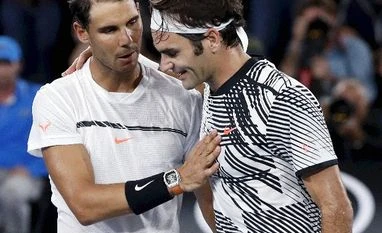
We are told that this is a golden era for tennis. In many ways, this is readily apparent. Tennis athletes have never been fitter, rivalries have never been more intense, and four players of this era – Novak Djokovic, Roger Federer, Rafael Nadal and Serena Williams – have a legitimate claim to be the “greatest of all time”. This has truly been a golden generation of tennis players. But it has not been a golden era for tennis.
The ethics of how sports are allowed to develop and what should count as “progress” are central preoccupations of my academic research in the philosophy of sport. A golden era for a sport should showcase the full spectrum of skills and abilities – of excellences – that the sport makes possible.
By contrast, in this tennis era, the spectrum has narrowed so that all viable playing styles are fundamentally anchored to the baseline. Serve-and-volley tennis has disappeared, and all realistic grand slam title contenders are baseliners of one kind or another. The sport is more uniform in how it is played than at any other point in the professional era.
This narrowing of excellence is a problem because it limits how a player can express themselves. Sports present obstacles for players to overcome using their skill, guile, tenacity, and physical prowess. Constraints created by the rules and by one’s opponent place obstacles in the way of scoring a goal, shooting a basket, or hitting an ace.
The demise of serve-and-volley tennis over the last two decades has shoehorned tennis players into choosing from among a small group of playing styles and it has effectively excluded those whose skill set does not fall within the smaller cluster of excellences that remain relevant in the sport. By narrowing the spectrum of viable strategies, the sport is diminished, not only as an avenue for testing and showcasing a variety of different excellences, but also as an avenue for self-expression.
Serve-and-volley tennis is inherently confrontational. It narrows the physical space between opponents as one approaches the net, it quickens the exchange of shots, and it poses a challenge to “hit past me or through me”. The best serve-and-volleyers are relentless – they return to the net point after point, laying down the same challenge anew.
The beauty of this style lies precisely in its lack of surprise. It was entirely predictable that Pete Sampras or Martina Navratilova would attack the net after their serve. Everyone, especially their opponents, knew this. And they knew that their opponent knew this. But they did it anyway. Like a football goalkeeper, they challenged their opponent to defy the odds and find that tiny spot beyond their reach – point after point.
However, net play is now a dying art. No serve-and-volleyer, male or female, has won a grand slam since Sampras’s last US Open victory in 2002. Lighter, more powerful rackets, polyester strings, and the introduction of slower court surfaces and balls have shifted the odds heavily in favour of the baseliner and against the net rusher.
Polyester strings, in particular, have made it easier than ever before for players to generate enormous spin. This spin in turn allows the baseliner both to dip the ball sharply over the net at the volleyer’s feet and to find previously impossible angled passing shots. The sight of Djokovic or Williams straining every sinew to reach the ball and then, at full stretch, hitting a sharp-angled passing shot for a clean winner is perhaps the defining image of modern tennis.
Any complex sport must allow different styles of play to flourish. Within the possible arrangements of the rules, there is an ideal balance – an equipoise – that allows a variety of styles a realistic prospect of success. When a sport achieves such a “balance of excellences”, one style is not favoured to the extent that others are rendered redundant.
However, tennis authorities have allowed the development of equipment to run ahead of reflection on their effects, so that one of the sport’s fundamental playing styles has become an historical curiosity, not the foundation of a serious game plan. Approaching the net is now used as little more than an occasional surprise play. Stewards of the sport have failed in their duty to manage its evolution so that all of the excellences that define the game are preserved.
Serve-and-volley tennis was not a feature of the sport from its inception, and it only came to prominence in the 1950s. However, it presented a genuinely innovative way to explore court geometry. Such innovation should not be consigned to the scrapheap.
This is a golden generation of tennis greats who have brought baseline play to a point of perfection, but this era boasts strikingly little diversity in playing styles. Perhaps we have gone too far for a recalibration, but swimming has banned full body 100% polyurethane suits, and golf has banned the anchored putting technique, so why can’t tennis reconsider rackets, strings, courts and balls so that net rushers once again have a fighting chance?
John William Devine, Lecturer in Sports Ethics and Integrity, Swansea University
This article is republished from The Conversation under a Creative Commons license. Read the original article.
Already subscribed? Log in
Subscribe to read the full story →

3 Months
₹300/Month
1 Year
₹225/Month
2 Years
₹162/Month
Renews automatically, cancel anytime

Over 30 premium stories daily, handpicked by our editors


News, Games, Cooking, Audio, Wirecutter & The Athletic
Digital replica of our daily newspaper — with options to read, save, and share


Insights on markets, finance, politics, tech, and more delivered to your inbox
In-depth market analysis & insights with access to The Smart Investor


Repository of articles and publications dating back to 1997
Uninterrupted reading experience with no advertisements


Access Business Standard across devices — mobile, tablet, or PC, via web or app
First Published: Jul 12 2020 | 11:58 AM IST

