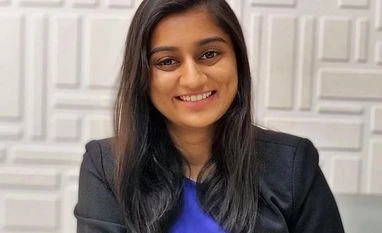
This biotech engineer is on a mission to create human organs using 3D tech

Her startup has so far handled 1,400 cases making 3D models of patients' body parts, assisting doctors to study the organ without opening up the patient in the operation theatre

Firoza Kothari
Firoza Kothari, co-founder and CTO, Anatomiz3D Medtech
Samreen Ahmad Bengaluru
4 min read Last Updated : Mar 24 2021 | 3:55 PM IST
Mumbai-based Firoza Kothari, co-founder, Anatomiz3D Medtech, dreams of doing research work and fabricating organs in a lab using human cells. The 28-year-old, who as a child wanted to be a doctor just like her grandfather, has come  long way since. That dream failed to take off as she realised that she couldn't stand the sight of blood.

But that did not stop her from pursuing a career in healthcare. Early last month, Anatomiz3D signed up with Apollo Hospitals Enterprise to establish 3D-printing labs in its hospitals. Anatomiz3D will collaborate with Apollo Hospitals for design and printing of complex implants for domestic and international markets. 

Kothari has built a distinctive startup and has emerged as one of India's  leading patient specific solution provider to the healthcare industry for design, 3D printing, prototyping and bioprinting technologies. 

With a biotechnology engineering background, Kothari began her journey in 3D printing after doing monotonous work in the pharma industry. During her six-month internship post college at pharmaceutical company Lupin, where she was working on monoclonal antibodies, she realised this was not what she wanted to pursue. “While biotechnology was really exciting theoretically, it was monotonous to work in the field then,” says Kothari. So she tried hands at a sales job at a pathological company, but even that did not excite her. 

So in 2015 she started working at a medical 3D printing company, Sahas Softech, started by her brother Sohrab Kothari and his friend Sagar Shah. It  was here that she took up her first case of creating the heart model of a six-month-old baby using 3D. “It involved understanding the technology, the material, its applications, reading CT/MRI scans and converting them into 3D models in a way that surgeons can visualise it. This 12-day period was really exciting and I knew this was my calling,” she says. 

This was the first case of 3D printing in paediatric cardiology in which the patient’s MRI scan was turned into a CAD model, with which the team were able to design a replica of the baby’s heart. They were then able to 3D print the model with two different views necessary for the surgery. 

This gave Kothari a boost and she started exploring the use of 3D in other surgeries. Realising the immense potential of 3D printing in healthcare, Sahas Softech formed a separate entity called Anatomiz3D Medtech in 2016, a one-stop solution for all medical products involving 3D printing. Kothari became the cofounder and CTO of this startup. 

The company has so far served 1,400 cases making 3D models of patients' body parts, assisting doctors to study the organ without opening up the patient in the operation theatre. This way doctors can study and plan the procedure knowing exactly what to expect in the OT. 

“Advances in 3D printing technology today produce customised, lighter, stronger, safer and higher performing products with lower lead times and costs. This gives doctors with a better understanding of their patients and improves patient comfort level with products that are designed especially for their anatomy. Patient-specific design of implantable devices and surgical tools will help optimize surgical processes and costs,” said Sangita Reddy, Joint Managing Director, Apollo Hospitals Group.

“This is just the beginning and as the technology continues to develop, we will see the unlocking of the full potential of 3D-printing in healthcare,” Reddy added.

According to Kothari, surgeries done with the assistance of 3D models reduced the OT time and  surgeons are able to perform the surgery faster as they study the anatomical models beforehand. 

Keeping her childhood dream aside, she now has a new dream -- to do research work and fabricate organs in a lab using human cells. “There are loads of challenges but 30-40 years down the line, there is a possibility of this becoming a reality and we might not need organ donors one day,” she says. 

The company is also planning to enter the education space with 3D models to help upcoming surgeons practice and prepare themselves better for the future. “They would not have to wait for cadavers for practice and each medical student would have the opportunity to practice individually rather than congregating around one cadaver,” said Kothari. 

Anatomiz3D has so far raised an undisclosed amount in seed funding from Pune-based 3D Incredible and is now planning to raise a Series A this year.

One subscription. Two world-class reads.

Already subscribed? Log in

Subscribe to read the full story →
*Subscribe to Business Standard digital and get complimentary access to The New York Times

Smart Quarterly

₹900

3 Months

₹300/Month

SAVE 25%

Smart Essential

₹2,700

1 Year

₹225/Month

SAVE 46%
*Complimentary New York Times access for the 2nd year will be given after 12 months

Super Saver

₹3,900

2 Years

₹162/Month

Subscribe

Renews automatically, cancel anytime

Here’s what’s included in our digital subscription plans

Exclusive premium stories online

  • Over 30 premium stories daily, handpicked by our editors

Complimentary Access to The New York Times

  • News, Games, Cooking, Audio, Wirecutter & The Athletic

Business Standard Epaper

  • Digital replica of our daily newspaper — with options to read, save, and share

Curated Newsletters

  • Insights on markets, finance, politics, tech, and more delivered to your inbox

Market Analysis & Investment Insights

  • In-depth market analysis & insights with access to The Smart Investor

Archives

  • Repository of articles and publications dating back to 1997

Ad-free Reading

  • Uninterrupted reading experience with no advertisements

Seamless Access Across All Devices

  • Access Business Standard across devices — mobile, tablet, or PC, via web or app

Topics :health care3D printinghuman bodyBiotechnologyApollo Hospitals

Next Story