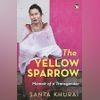
The Yellow Sparrow: Memoir of a Transgender Woman
Translator: Rubani Yumkhaibam
Publisher: Speaking Tiger
“My desire to be a part of [fellow queer people’s] world was simultaneously overshadowed by the fear that my parents would reprimand me for my association with them,” writes Santa Khurai in her no-holds-barred memoir The Yellow Sparrow. Expertly translated from Manipuri by Rubani Yumkhaibam, the title of the book is inspired by a narrative poem Khurai wrote in her teens after a “bitter disagreement with [her] father”. Under the mango tree of her courtyard, she saw a wounded and “different” sparrow. Its companions flew away, abandoning her, which inspired Khurai to see similarities between the sparrow and her situation.
As a young person, Khurai knew that she didn’t identify with the gender she was assigned. But as is the case with any queer or trans person, it takes someone from the outside — not necessarily a sparrow — to realise that they can be who they want. It was an array of people she calls “homo”— derogatory slang for queer people — which she owns in her memoir and makes into an identity that helped her form a community.
Nupi Maanbis, as transwomen are called in Manipur, were also referred to as “homo,” for their “feminine nature”. However, there “were countless differences between [her] life and experience as a woman and society’s conception of a woman,” as Khurai writes. Interestingly, even woke society doesn’t consider anyone identifying as a woman to be a woman.
For example, Nigerian writer and winner of the 2007 Women’s Prize for Fiction for Half of a Yellow Sun, Chimamanda Ngozi Adichie ran into trouble early in 2021 for her trans-exclusionary feminism. Many continue to buy her idea that one has to be assigned the gender that they are born into to be a man or a woman, erasing a spectrum of gender identity and taking away agency from people to choose to identify themselves differently.
Khurai’s assertion of her identity was not only a defiance of sorts but also a courageous stand for living her life as she wanted in a volatile environment, riddled with militancy and the armed forces’ brutal, oppressive presence.
She writes, “In writing this memoir I have not borrowed style and content from the writings of other authors. Rather, I have chronicled the events of my life in the simplest manner.” What, however, is obvious in her writing style is an indelible mark of the oral tradition and myth-histories from her region, as there are several stories invoking the supernatural, resulting in an eccentric memoir.
Khurai notes that she took many excursions to her grandmother’s place, which is where she met “homos”. She began socialising with them despite the fear of being reported to her parents. Easily overlooked but crucial to note here is that if you want to be your own person — irrespective of your gender identity or sexual orientation — your movements are policed. This societal surveillance results in alienation, a gap the size of a world that queer and trans people in particular fill by building their own universe, their chosen families.
The idea of world-building championed by Akwaeke Emezi in their genre-defying memoir Dear Senthuran is reflected in Khurai’s work, too. However, her book work is not full of stories of trauma. She breaks away from this overdone tradition of queer storytelling, filling her work with humorous tales. Be it her transition story, which is at once joyous and heart-rending to read, or her naïve belief that America would be a dream world in which to live, innocence guided her and she listened only to her heart. Of course, her choices attracted a fair share of bad experiences, but a girl wanted to dream. Movies definitely played a role here.
She was obsessed with Julia Roberts in Pretty Woman (1990) and grooved on It Must Have Been Love by Roxette, looking for someone who could make her feel like the woman she wanted to be. That did happen but didn’t last long because insecurity and heteropatriarchy made the men she met rethink their choices. Unlike these men, she didn’t want to rethink her choices.
Here’s a powerful sentence that captures her determination: “To conform to society’s expectations, at the cost of banishing my own self and the desire ingrained in my blood, was a form of slavery to me.” She was born into a freedom she had created for herself, and she conducted herself thus. It took Khurai several years to come to this conclusion and describe the world she inhabited, and share her dream of a world she desires— where everyone can be who they want to be.

 "A tell-all across gender divide")












 Connect with us on WhatsApp