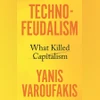
Techno-Feudalism: What Killed Capitalism
Yanis Varoufakis, maverick Marxist economist, former finance minister of Greece, and raconteur par excellence, proposes an original and controversial theory in his new book, Techno-Feudalism . While many of his contemporaries have bemoaned the fact that we are experiencing the darkest side of capitalism, Mr Varaoufakis says that capitalism — at least as it is understood in the classical sense — is already dead. It has been replaced by something infinitely worse — a new form of feudalism where tech giants have essentially taken over all assets and force citizens of the world to pay rent for using any service. Consumers do not have any options, either, to move out of this system. They are locked in by Big Tech. We are essentially in a rentier economy and technology overlords are the new aristocrats.
Mr Varoufakis builds his case painstakingly. It helps that he has not written what would be considered a hardcore economics volume. It is instead a wide and rambling journey that uses philosophy, material science, pop culture, mythology, technology, and economic and political history to illustrate his points. The book is in the form of a letter to his father, who died recently. It is a conversation exploring strands of earlier conversations.
Georgios, Yanis’ father, was a Greek-Egyptian communist who retained the faith till the very end. He rose to be the chairman of one of Greece’s biggest steelmakers. Yanis credits him for many of the early lessons he learned about all sorts of subjects. He, too, has not shed communism — and his view of capitalism and feudalism, or rather techno-feudalism, is essentially his view of all that is wrong currently.
The book couldn’t have come at a better time. The rise of Generative AI (GenAI) as well as the dominance of Silicon Valley’s Big Tech has accelerated the debate about whether multinational technology giants have become too powerful — and become too big to be disciplined.
Across the globe, regulators have become worried enough to try cutting them down to size — and in the US, there is even some thought of breaking down some of the most powerful Big Tech companies in order to curb their power.
In Europe, lawmakers have long frowned upon Big Tech and they are increasingly bringing in legislation and regulations to curb the amount of harm the companies can do. In other parts of the world too, curbs on many big platforms and companies are being contemplated.
I am not very sure if I would agree with all of Mr Varoufakis’ assertions, though he has argued his case very well in the book. Certainly, the rise of the rentier class has been noted by other scholars in different countries — though none of them have gone as far as Mr Varoufakis to pronounce the end of capitalism. Earlier authors had pointed out that when the Soviet Union disintegrated and Russia and the other former USSR states embraced market economy, it was not really a free economy in the classical form that they adopted. Instead, powerful oligarchs cropped up in the chaos, building businesses that were more about rentiers than capitalism.
Does that mean that things are not quite grim and we can all sleep more peacefully now? Not really. While we may not see a full-fledged techno-feudal rentier economic system taking over the world, I doubt we are going back to better times anytime soon. Marxism has failed and capitalism has reached a point where it is exacerbating inequality. The future is gloomy — unless you are one of the fortunate members of the 0.1 per cent of the world’s elite. But we are not shifting to a new form of feudalism and rentier economy either.
The reviewer is editor, Prosaicview.com, and former editor, Business Today and Businessworld

 "Capitalism is dead, long live the techno-rentiers")












 Connect with us on WhatsApp