Home / Book / PMO: Himanshu Roy's book traces evolution of prime-ministerial governance
PMO: Himanshu Roy's book traces evolution of prime-ministerial governance
The book has an excellent section on how the offices of the Prime Minister and the Cabinet secretariat have evolved in the United Kingdom, Canada and Australia
5 min read Last Updated : May 12 2025 | 10:40 PM IST
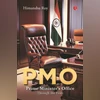
PMO – Prime Minister’s Office Through the Years
Author: Himanshu Roy
Publisher: Rupa Publications
Pages: xliv plus 148
Price: Rs 495
The manner in which India’s prime ministers over the years have strengthened and expanded their own secretariat is not an unknown story. This trend has been noted and analysed by several commentators and senior civil servants who wrote their memoirs after retirement. But the book under review takes a long-term and comprehensive view of the evolution of a prime ministerial government in New Delhi. It narrates the story of how almost all prime ministers worked towards sacrificing a Cabinet-led governance model. In the process, the book adds a new dimension to the understanding of this evolution. The author, a professor at Jawaharlal Nehru University, argues that this transformation took place against the principle of a Cabinet form of government, as enunciated in the Indian Constitution.
The new dimension of this understanding pertains to Jawaharlal Nehru and his commitment to the idea of a Cabinet-led governance model. It is widely believed that it was Lal Bahadur Shastri who laid the foundations of a strong secretariat for the Prime Minister in 1964. Himanshu Roy argues that even before the Prime Minister’s Secretariat (PMS) became an institutional force overshadowing the Cabinet secretariat, the seeds of a prime ministerial government were sown by Nehru. Indeed, it was Nehru, who mooted the idea of a high-powered PM secretariat overriding the power and influence of the Cabinet secretariat. This was opposed by then home minister Sardar Vallabhbhai Patel and other senior ministerial colleagues. Even senior secretaries such as H M Patel and V P Menon had opposed the idea.
According to Prof Roy, the last British governor-general Lord Mountbatten was also against such a change in the governance model. After some debate over Nehru’s proposal, the idea of a formal organisation to function as a powerful PMS was dropped. The author’s analysis, based on extensive research, is that Nehru saw himself as a successor to the viceroy of the British system, where the private secretariat could be converted into a PMS, while the secretariat of the Executive Council under the viceroy was to function like the Cabinet Secretariat with an advisory role and power. Indeed, in the early days after Independence, Nehru would have his principal private secretary (PPS) attend the Cabinet meetings, which was not the practice during the British era. However, ministerial colleagues of Nehru did not approve of the idea of the PPS to the Prime Minister attending Cabinet meetings and the practice was discontinued. But this, Prof Roy argues, showed Nehru’s preference for a prime ministerial government.
What led to the strengthening of the PMS under Shastri was a realisation that governance processes would become easier with less confusion and greater clarity. Many civil servants under Nehru would notice a lack of coordination between the Prime Minister and the Cabinet Secretariat. Shastri observed this dissonance from close quarters since before becoming the Prime Minister, he had overseen the Cabinet Secretariat in 1964 as a minister without portfolio. In order to improve this much-needed coordination between the PMS and the Cabinet Secretariat, he decided to strengthen the PMS with the appointment of a secretary-level officer as his PPS. In Nehru’s time, the PPS was of the rank of a deputy secretary and later joint secretary. That marked the beginning of a process leading to the reduced role and power of the Cabinet Secretariat and the emergence of a powerful institution in the PMS. Under Indira Gandhi as Prime Minister, the process of institutionalising the PMS was accelerated and Nehru’s visualisation of a strong secretariat under the Prime Minister was realised by his daughter.
Interestingly, Morarji Desai’s tenure as Prime Minister saw the downsizing of the PMS in its importance and power. Not only was the PMS renamed the Prime Minister’s Office (PMO), its power and influence were reined in significantly. However, this arrangement did not last long. With the return of Indira Gandhi as Prime Minister in 1980, even the rechristened PMO regained its earlier clout. Since then, successive Prime Ministers, including the current incumbent, Narendra Modi, have followed the same system of a prime ministerial government, with a reduced role for the Cabinet secretariat.
The author argues that coalition governments have seen some restoration of the power of the Cabinet and its secretariat. However, this is not borne out by the way coalition governments of Atal Bihari Vajpayee and Manmohan Singh functioned. They continued to strengthen the role of the PMO, whose influential officials steered policymaking and important decisions. The only exception perhaps was the coalition government led by Chandra Shekhar in 1989. The role of the Cabinet secretariat had reclaimed its power during that short period, perhaps because of political and economic uncertainties.
Understandably, this has had its impact on the bureaucracy also. The Cabinet secretariat has been reduced to playing the role of coordinating among ministries, holding Cabinet meetings and overseeing the career progression of civil servants. Even here, the role of the PMO has grown. The book does not dwell enough on the reduced scope of work for the Cabinet secretariat or its impact on civil servants. But outlining the impact of a new governance model on the performance or morale of what is described as the country’s steel frame would have enhanced the book’s appeal and intrinsic value.
The book has an excellent section on how the offices of the Prime Minister and the Cabinet secretariat have evolved in the United Kingdom, Canada and Australia. The experience of these countries is by and large similar to the one in India. This raises a more central question on whether what has been de facto for so many years in India needs to become de jure.




