The CIA Book Club: The Best-Kept Secret of the Cold War
Published by HarperCollins
For earnest Indian university students, at least until the eighties, George Orwell’s 1984 and Animal Farm, and Alexander Solzhenitsyn’s The Gulag Archipelago were standard social reading. These and other “intellectual” books, readily available and easily borrowed, were discussed threadbare during adda sessions, the duration of which depended on the number of classes we felt compelled to miss. It is striking to discover, then, that for contemporaries behind the Iron Curtain, these and many other authors — including Agatha Christie! — were forbidden pleasures, accessible only through well-organised smuggling circuits from Western Europe.
This material was trafficked through, among other things, travelling musicians’ sheet music, in food tins or Tampax boxes. The Gulag Archipelago once arrived in Warsaw wrapped in a nappy. The availability of proscribed books and periodicals (among them Marie Claire and the New York Review of Books) in Eastern Europe were courtesy an operation known as the “CIA book program”, but variously described as an “offensive of honest free thinking” and the West’s “Marshall Plan for the Mind”. In The CIA Book Club, former journalist Charlie English tells the story of the 35-year-long operation in Poland, the first falling domino of Soviet Europe.
The book project was uncharacteristic in an era when the CIA had developed its scandalous penchant for swashbuckling interventions — Iran, Chile, Guatemala, El Salvador. It was perhaps the cheapest of the CIA’s covert ops campaigns but by no means small in scope. When it was wound up in 1991, the International Literary Centre (ILC) had distributed across Eastern Europe almost 10 million items (including printing press machinery to publish samizdat literature), at a cost of $2.7 million. It was run from a nondescript building in Manhattan through the innocuously named organisation called the International Literary Centre — the British spelling “an added layer of subterfuge”.
Yet, the programme remains “the best kept secret of the Cold War”, its files still classified along with those documenting the CIA’s broader support of the Polish opposition movement led by Solidarity. This is, Mr English explains, on account of post-Cold War politics in which the Poles prefer to distance themselves from the CIA, not least because many of the programme’s agents were unaware of CIA links. Mr English builds his book mainly through interviews with several key players as well as unpublished papers, producing a fascinating story of ground-level operations undertaken at great personal risk for its movers and shakers against the high politics of the Cold War.
The book programme emerged from a 1951 balloon offensive over Czechoslovakia containing subversive messages and copies of Animal Farm. When an infuriated government sent fighters to shoot down the balloons, the CIA knew it had worked. A follow-up campaign to send anti-communist material to random addresses culled from Eastern phone directories coalesced into a structured book programme under the ILC, headed by the refugee George Minden, a half-British, half-Romanian heir to oilfields that were seized by the communists.
The ILC’s Polish desk was run by two of a colourful cast of characters that people this book: Adam Rudski, a Nazi fugitive, and his most influential Paris-based associate Jerzy Gierdroyc, known as “the Editor”, who produced the emigre journal Kultura, which was deeply influenced by the Polish anti-communist movement. Gierdroyc became a legend because of his role in sustaining the underground press led by Miroslaw Chojecki (pronounced hoy-yet-ski), a nuclear scientist who launched NOWA, a publishing house that illegally printed and circulated banned books. Chojecki was also one of the moving spirits behind the creation of Solidarity and the press agency, which became Poland’s most reliable source of political information.
The puppet regime’s allergy to unauthorised publication was so extreme that Chojecki was arrested and tortured 43 times by the security apparat. Visiting the famous Frankfurt Book Fair to rustle up financial support for NOWA, the imposition of martial law in 1981 made him an unwilling exile. Through the ILC, he orchestrated funding for the underground press, especially the Solidarity Press Agency, ably managed by women such as Helena Luczywo and Magda Boguta. They managed to produce the paper during the worst days of the crackdown against Solidarity, succeeding, ironically, because the authorities didn’t think much of women’s capabilities.


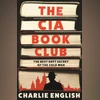 "The CIA Book Club reveals how the West won minds behind the Iron Curtain")











