The New Geography of Innovation: The Global Contest for Breakthrough Technologies
For anyone fascinated by questions about technological innovation, why it happens, what makes it happen and so on, this book has some wonderful case studies. For example, France saw the emergence of a private initiative, Station F, which has become a symbol of France’s ambition to become the tech capital of Europe. When Emmanuel Macron inaugurated the facility in 2017, he made a pitch for why this is the place for the smartest people with the biggest dreams. “I like to compare a researcher in Harvard with a researcher in France,” he said. “[In France], school is free and excellent, healthcare is free, and there’s a retirement system. On the other side, there’s nothing.” It took them five years to pull that off, but in 2022, Hugging Face became the first startup to cross a billion-dollar valuation. The young company quickly became the central hub of the artificial intelligence (AI) community. It’s the most widely used online platform where AI experts and enthusiasts come together to share their work and collaborate on building machine learning models.
We all know the United States as the source of just about all the technologies that define modern life: Personal computers, operating systems, smartphones, e-commerce, web browsers, email, search engines, social networks, electric cars, and so on. And most of the tech companies that created and monetised these technologies are also in the US. This book asks: Is that changing?
The author, Mehran Gul, attended Yale, where he was a Fulbright scholar, Fox International fellow, and teaching fellow at Yale. He has served as a lead for the Digital Transformation of Industries at the World Economic Forum. He studied at the Lahore University of Management Sciences and has been a visiting scholar at Jawaharlal Nehru University in New Delhi, as well as a fellow with the Acumen Fund. He lives in Switzerland, and The New Geography of Innovation is his first book.
Mr Gul recounts a major research effort in the search for decoding the innovation mystery. The Global Innovation Index is a ranking of the world’s most innovative countries, created and published by the World Intellectual Property Organisation. It was an attempt to provide a comprehensive assessment of the state of innovation in the world by crunching over 80 indicators, which range as widely as research output, R&D expenditure, education spending, test scores, valuations, engineering graduates, patents, and so on. Seven out of the top 10 countries on that list turned out to be European, giving the unmistakable impression that the continent is firmly at the centre of innovation. But contrary to the finding of that study, Nobel Prize-winning economist Jean Tirole writes that “The EU is losing the race for innovation.” The document notes that the transatlantic gap in new technologies is widening, and China too is at the cusp of leaving the continent behind. Thus, the mystery about innovation deepens.
This book correctly points out that most discussions about innovation revolve around personalities and institutions. Steve Jobs was a creative genius. Pixar built a unique culture. Stanford redefined what it means to be a university — that sort of thing. But this book goes one level higher to look at the wider ecosystem from which these people and institutions and companies emerge. This book also delves deeply into this question with fascinating results.
This is a book about technology, but it has people at its centre. Specifically, the people who are making that technology happen. It is based on data from the author’s conversations with nearly 200 prominent figures in technology worldwide, including entrepreneurs, scientists, venture capitalists, and public officials. It’s an attempt to piece together a coherent picture of what the map of the world’s most technologically capable places looks like, how they achieved that status, and the world they are creating.
An intriguing case that the author discusses is how, in 2015, four researchers at the Microsoft Research lab in Beijing published a seminal paper that marked one of the most significant advances in machine learning. The paper, titled “Deep Residual Learning for Image Recognition”, or simply ResNet, outlined how neural networks can be layered to vastly improve the performance of AI systems. This paper has garnered nearly a quarter of a million citations on Google Scholar in under a decade. It is the most cited paper in AI. It was authored by Kaiming He, Xiangyu Zhang, Shaoqing Ren, and Jian Sun. All four got their undergraduate, graduate, and doctoral degrees from Chinese universities. None of them had worked outside China before publishing their landmark paper.

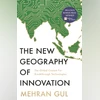 "Mehran Gul's debut book decodes the innovation ecosystem through its people")










 Connect with us on WhatsApp