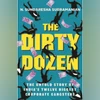
Author: N Sundaresha Subramanian
Publisher: Pan Macmillan India
Over the past decade, the Indian financial markets have been the toast of investors. The domestic stock markets have outperformed most global peers. India’s market value —which first hit $1 trillion only in 2007— hit $5 trillion this month. The country is the world’s fourth-largest market now, after the US, China and Japan. A booming stock market reflects the fact that the country’s corporate sector has performed well. The equity side of the market is often discussed but the debt side of the business doesn’t get equal attention. Yet few companies, particularly those in capital-intensive sectors such as steel, power and textiles, can do without raising debt, and bank loans are considered the lubrication for a country’s economic engine.
The dark side of this cycle is that large borrowers can fail to honour repayment obligations and banks have to contend with the consequences. In the normal course, any business can fail. Mega-plans can also run aground as a result of large-scale changes or an economic downturn. But large defaulters are often those who try to game the system by duping banks and scooting with hard-earned depositor or taxpayer money.
N Sundaresha Subramanian, who specialises in reporting on the regulatory landscape and corporate wrongdoings, has done an impressive job in recounting the story of India’s most indebted firms in The Dirty Dozen . In most cases, he finds a nexus between corporations, politicians and corrupt bank officials.
The Dirty Dozen is not just an attempt at describing the journey of the 12 large defaulters but also an effort at capturing the changing landscape around the evolution of the bankruptcy system in India. The book leaves you with plenty of food for thought: How we got to the often-quoted Rs 10 trillion bad loan figure, the painful process of under-recovery and the evolution of the framework leading up to the Insolvency and Bankruptcy Board of India (IBBI).
The book — premised on the country’s 12 biggest defaulters declared by the Reserve Bank of India (RBI) in June 2017—has three chapters. The first one delves into how regulations governing defaults and bad loans changed under various governments. It also simplifies all the jargon around bad loans for the uninitiated. This makes it an interesting read for those who are unfamiliar with the Indian banking system.
The chapters are sprinkled with interesting anecdotes, studies and speeches of governors and deputy governors. It dives deep into the power equation between a borrower and a banker. It looks at, for instance, how state-owned banks account for the bulk of the bad loans and how public sector bankers are often from humble backgrounds, which makes the system vulnerable to exploitation. Worse, corporate borrowers escape largely unscathed but bank officials end up behind bars.
A separate chapter on Vijay Mallya is intriguing. Kingfisher Airlines (KFA) didn’t go through the Insolvency and Bankruptcy Code (IBC) proceedings because Mr Mallya was declared a defaulter before the new regulation was enacted. Though much has been written on Mr Mallya’s doomed entry into aviation, the book offers a lot of new information, including on the liquor baron’s political affiliations and email exchanges between KFA’s top bosses amid mounting debt.
Chapter two, which makes up almost half the book, is dedicated to the “dirty dozen” with one section dedicated to each. Mr Subramanian finds interesting common threads between them — their faulty decision-making and questionable business acumen.
Generally speaking, insolvency proceedings can be extremely technical. The book tries to tell a simple story around the company’s background, its promoters, run-ins with the authorities and the eventual fall into the debt trap. After every chapter, however, you are left wanting to know more.
While one could expect the book to end after summarising the travails of the 12 defaulters, the last chapter covers fugitives Nirav Modi and his uncle Mehul Choksi of Gitanjali Gems and the story of how they took Punjab National Bank for a ride by misusing the letter of undertaking (LoU) mechanism.
It also focuses on a select few groups, such as JSW, Adani and Vedanta, which have managed to thrive despite a pile of debt. The Videocon-Chanda Kochhar controversy and the collapse of the Anil Ambani empire also find a place in this book. A chapter on the RBI’s response—which begins with a reference to the Asian Currency Crisis—dives into how the regulatory landscape around tackling bad loans has evolved starting with the corporate debt restructuring (CDR) mechanism leading up to the present day IBBI. It explains approaches the RBI uses towards tackling stressed assets.
Despite the regulator’s best efforts at addressing the issue of bad debt, the system is still plagued by complications—whether it is poor adjudication infrastructure or complex judicial proceedings. As M S Sahoo, the first chair of IBBI, sums up in the foreword to this book, “the road to success is always under construction.”
The third chapter is packed with information, but the flow is somewhat inconsistent.
Mr Subramanian developed the idea of the book in 2016; since then, the landscape around bad loans has changed. Add to that the disruption caused by the Covid-19 pandemic, which brought many insolvency proceedings to standstill. This makes writing on the topic extremely complex, so his effort at demystifying it is a laudable achievement.

 "The debt trap saga")












 Connect with us on WhatsApp