Seismic matters

The Rumbling Earth demystifies the science behind earthquakes, allowing readers to grasp this phenomenon in all its variety
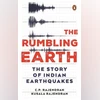
Book
Chittajit Mitra
5 min read Last Updated : May 22 2024 | 9:17 PM IST
The Rumbling Earth: The Story of Indian Earthquakes
Author: C P Rajendran & Kusala Rajendran
Publisher: Penguin
Pages: 256
Price:  Rs 699

Last year, Dutch researcher Frank Hoogerbeets, who had accurately predicted the twin earthquakes in Turkey and Syria of February 2023, predicted a massive earthquake in Pakistan. In December, Pakistan was indeed jolted by an earthquake with a magnitude of 4, fortunately without loss of life. But Mr Hoogerbeets’ findings, which are controversially based on the alignment of celestial bodies, are intriguing because earthquakes cannot really be predicted.

Also Read


In fact, just a month after his widely reported prediction, it was Nepal that was unprepared for the 6.4 magnitude earthquake on November 3, which killed more than 153 people, underlining the constant anxiety for those who live in quake-prone zones and raising questions for the curious. What causes earthquakes and why are they so difficult to predict? In tracing the science, history and impact of earthquakes in India, renowned seismologists C P Rajendran and Kusala Rajendran offer a useful perspective on this phenomenon in The Rumbling Earth: The Story of Indian Earthquakes.

The authors begin the conversation by highlighting the importance of earth sciences and how it is ignored on a wider level in the education system that also diverts prospective scientists away from a field that deals with issues directly impacting nations and people. For earth scientists, public outreach is another complication because they cannot predict a calamity such as this. When six Italian scientists were asked whether a series of tremors that the people at a town called L’Aquila were experiencing is of any concern, they expressed a balanced viewpoint based on the available data. Then they experienced an earthquake of 6.3 magnitude that killed 309 people on April 6, 2009. They were subsequently convicted of manslaughter and sentenced to a six-year prison term for supposedly downplaying the calamity. Later, the conviction was reversed. This shows the contradictions that exist within the science of earthquakes as the data is still unclear whether a culmination of tremors can lead to a massive earthquake or not.

The following chapters go on to talk about how stress accumulates at the Himalayan range and then leads to several earthquakes such as those in Garhwal (1803), Kangra (1905), Bihar-Nepal (1934), Assam (1950), Kashmir (2005) and Nepal (2015). To understand why and how it happens one needs to go back into prehistory. About 225 million years ago, India was an island near Australia and Antarctica. Eventually 40-50 million years ago, this plate collided with Eurasia, forming the initial peaks of the Himalayas. This movement between the two plates, which continues today, causes stress that leads to earthquakes in that specific region.

For instance, along the eastern and north-eastern part of the country, active tectonic movements led to the formation of scenic mountain ranges and river systems of which the Brahmaputra is a major one. But it has a long history of disturbances as well. On August 15, 1950, the largest documented continental inter-plate earthquake shook the Northeast with a magnitude of 8.7. Before that, in 1897, another great earthquake with a magnitude of 8.2 shook that region with its epicentre in Shillong. The effects were so widespread that the aftershocks were felt in Calcutta (now Kolkata) and Bhagalpur. This historic event was also mentioned in a Ruskin Bond story as well as in letters British colonialists wrote home to their families. But this disaster opened new avenues in observational seismology as well as modern seismological research.

Yet, the authors point out, it cannot be concluded that earthquakes can occur only at the plate boundaries; in fact, they often also occur at places least expected. Regions away from plate boundaries with fewer deformations are known as stable continental regions (SCRs) and because the chances of stress accumulating in such regions have been low, one might assume that they won’t experience earthquakes at all. But this false sense of security can lead to cataclysmic disasters. Near Killari, Maharashtra, on September 30, 1993, a moderate earthquake of 6.3 magnitude hit at 3:56 am, killing more than 10,000 across 67 villages that were reduced to rubble. The damage was worsened by the fact that homes here were built using wooden beams and light frames for the roof and covered by several layers of black soil. Since the villagers never suspected the possibility of such a disaster, they had no concerns for their safety on that particular aspect. This incident, though unexpected, opened another arena for seismologists to examine diverse possibilities around earthquakes in India.

Time and again, history has pointed to the lessons that we need to learn from earthquakes. Whether we are paying heed to them is a different conversation altogether. In the race to “development”, we seem to have ignored the long-term implications, especially in seismically fragile areas. The steady sinking of the Himalayan town of Joshimath stands as one cautionary event. Yet, the government seems oblivious to the risks as the Himalayan hydropower projects and the perilous over-tourism during the Char Dham Yatra in Uttarakhand demonstrate. In demystifying the science behind earthquakes in the form of a compelling story, the authors allow the reader to grasp this phenomenon in all its variety. Most critically, the book also points to a potentially disastrous future if we continue to ignore the messages from the rumbling earth. 

The reviewer is an Allahabad-based writer and translator

One subscription. Two world-class reads.

Already subscribed? Log in

Subscribe to read the full story →
*Subscribe to Business Standard digital and get complimentary access to The New York Times

Smart Quarterly

₹900

3 Months

₹300/Month

SAVE 25%

Smart Essential

₹2,700

1 Year

₹225/Month

SAVE 46%
*Complimentary New York Times access for the 2nd year will be given after 12 months

Super Saver

₹3,900

2 Years

₹162/Month

Subscribe

Renews automatically, cancel anytime

Here’s what’s included in our digital subscription plans

Exclusive premium stories online

  • Over 30 premium stories daily, handpicked by our editors

Complimentary Access to The New York Times

  • News, Games, Cooking, Audio, Wirecutter & The Athletic

Business Standard Epaper

  • Digital replica of our daily newspaper — with options to read, save, and share

Curated Newsletters

  • Insights on markets, finance, politics, tech, and more delivered to your inbox

Market Analysis & Investment Insights

  • In-depth market analysis & insights with access to The Smart Investor

Archives

  • Repository of articles and publications dating back to 1997

Ad-free Reading

  • Uninterrupted reading experience with no advertisements

Seamless Access Across All Devices

  • Access Business Standard across devices — mobile, tablet, or PC, via web or app

Topics :BS ReadsBOOK REVIEW

Next Story



